

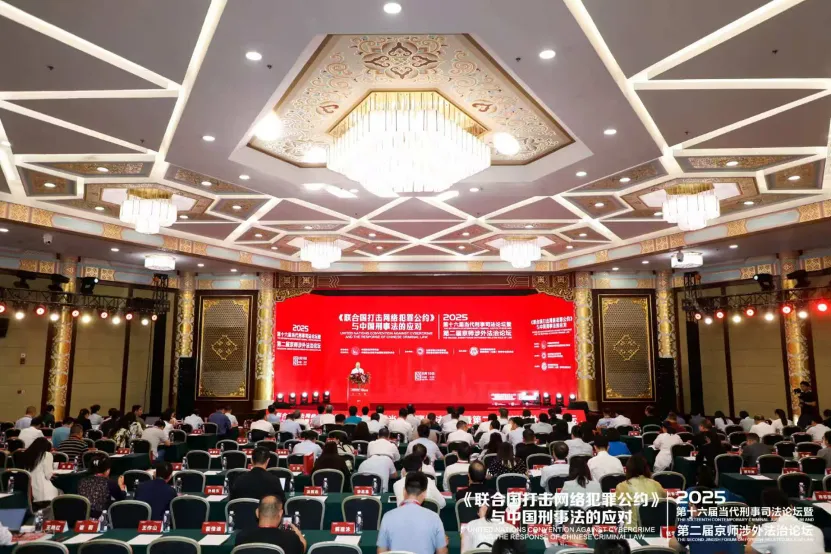
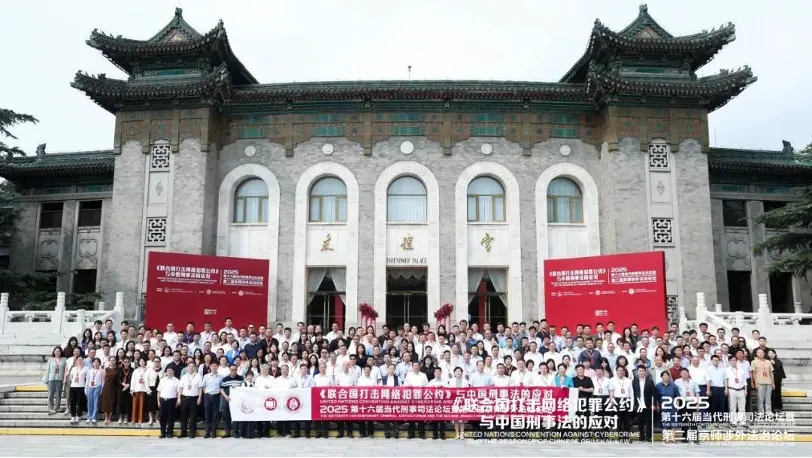
On August 18, 2025, the Law School and the College for Criminal Law Science at Beijing Normal University successfully hosted the 16th Contemporary Criminal Justice Forum and the 2nd BNU Foreign-related Legal Forum in Beijing. The event was held to celebrate the 30th anniversary of the establishment of the Law discipline at Beijing Normal University and the 20th anniversary of the College for Criminal Law Science. Themed "The United Nations Convention on Cybercrime and China's Criminal Law Response," the forum aimed to explore in depth the response strategies of China's criminal legislation and judicial system following the implementation of the UN Convention on Cybercrime, with the goal of better promoting the construction of foreign-related rule of law in China. The forum was guided by the Chinese Criminal Law Research Association and supported by its International Criminal Law Branch. It was co-organized by Beijing Jingshi Law Firm and the (National) Criminal Law Professional Committee of Jingshi Law Firm.
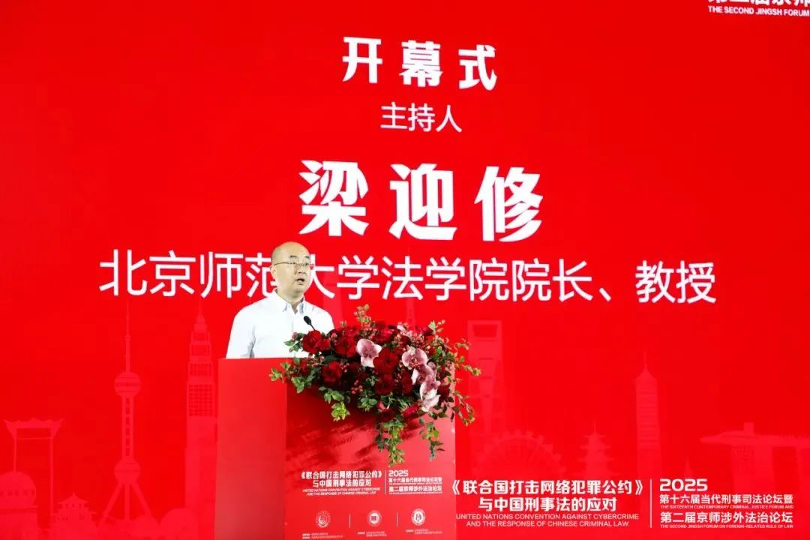
Opening ceremony
The opening ceremony was presided over by Liang Yingxiu, Dean and Professor of the Law School at Beijing Normal University.
Zhang Yanyun, Deputy Secretary of the Party Committee and Professor at Beijing Normal University, began by highlighting the university's profound heritage and comprehensive strength as a leading institution under the national "211 Project," "985 Project," and "Double First-Class" initiative. He noted that the College for Criminal Law Science has injected strong momentum into the development of the university's Law discipline. He emphasized that the forum's focus on "The United Nations Convention on Cybercrime and China's Criminal Law Response" holds significant practical relevance and far-reaching strategic implications. While network information technology has profoundly transformed social production and daily life, it has also precipitated a surge in cybercrimes, including online fraud, theft, and cyberattacks, that pose serious threats to national security, social stability, and the legitimate rights and interests of citizens. In this context, Zhang provided an in-depth analysis of the dual impact the Convention's implementation will have on China's criminal law. On one hand, it offers international standards and references that will aid in refining legislation related to cybercrime. On the other, it places higher demands on the adaptability of the domestic criminal legal system and its compatibility with international rules. He expressed hope that the distinguished guests would engage in in-depth discussions and exchange ideas, contributing new insights and methodologies to address the challenges of cybercrime.

Jiang Wei, Vice Chairman of the Supreme People's Court Advisory Committee and President of the Cyber and Information Law Research Association of China, extended warm congratulations on the 30th anniversary of the establishment of the Law discipline at Beijing Normal University and the 20th anniversary of the establishment of the College for Criminal Law Science. He then elaborated on the milestone significance of the United Nations Convention on Cybercrime and made three points: First, the governance of cybercrime is a severe challenge faced by countries worldwide, having long transcended national borders, infiltrating the economic lifelines of various nations, and eroding national security. The United Nations Convention on Cybercrime provides direction for combating cybercrime and offers opportunities and foundations for international cooperation. Second, China's criminal law should be systematically advanced in line with the Convention, achieving systematic alignment in procedural law connections, substantive law coordination, and international cooperation mechanisms. Third, the basic idea of transforming the Convention into domestic law is to establish a dual review mechanism of pre-security assessment and purpose limitation principles, converting China's positions on cyber sovereignty and data security into a Chinese solution within the framework of international rules.

Jia Yu, President of the Shanghai High People's Court and President of the Criminal Law Research Association of China, fully affirmed the outstanding contributions made by the College for Criminal Law Science of Beijing Normal University to the innovation of Chinese criminal law, and on behalf of the Criminal Law Research Association of China, expressed respect for the remarkable achievements since the establishment of the College for Criminal Law Science. He pointed out that with the rapid development of big data and artificial intelligence, cybercrime and digital security risks have become a common severe challenge faced by countries around the world. Subsequently, President Jia Yu elaborated on the important status and significance of the United Nations Convention on Cybercrime, emphasizing that this forum focuses on the response strategies of China's criminal legislation and judicial system following the Convention's entry into force, which has significant theoretical value and practical guidance for advancing China's foreign-related criminal legal construction. He proposed three core opinions: First, to directly face the new characteristics of high incidence, low cost, strong concealment, and intelligence of cybercrime, and its serious harm to social order, a new pattern of comprehensive policies and multi-party governance should be constructed. Second, strengthen international cooperation to deepen the fight against cross-border cybercrime. We should effectively utilize the framework of the "Convention" to actively promote cross-border data flow and coordination of convention rules, contributing high-quality Chinese solutions to global cybercrime governance. Third, deepen cooperation among educational institutions to cultivate foreign-related criminal law talents with broad international perspectives and strong interdisciplinary capabilities, timely transforming the latest experiences and in-depth cases of China's foreign-related rule of law practice into educational resources, achieving a deep integration of theory and practice, and enhancing collaborative education requirements.

Jing Dali, former chief prosecutor of the Beijing People's Procuratorate and president of the Chinese Criminal Procedure Law Research Association, first introduced the long-standing emphasis on "school-association cooperation" with law schools by the association, achieving a win-win situation through academic activities and the establishment of professional platforms. He particularly pointed out that the College for Criminal Law Science of Beijing Normal University is one of the first member units of the association, and he looks forward to both parties continuing to expand their areas of cooperation in the future. President Jing Dali emphasized that this forum aims to address the contemporary issue of connecting the "United Nations Convention on Cybercrime" with Chinese criminal law, carrying the historical mission of building a new trend of digital civilization for humanity. In the face of current challenges, China needs to actively play the role of a responsible major country, participating in the establishment of global, regional, and multi-level internet governance, focusing on modern rule of law, and striving to build a criminal justice system that is both internationally compatible and locally adaptable, helping our country transition from a major internet power to a strong internet power. The Chinese Criminal Procedure Law Research Association will continue to pay attention to cutting-edge issues of international cybercrime, providing solid theoretical support and intellectual assistance for cybercrime governance.

Li Xin, first-level inspector of the International Cooperation Bureau of the Supreme People's Procuratorate and secretary-general of the Chinese Women Prosecutors Association, stated that since the 18th National Congress of the Communist Party, the Party Central Committee has attached great importance to foreign-related rule of law work, and the Third Plenary Session of the 20th Central Committee has also clearly proposed the requirement to "strengthen the construction of foreign-related rule of law and improve the foreign-related national security mechanism." Subsequently, regarding "promoting international cooperation in prosecution during the implementation of the 'United Nations Convention on Cybercrime'," she put forward four suggestions: first, efforts should be made to enhance the awareness and ability of prosecutors to use international treaties in handling cases. As a legally defined supervisory agency by the Constitution, the procuratorial organs bear the full supervision function in criminal proceedings and should fully play their role in the coordination of criminal justice. Second, we need to take the implementation of the "Convention" as an opportunity to promote effective alignment of domestic legislation, laying a solid legal foundation for international cooperation in prosecution. Third, we should strengthen technological empowerment, combining it with the actual needs of combating cybercrime, adapting to digital trends, and enhancing our ability to identify and respond to new types of cybercrime, thereby promoting the construction of an intelligent and information-based technical system. Fourth, we should continue to expand the international prosecution cooperation network. Prosecutorial agencies should actively participate in the formulation of international rules in areas such as counter-terrorism, anti-corruption, and combating cybercrime, adhering to a combination of "bringing in" and "going out," injecting continuous momentum into strengthening international judicial cooperation.

Professor Wang Qiangjun, Vice Dean of the Law School of Nankai University and an alumnus representative, highlighted the solid foundation and development achievements of the College for Criminal Law Science of Beijing Normal University in discipline construction and talent cultivation. He pointed out that the College for Criminal Law Science has continuously held high-quality academic lectures, attracting numerous renowned experts and scholars from both domestic and international backgrounds, creating a strong academic atmosphere. The research in the field of criminal law at the institute is particularly in-depth and solid, focusing on core issues such as the improvement of criminal law legislation, application of criminal law, and functions of criminal law, yielding substantial theoretical results that provide solid support for the standardized construction of the discipline and overall work. Relying on its profound disciplinary accumulation and rich practical teaching experience, the College for Criminal Law Science has achieved remarkable results in talent cultivation, having been approved as a training base for foreign-related legal talents, dedicated to cultivating high-quality legal talents with international vision and practical abilities, continuously delivering new forces for the country's rule of law construction.

Professor Yin Jianfeng, Vice Dean of the Law School of Beijing Normal University, mainly reported on the construction achievements of the College for Criminal Law Science over the past 20 years. He pointed out that the law discipline at Beijing Normal University is composed of the Law School and the College for Criminal Law Science, and the College for Criminal Law Science has always adhered to promoting development through institutional innovation, achieving remarkable results. The College for Criminal Law Science attaches great importance to international exchanges, adhering to the development led by high-end platforms. It is committed to building networks for the United Nations institutions on crime prevention and criminal justice, alliances of international anti-corruption academies, partnerships with the United Nations Security Council Counter-Terrorism Committee Executive Directorate, observer units of the United Nations Intergovernmental Expert Group on Cybercrime, and the Research Center on Internation Cooperation Regarding Persons Sought for Corruption and Asset Recovery in G20 Member States. It strives to create international regional exchange platforms such as the "Contemporary Criminal Law International Forum," the "Cross-Strait and Four Regions Criminal Law Forum," and the "Sino-Korean Criminal Law Academic Seminar." At the same time, the College for Criminal Law Science also emphasizes close ties to practical realities, insisting on enhancing development through legal practice. By establishing formal exchange and cooperation relationships with political and legal institutions, it provides legal consulting opinions and research reports, participates in legislative, judicial, and law enforcement activities as experts, and actively promotes the organic integration of legal theory and legal practice.
Professor Yin Jianfeng also read a congratulatory message written by Mr. Gao Mingxuan, the honorary president of the College for Criminal Law Science and a participant and witness in its establishment and development, on the occasion of the 20th anniversary of the institute. Mr. Gao Mingxuan pointed out that from basic theoretical research to the exploration of cutting-edge issues, from legislative suggestions to in-depth studies of judicial practice, and from international academic dialogue to the refinement of local wisdom, the College for Criminal Law Science continuously enhances its research capabilities in criminal law with outstanding academic character and mission. It produces significant and internationally influential research outcomes, leaving an indelible mark on the progress of criminal justice in China, and makes new contributions to the construction of high-end think tanks, the cultivation of high-end talents, and high-end academic exchanges in the field of criminal law. It is hoped that the College for Criminal Law Science will take its 20th anniversary as a new starting point, standing at the pinnacle of the times, forging the soul of academia, and constructing an academic system of Chinese criminal law that combines theoretical depth with practical tension. It aims to cultivate legal talents who are both virtuous and capable, bridging Eastern and Western legal traditions, serving national strategies, responding to public expectations, and contributing intellectual light to the path of socialist rule of law with Chinese characteristics.

Unit One: Research on Macro Issues of the "United Nations Convention against Cybercrime"
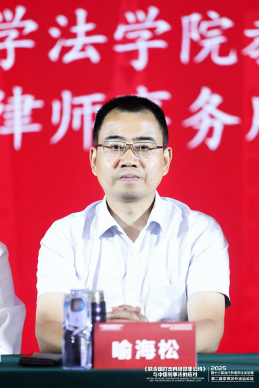
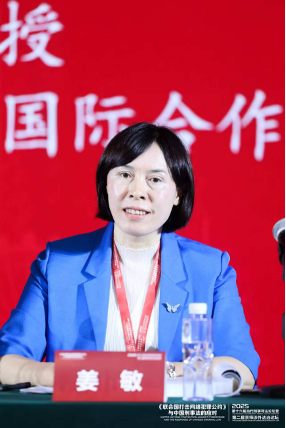
Unit One is hosted by Yu Haisong, Deputy Director of the Research Office of the Supreme People's Court, and Wang Xiumei, Professor at the Law School of Beijing Normal University and Director of the Research Center on Internation Cooperation Regarding Persons Sought for Corruption and Asset Recovery in G20 Member States.

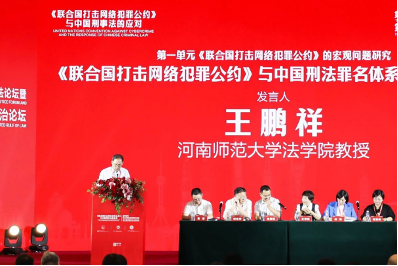
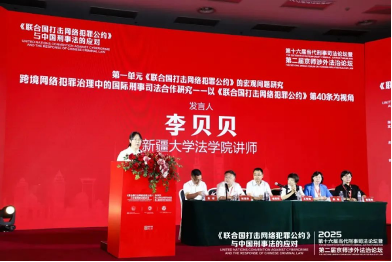
In this unit's speaking session, six guests, including Zhao Yongchen, former ambassador of China to Grenada and part-time professor at the Law School of Hainan University, Wu Shenkuo, associate professor at the Law School of Beijing Normal University, Wang Pengxiang, professor at the Law School of Henan Normal University, Zhang Xinwen, lecturer at the School of Humanities and Law of the Emergency Management University (under preparation), Sun Wei, prosecutor from the Third Procuratorial Department of the People's Procuratorate of Xuhui District, Shanghai, and Li Beibei, lecturer at the Law School of Xinjiang University, reported on the formulation process, main content of the "United Nations Convention against Cybercrime," and how China's criminal law and criminal procedure law can effectively connect with the Convention.




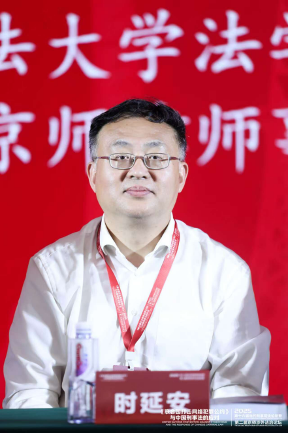
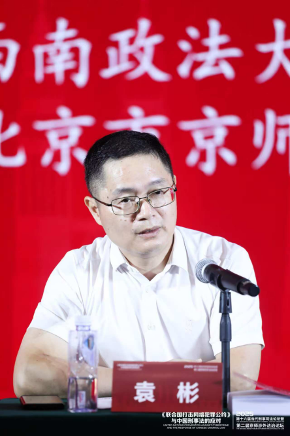
In the discussion session of this unit, Professor Shi Yanan, Director of the Criminal Law Science Research Center at Renmin University of China, emphasized the need to integrate research on the Convention with international multi-field laws, while deepening international cooperation. He called for strengthening multidisciplinary research on the coordination of criminal law, administrative law, and domestic law, actively responding to the competitive situation of cybersecurity, and ensuring that governance work is reasonable, legal, and compliant, serving the overall national development and risk prevention. Professor Yuan Bin from the Law School of Beijing Normal University affirmed the discussion value of this unit and added that attention should be paid to the "symbiotic" characteristics of cybercrime targets, behaviors, legal interests, and controversies. Professor Jiang Min from the Law School of Southwest University of Political Science and Law pointed out that the Convention has sparked heated discussions in China's theoretical and practical circles, but improvements are still needed in areas such as jurisdictional rule design and conflicts in legal practice. The academic community is expected to promote its development. Huang Lujuan, Director of the International Cooperation Committee of Beijing Jingshi Law Firm, stated that the Convention marks a significant breakthrough for the international community in combating cybercrime, but it also faces challenges such as sovereignty definition, corporate collaboration difficulties, balancing technology application with human rights protection, and refining cross-border data retrieval rules.

Unit Two: Research on the Regulation of Specific Crimes in the United Nations Convention on Cybercrime
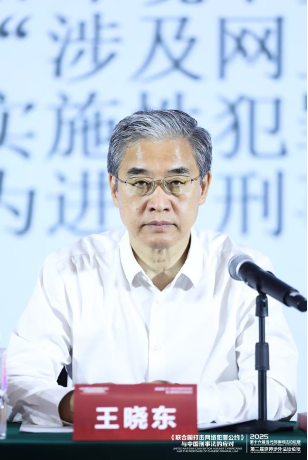
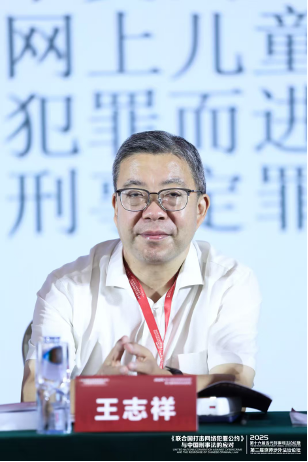
Unit Two is hosted by Wang Xiaodong, former Chief Judge of the Second Criminal Division of the Supreme People's Court and Vice President of the Chinese Criminal Procedure Law Research Association, and Wang Zhixiang, Professor at the Law School and Director of the Institute of Foreign Criminal Law and Comparative Criminal Law of Beijing Normal University.
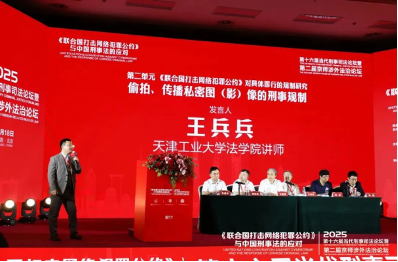
During the speech session of this unit, seven guests, including Jiao Yang, Associate Professor of International Law at the Diplomatic Academy, Zhao Anxiaoyu, Lecturer at the Law School of Inner Mongolia University, Zhang Minxing, PhD student at the Law School of Shandong University, Zhu He, Associate Professor at the School of Criminal Justice of Henan University of Economics and Law, He Qun, Associate Professor at the Law School of Fuzhou University, Liu Minxian, Lecturer at the School of Humanities of Anhui University of Technology, and Wang Bingbing, Lecturer at the Law School of Tianjin University of Technology, focused on how to connect the Convention with China's criminal law to protect minors from sexual abuse, as well as core issues such as data security and privacy breaches.
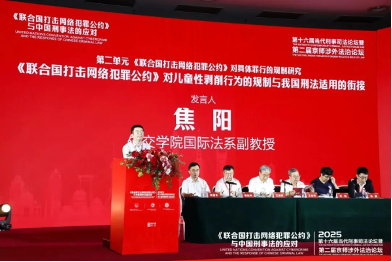
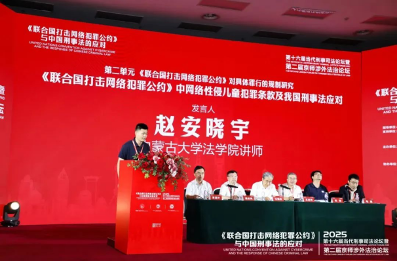
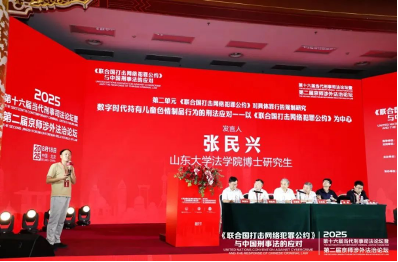
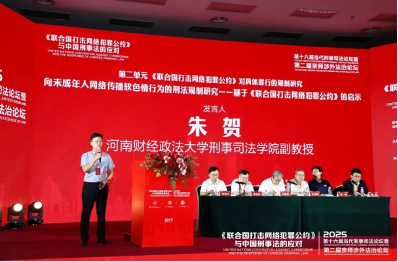
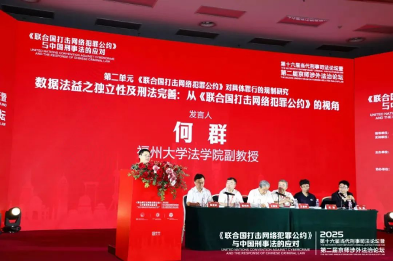
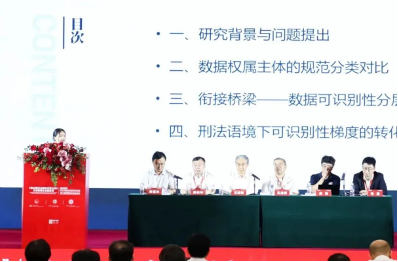
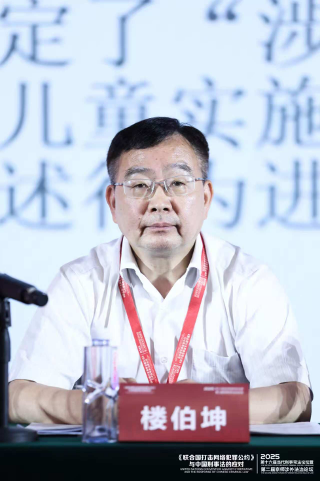
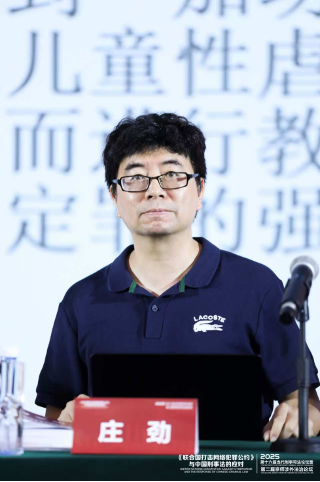
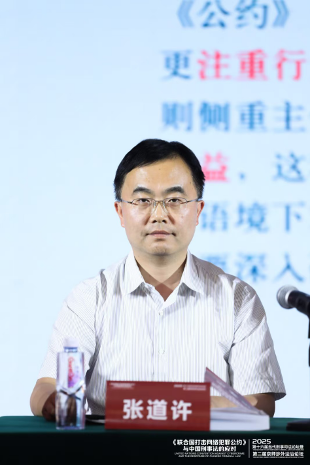
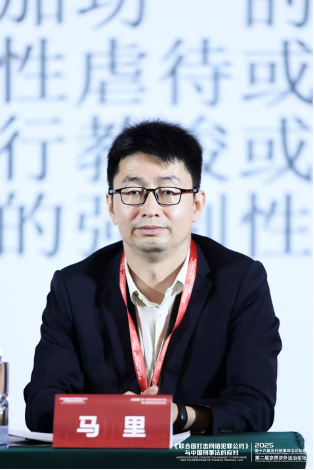
In the discussion session of this unit, Professor Lou Bokun from the Law School of Zhejiang Gongshang University emphasized the need to actively respond to international conventions, stating that the regulation of crimes related to cybercrime must be based on China's realities, seeking a balance between protecting children's rights and effective enforcement. Professor Zhuang Jin from the Law School of Sun Yat-sen University shared professional insights focusing on the legislative definition in the field of data crimes. Professor Zhang Daoxu, Dean of the Law School of Henan University of Technology, focused on the modification and improvement of domestic law, particularly using crimes such as child pornography that severely infringe on minors' rights as examples to elaborate on the direction of legal improvement. Mari, a partner at Beijing Jingshi Law Firm and Executive Director of the National Criminal Committee of Jingshi Law Firm, conducted an in-depth analysis from a practical perspective on the cross-border evidence collection application process and diplomatic procedures for electronic evidence and confessions, emphasizing the need to pay close attention to the connection and improvement of procedural rules in the process of linking cybercrime with criminal law.
Unit Three: Research on Procedural Measures and Cross-Border Electronic Evidence Issues in the United Nations Convention on Cybercrime
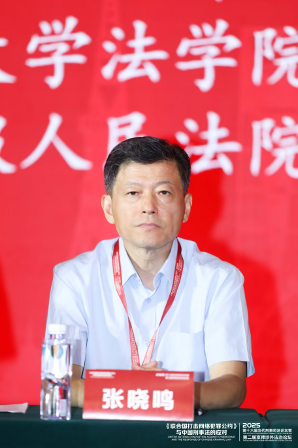
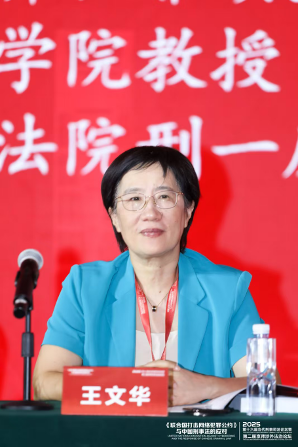
The third unit was hosted by Zhang Xiaoming, former deputy director of the International Cooperation Bureau of the Ministry of Justice, and Wang Wenhua, director of the Academic Committee and professor at the School of Law, Beijing Foreign Studies University.
During the speaking session of this unit, seven guests, including Professor Peng Haiqing from the School of Law, Beijing Institute of Technology, Associate Professor Chen Suhao, deputy director of the Department of Law, Nanjing University of Aeronautics and Astronautics, PhD student Gao Bangxun from the School of Law, Liaoning University, Liu Zhimin, equity partner at Beijing Jing Shi Law Firm and honorary director of the National Criminal Committee of Jing Shi Law Firm, Assistant Professor Guo Zhenyuan from the School of International Law, China University of Political Science and Law, Zhou Shuming, deputy secretary of the Party Leadership Group and executive deputy chief prosecutor of the People's Procuratorate of Fuyang District, Hangzhou, and Associate Professor Song Dawei from the School of Humanities and Law, Northeast Forestry University, respectively reported on procedural issues such as cross-border evidence collection and extraterritorial jurisdiction in the process of aligning the "United Nations Convention on Cybercrime" with Chinese law.
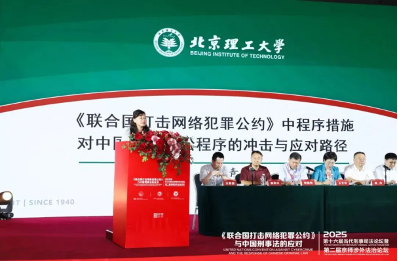

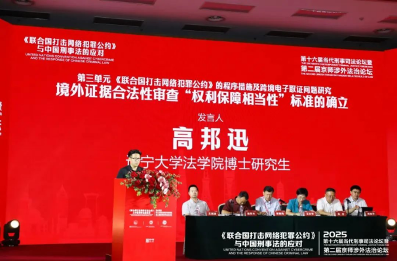
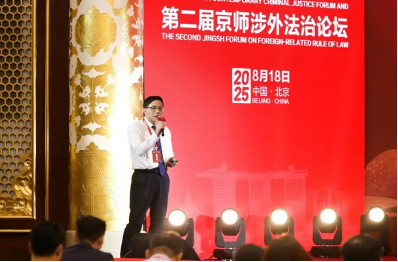
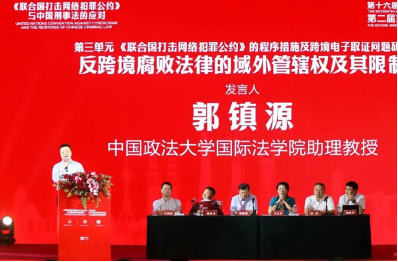
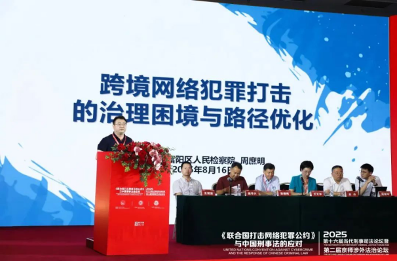

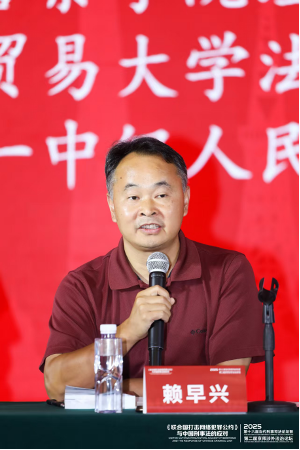
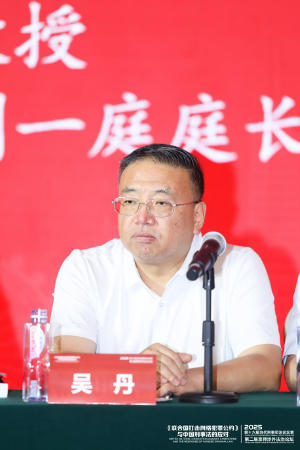
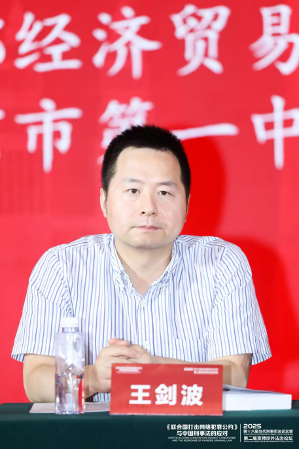
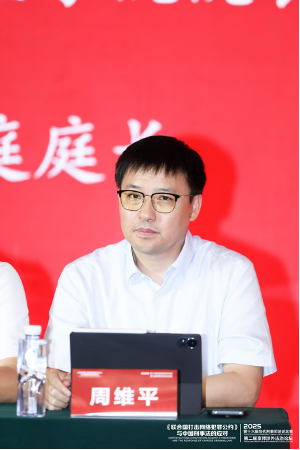
In the discussion session of this unit, Professor Lai Zaoxing from the School of Law, Xiangtan University, emphasized the need to actively address the cybercrime issues involved in the Convention, uphold national sovereignty and maintain national security, and actively engage in international exchanges and cooperation to achieve both crackdown and prevention. Professor Wu Dan, Dean of the School of Economic Crime Investigation at the Chinese Criminal Police University, shared advanced experiences in cross-border electronic evidence collection, such as using algorithmic technology for penetrating tracking of involved funds, from the perspective of economic crime investigation, and introduced the foreign-related talent training system established by the Criminal Police Academy in the fields of cybercrime and cybersecurity. Professor Wang Jianbo from the School of Law, Capital University of Economics and Business, provided comments on each speaker, emphasizing that when fulfilling international obligations for cross-border evidence collection, it is essential to properly handle disputes and balance the needs for cooperation with the maintenance of national sovereignty. Zhou Weiping, head of the First Criminal Division of the Beijing First Intermediate People's Court, emphasized from the perspective of judicial practice that cross-border evidence is a key link in combating cybercrime, requiring careful examination of its legality, reliability, and authenticity, and expressed hope for the improvement of cross-border electronic evidence rules to provide strong support for international cooperation among law enforcement agencies.
Research on the criminal regulation of new technology crimes and other frontier issues in the fourth unit.
The fourth unit was hosted by Professor Zhao Jun from the School of Law, Beijing Normal University, and Professor Zhao We from the School of Law, Ningbo University.
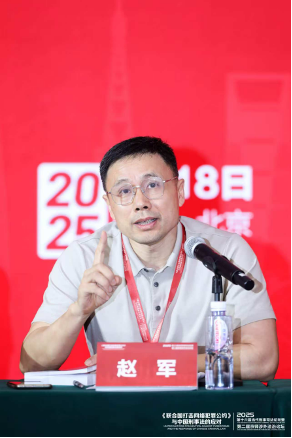
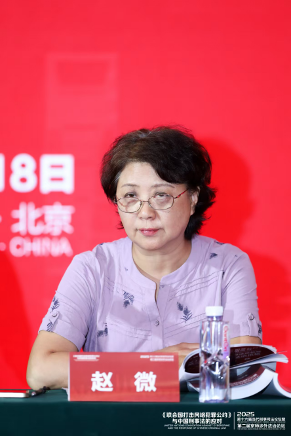
During the speaking session of this unit, seven guests, including Liao Tianhu from the School of Law, Southwest University of Science and Technology, Associate Professor Zheng Xujian, deputy director of the Data Law Research Institute, Zhejiang University of Science and Technology, Yan Yu from the School of Law, Guangdong University of Technology, Tao Kuan, equity partner at Beijing Jing Shi Law Firm and deputy director and secretary-general of the National Criminal Committee of Jing Shi Law Firm, Liang Wei, director of the Foreign-related Criminal Law Research Center and a member of the National Criminal Committee of Jing Shi Law Firm, Associate Professor Liu Chunhua from the School of Law, Jiangsu University, and Lecturer Rong Hao from the School of Humanities and Law, University of Science and Technology Beijing, respectively elaborated on various criminal regulation issues related to new technology crimes, including deepfake behavior, copyright infringement crimes involving generative artificial intelligence works, virtual currency-based online pyramid schemes, online gambling crimes, and the lifting of restrictions on drone altitude and no-fly zones.

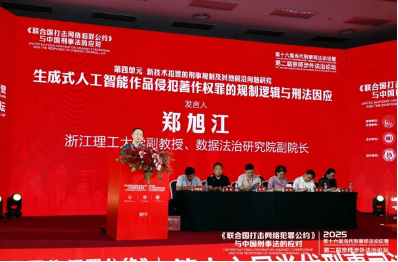
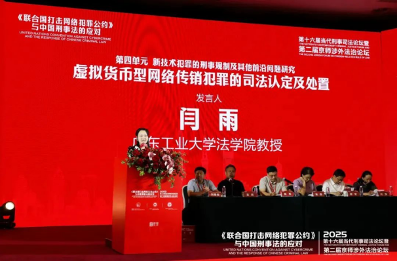
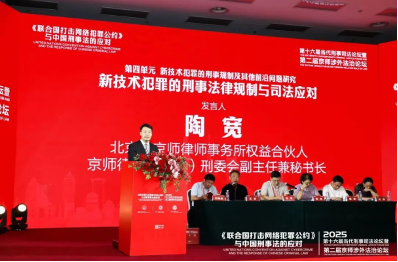


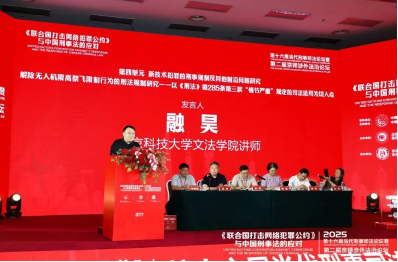
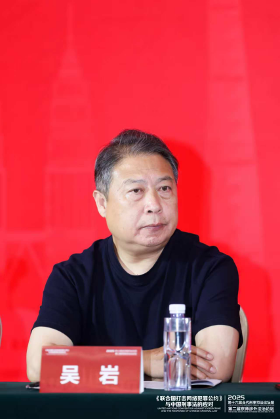
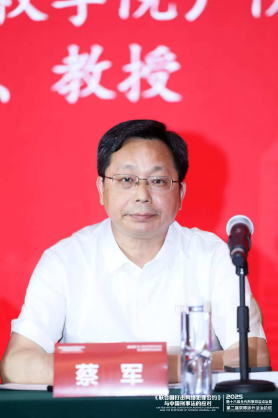
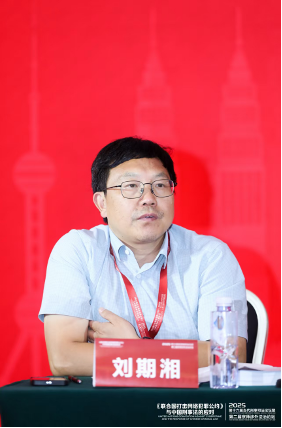
In the discussion session of this unit, former editor-in-chief of "Legal Forum" Wu Yan focused on analyzing the new legal challenges posed by deepfake technology, generative artificial intelligence, and virtual currency-based online pyramid schemes, agreeing that the criminal classification system for deepfake behavior should be clarified and that the authenticity of electronic evidence related to deepfake behavior should be strengthened. Professor Cai Jun, Dean of the Law School (School of Intellectual Property) at Henan University, discussed the uniqueness of the viewpoints of the speakers, pointing out that factors such as the internet, pyramid schemes, and virtual currencies are driving the continuous evolution and distortion of cybercrime. Professor Liu Qixiang, Dean of the Law School at Hunan University of Commerce, noted that this session focuses on the characteristics of criminal regulation in the digital age, closely addressing the forefront of technology and the dynamics of regulation, exploring key issues such as technological neutrality and the boundaries of crime, the protection of legal interests in new technologies, strengthening cross-border judicial cooperation, and the legitimate norms of technological applications in emerging fields, as well as judicial reform. Ye Ping, Deputy Editor of "Jiangxi Social Sciences," suggested that researchers pay attention to the precision of keywords and the conciseness of titles in academic papers, striving to produce original theoretical results to promote the development of an independent disciplinary system.

Closing Ceremony
The closing ceremony was hosted by He Ting, Vice Dean and Professor of the Law School at Beijing Normal University.

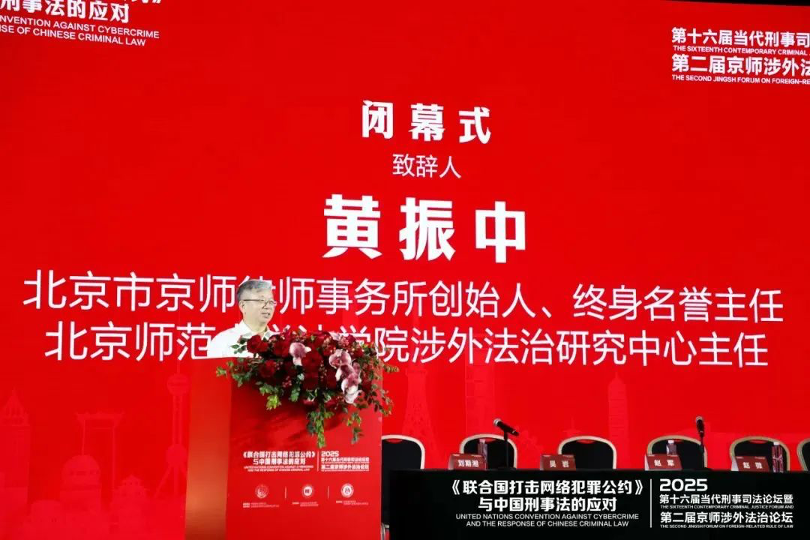
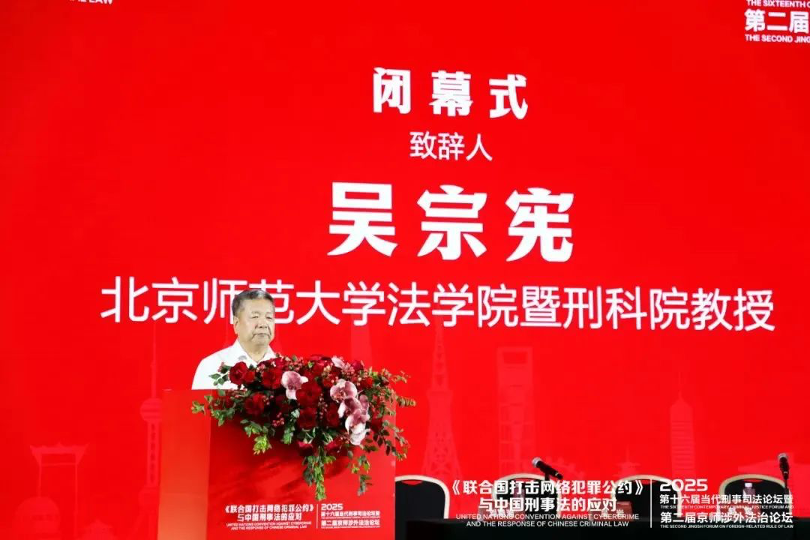
Huang Zhenzhong, founder and lifelong honorary director of Beijing Jingshi Law Firm, director of the Center for Foreign-related Legal Research at Beijing Normal University Law School, Professor Wu Zongxian from the Law School and the College for Criminal Law Science at Beijing Normal University, and Dean and Professor Liang Yingxiu from the Law School at Beijing Normal University delivered closing remarks.
In his speech, Director Huang Zhenzhong fondly recalled the long-standing and fruitful collaboration between Jingshi Law Firm and the Law School and the College for Criminal Law Science at Beijing Normal University. He pointed out that the successful hosting of two consecutive Jingshi Foreign-related Legal Forums is a vivid reflection of the close cooperative relationship, demonstrating both parties' shared beliefs and common pursuits in serving the overall national legal construction. This strong alliance based on a common mission not only promotes the steady and far-reaching development of cooperative endeavors but also ensures the continuous transmission of valuable experiences and the spirit of the rule of law, injecting new wisdom and momentum into the construction of a rule-of-law China. With the joint efforts of Beijing Normal University and various sectors of society, Jingshi Law Firm will surely continue to thrive and write a new chapter in serving the strategic needs of the country.
Professor Wu Zongxian reviewed the outstanding achievements of the College for Criminal Law Science of Beijing Normal University over the past 20 years, pointing out that it has become a core force in the construction and research of criminal legal systems in China and an internationally renowned academic platform. The College for Criminal Law Science's deep involvement in criminal justice affairs under the United Nations framework highlights the country's academic influence. The institute has established a teaching and research team that combines senior, middle-aged, and young scholars across multiple disciplines, creating a united, harmonious, and efficient academic environment that strongly supports the academic productivity of faculty and students. In terms of talent cultivation, the College for Criminal Law Science has provided a large number of key personnel active in central and local governments, as well as in judicial practice and academia, with particularly notable academic contributions. Teachers, based on national needs, have deeply engaged in legislative and judicial practices, authored books and textbooks with far-reaching impacts, and provided important intellectual support in key areas such as counter-terrorism, anti-corruption, death penalty reform, and protection of minors, serving the country's foreign-related legal needs. Looking to the future, it is hoped that all faculty and students will cherish and deepen the professional development of the College for Criminal Law Science, stand at the forefront, continue to strive, achieve solid academic results to earn the academic status they deserve, create a far-reaching academic brand, and become leaders in their respective fields.
Dean Liang Yingxiu stated that this forum, serving as a significant tribute to the 20th anniversary of the College for Criminal Law Science, successfully realized the collaboration of two major academic brands: the "Contemporary Criminal Justice Forum" and the "BNU Foreign-related Legal Forum." He noted that the event gathered the collective wisdom of academia and practice, fully demonstrating the development and accumulation of the law discipline at Beijing Normal University over the past 30 years. Furthermore, Liang highlighted that the deep strategic cooperation between Beijing Normal University and Jingshi Law Firm fully reflects the advantages of their collaborative innovation mechanism. He described the relationship between the two parties as being "like one family," providing comprehensive support for the forum. Looking ahead, he expressed a commitment to deepening this collaboration, focusing on the cultivation of foreign-related legal talents, research on cutting-edge topics, and the transformation of academic achievements to jointly build an integrated ecosystem of "industry, academia, research, and application."

The forum, centered on the theme of "The United Nations Convention on Cybercrime and Its Response in Chinese Criminal Law," garnered significant attention and robust support from all sectors of society. The event was covered by prominent central media outlets, including the People's Court Daily and the Procuratorial Daily. Participants also lauded the forum, unanimously agreeing that it will serve as a powerful catalyst for the development of China's foreign-related criminal legal system and advance the coordinated progress of domestic and foreign-related law.
Typesetting: Xu Yiyang
Editor: Shi Tianyu