

On November 8, 2025, the Third Greater Bay Area General Law Forum was successfully convened at the Zhuhai campus of Beijing Normal University. Centered on the theme "Integration and Development of the Greater Bay Area and the Protection of the Basic Law," the forum was co-hosted by the Law School of Beijing Normal University and the Macao Legal Research Association.
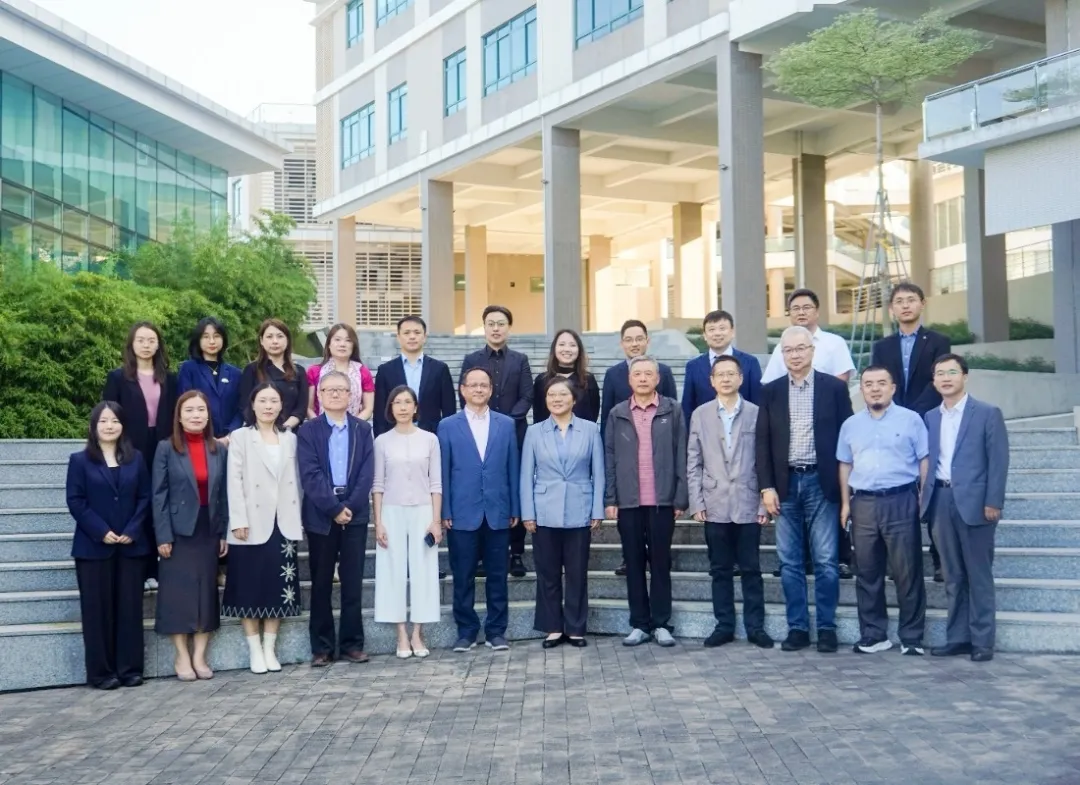
The conference featured Ms. Wang Heng, Director of the Legal Department of the Liaison Office of the Central People's Government in Macao, Mr. Yin Honghao, former Director of the Legal Department of the Liaison Office, Mr. Liu Shuqiang, Vice President of the Hong Kong and Macao Basic Law Research Association of the China Law Society, Mr. Pan Xiaoda, former Level 1 Inspector of the Research Office of the Hong Kong and Macao Basic Law Committee of the Standing Committee of the National People's Congress, Ms. Zhong Yingyi, Director of the Hengqin Legal Affairs Bureau, Mr. Wang Yu, Professor at the Faculty of Law of the University of Macao, Ms. Ding Xiangna, Director of the Trial Management Office (Research Office) of the First People's Court of Zhongshan City, Mr. Lu Zhaosheng, President of the Tanzhou People's Court of the First People's Court of Zhongshan City, Ms. Huang Jiao Zhen, Director of the International and Inter-regional Legal Affairs Department of the Macao Legal Affairs Bureau, Mr. Han Guangming, Associate Professor at the Faculty of Law of Sun Yat-sen University, Ms. Pan Aiyi, Secretary-General of the Macao Lawyers Association, Ms. Li Ke, Researcher at the Faculty of Law of the University of Macao, and Mr. Chen Zhijie, Associate Professor at the School of Humanities of Jinan University.
Opening Speech
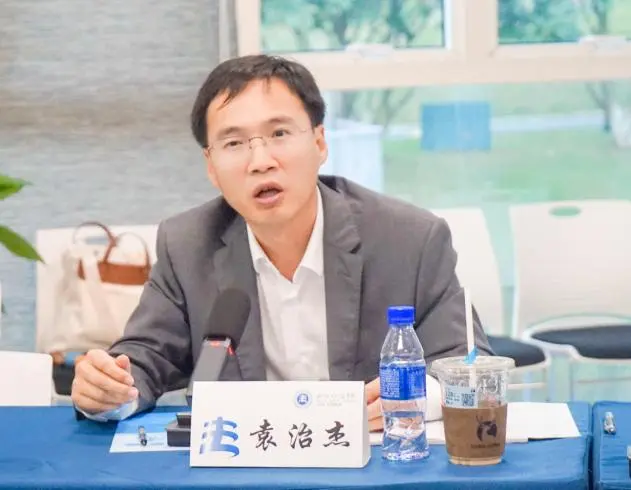
The opening ceremony was presided over by Professor Yuan Zhijie, Vice Dean of the Law School and Director of the Center for the Rule of Law and Development at the Zhuhai campus. To commence the seminar, Professor Yuan extended a warm welcome to all distinguished guests, providing a comprehensive overview of the Law School’s history, educational framework, talent cultivation strategies, and disciplinary development.
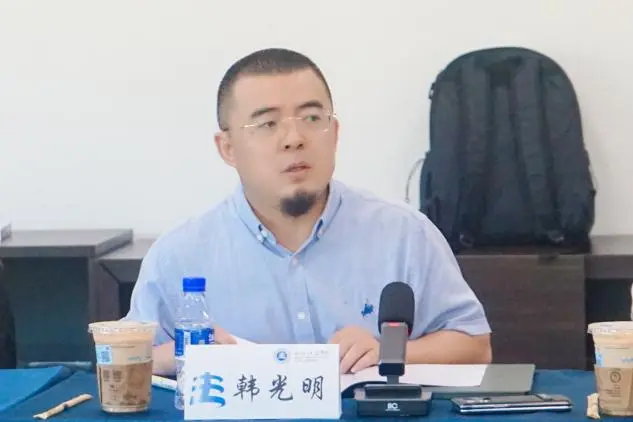
As the discussion moderator, Associate Professor Han Guangming elaborated on the conference theme, interpreting the significance of a "General Law" within the Guangdong-Hong Kong-Macao Greater Bay Area. He highlighted that the region's unique "two legal systems, three jurisdictions" framework provides rich material for legal scholarship. While acknowledging the progress in rule alignment and mechanism connectivity, Professor Han observed that the region currently faces a situation where "collaboration is abundant, but integration is insufficient." He posited that the "General Law" of the Greater Bay Area should not be viewed merely as comparative or common law, but rather as applicable positive law grounded in legal practice, thereby providing essential theoretical support for the region's integrated development.
Theme Speech of Unit One
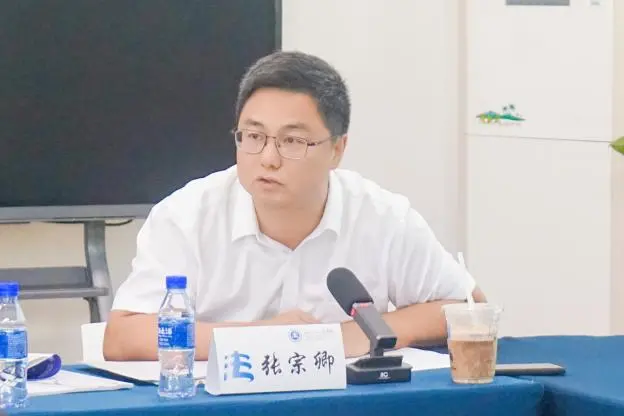
The theme speech of Unit One was hosted by Associate Professor and Deputy Director Zhang Zongqing from the Law and Development Research Center of Beijing Normal University, Zhuhai Campus. Professor Wang Yu from the Faculty of Law at the University of Macau, Secretary General Pan Aiyi of the Macau Lawyers Association, Associate Professor Chen Zhijie from the School of Humanities at Jinan University, and Researcher Li Ke from the Faculty of Law at the University of Macau each delivered a theme speech.
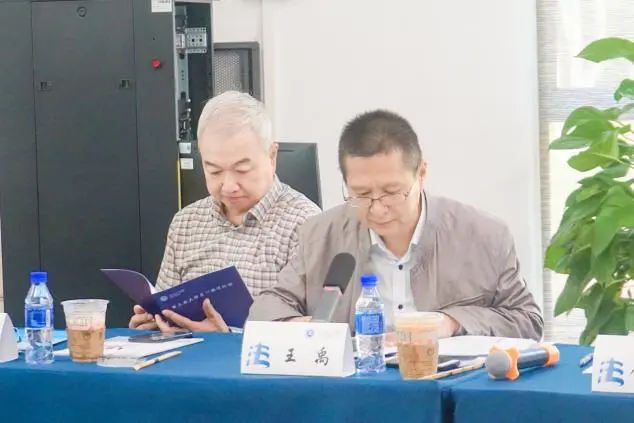
Professor Wang Yu's speech theme was “The Legal Theoretical Approach and Rule of Law Path for the Construction of the Guangdong-Hong Kong-Macao Greater Bay Area.” He pointed out that the essence of the Greater Bay Area's construction is regional cooperation and integration rather than forced integration. Currently, there is a lack of clear definitions and top-level design regarding “rule connection” and “mechanism docking.” He suggested establishing specific laws for the Greater Bay Area to provide a legal basis for deep collaborative development.

Secretary General Pan Aiyi's speech theme was “Comparative Analysis and Practical Sharing of Notarization Systems between the Mainland and Macau.” She conducted a comparative analysis of the notarization systems in Guangdong and Macau based on her work experience. She pointed out that there are significant differences in the scope of notarization services, the hierarchy of document effectiveness, and legal responsibilities between Macau and the Mainland. As the integrated development of the Greater Bay Area deepens, the demand for cross-border notarization by Macau residents is increasing. However, the current system has many inconveniences in cross-border processing and electronic applications. To address this, she suggested exploring the establishment of a cross-border notarization service mechanism to promote the docking of systems and electronic collaboration between the two regions, and called for the establishment of a special working group to systematically advance the connection of notarization rules and mechanism docking in the Greater Bay Area.
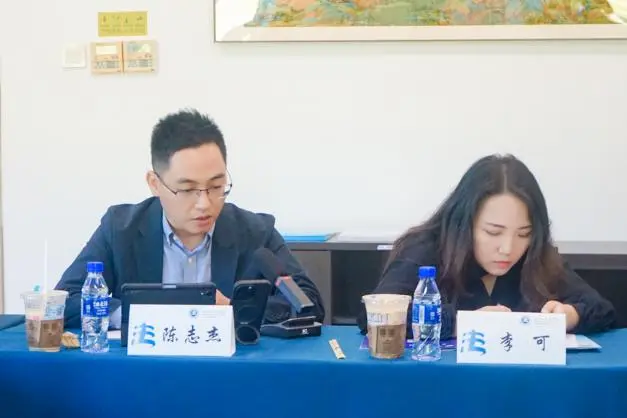
Associate Professor Chen Zhijie’s speech theme was “Coordinated Protection of Intellectual Property Rights and Multi-Dispute Resolution Mechanisms in the Guangdong-Hong Kong-Macao Greater Bay Area.” He outlined the latest progress and challenges in the coordinated protection of intellectual property rights among Guangdong, Hong Kong, and Macau. He proposed that the roles of multi-dispute resolution mechanisms such as arbitration and mediation should be fully utilized to build a more efficient intellectual property protection system in the Greater Bay Area.
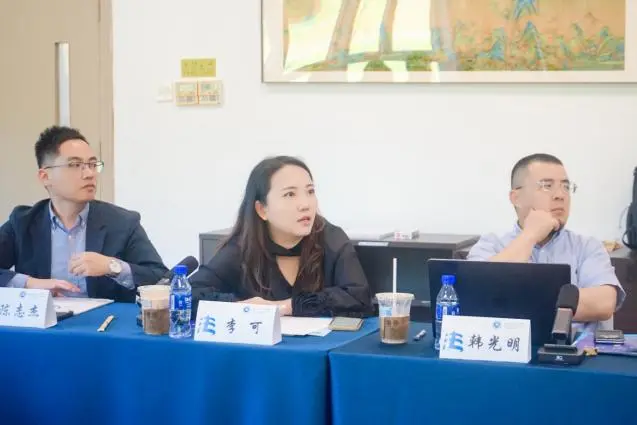
Researcher Li Ke focused on the theme "Article 136 of the Macao Basic Law and the Future of the Greater Bay Area: Building a Common Development Space with Flexible Contracting Rights," analyzing the connotation of Article 136 of the Macao Special Administrative Region Basic Law. She pointed out that this provision allows Macao to sign agreements in various fields such as economy, trade, technology, and culture under the name of "China Macao," providing a unique legal tool for the alignment of rules and mechanisms in the Guangdong-Hong Kong-Macao Greater Bay Area.
Theme Speech of Unit 2
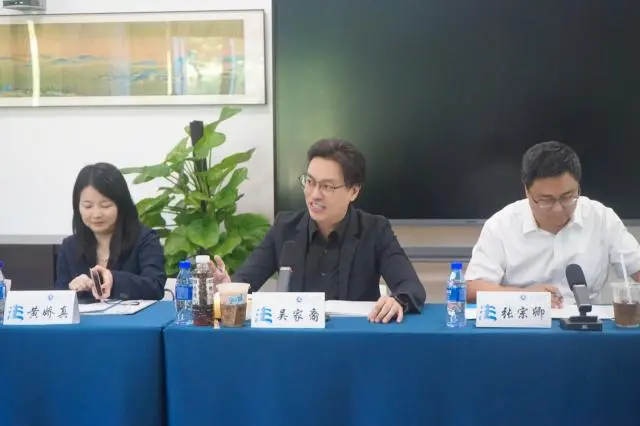
The theme speech of the second unit was hosted by Wu Jiayi, Chairman of the Supervisory Board of the Macao Legal Research Association. Chen Huaqing, a member of the 14th National Committee of the Chinese People's Political Consultative Conference and President of the Macao Legal Research Association; Yin Shuyu, Executive Editor of the "Bay Area Communication" at the Law Development Research Center of Beijing Normal University Zhuhai Campus; Tan Zhiwei, a doctoral student at the Faculty of Law of the University of Macao; and Qu Zheng, a doctoral student at the Faculty of Law of Beijing Normal University, each delivered theme speeches.
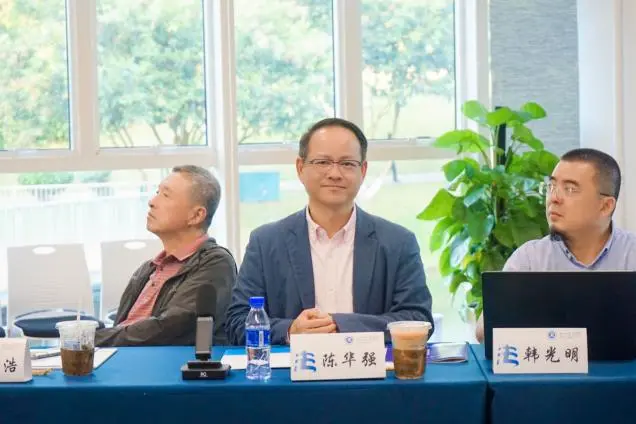
President Chen Huaqing explored the current situation and challenges of evidence investigation connectivity between Guangdong and Macao under the theme "Preliminary Exploration of the Evidence Investigation Connectivity Mechanism between Guangdong and Macao." He pointed out that due to institutional differences between Guangdong and Macao, the lawyer investigation order system faces practical obstacles such as qualification recognition and cross-border data in cross-regional mutual recognition, and proposed innovative suggestions such as mutual recognition of investigation orders within the existing framework and establishing a standardized verification platform.
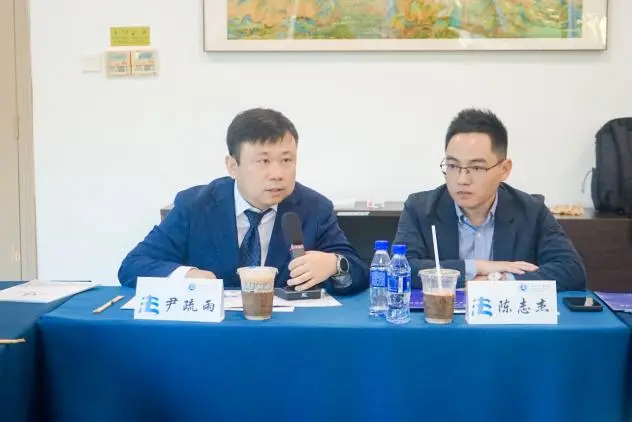
Executive Editor Yin Shuyu macro-analyzed the overall situation of integrated development in the Guangdong-Hong Kong-Macao Greater Bay Area from 2022 to 2025 under the theme "Key Points, Difficulties, and Solutions for the Integrated Development of the Guangdong-Hong Kong-Macao Greater Bay Area from 2022 to 2025—Using 'Bay Area Communication' as Analytical Material." He summarized the key points and achievements of the Bay Area in various aspects such as institutional construction, rule alignment, infrastructure, and economic development, as well as the deep-seated challenges currently faced, and provided solutions from multiple perspectives.
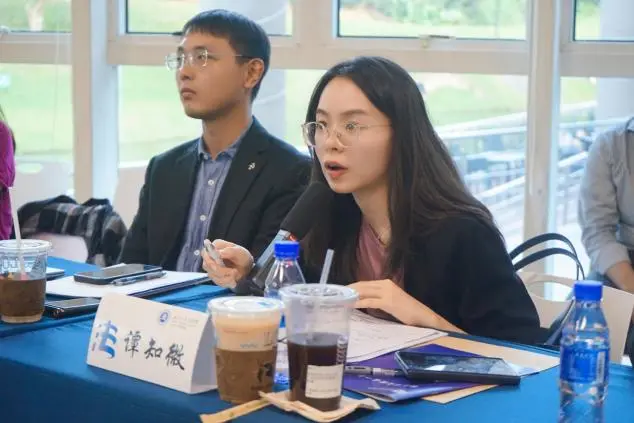
Tan Zhiwei discussed the relationship between the integrated development of the Greater Bay Area and the guarantees of the Basic Law under the theme "Integrated Development of the Greater Bay Area and the Guarantees of the Basic Law: A Constitutional Analysis from the Perspective of the Macao Special Administrative Region." She constructed an analytical framework from a macro perspective, pointing out that the Basic Law plays four key roles in the integration process: laying the foundation for the rule of law, providing institutional expectations, guiding the practice of 'One Country, Two Systems', and optimizing power coordination.
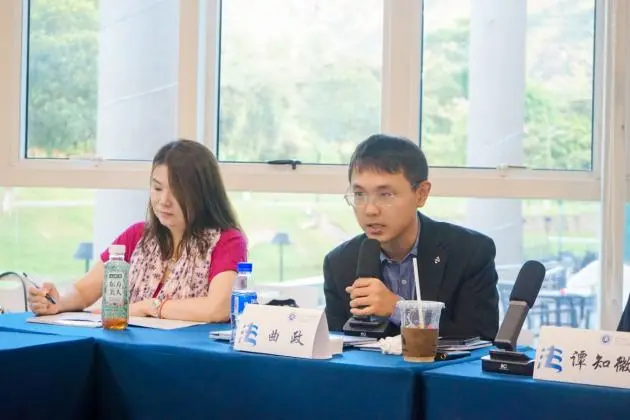
Qu Zheng focused on the theme of 'The Current Situation, Institutional Conditions, and Integrated Development of Vocational Education in the Guangdong-Hong Kong-Macao Greater Bay Area', systematically outlining the legal policy background and development status of vocational education cooperation in the Greater Bay Area from a macro perspective. He compared the differences in vocational education models and academic levels among the mainland, Hong Kong, and Macao, analyzed the current barriers to the integration of vocational education across the three regions, and proposed suggestions for strengthening cross-border qualification recognition, credit mutual recognition, and course alignment.
Discussion
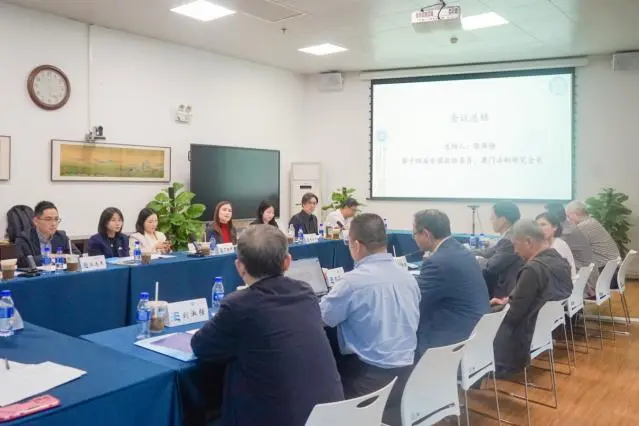
During the discussion session, participants engaged in a lively and in-depth discussion on the theme of 'Integration Development of the Greater Bay Area and the Safeguard of the Basic Law', focusing on the alignment of rules and institutional connections between Macao and the mainland, as well as opportunities for development in the Greater Bay Area. Drawing from their professional backgrounds and work experiences, they expressed their views and offered a series of constructive opinions and suggestions.
Meeting Summary
President Chen Huaqing pointed out in his concluding remarks that this seminar invited several guests from government departments, research institutions, and the legal community in Guangdong and Macao, who, based on their work experiences, engaged in a multi-layered and multi-perspective in-depth discussion on the rule of law construction in the Guangdong-Hong Kong-Macao Greater Bay Area. Experts at the meeting systematically analyzed the theoretical challenges and practical paths of promoting rule alignment and mechanism connection in the Greater Bay Area under the background of 'One Country, Two Systems and Three Legal Domains', covering aspects from legal theory foundations and institutional innovation to specific practices. The meeting not only focused on the reflection and reconstruction of general legal theoretical paradigms but also addressed the cross-border cooperation challenges in specific fields such as notarization, intellectual property, evidence investigation, and vocational education. The construction of the Greater Bay Area has now entered a critical stage of deepening integration, urgently requiring systematic institutional innovation to break down barriers to the flow of factors and provide a solid legal guarantee for enriching the connotation of 'One Country, Two Systems' practice.
Finally, Professor Yuan Zhijie expressed heartfelt gratitude to all the guests present, and the third General Law Forum of the Greater Bay Area concluded successfully amidst warm applause.