

On November 9, 2025, the Law School of Beijing Normal University successfully convened the 7th BNU Law Doctoral Student Forum at the Beiyou Technology Building in Beijing. Centered on the theme “Chinese-style Modernization and Legal Innovation,” the forum featured four sub-forums: “Digital Rule of Law and Artificial Intelligence Governance,” “Digital Government and the Legalization of Digital Power,” “Optimization and Innovation of the Business Environment under the Rule of Law,” and “Environmental Rule of Law and the Future Development of Humanity.” Doctoral candidates, experts, and scholars from leading institutions, including Peking University, Tsinghua University, Renmin University of China, China University of Political Science and Law, Wuhan University, Shandong University, Central University of Finance and Economics, Southeast University, Xi’an Jiaotong University, Zhengzhou University, Shanxi University, Capital University of Economics and Business, Shandong University of Political Science and Law, and Beijing Wuzi University, gathered in Beijing for an academic event that combined profound theoretical insights with real-world relevance.
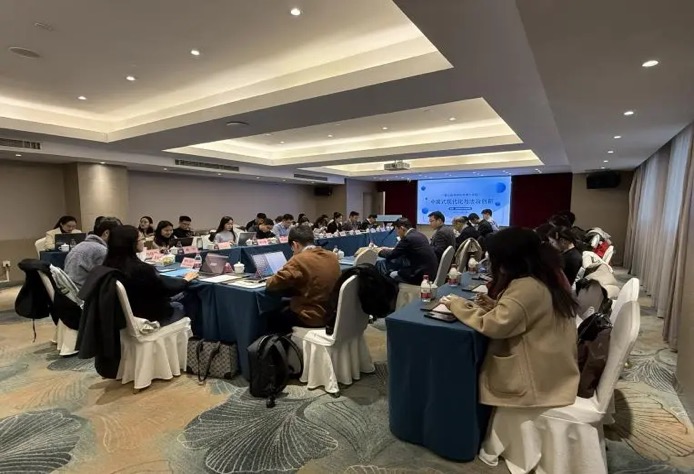
Opening ceremony
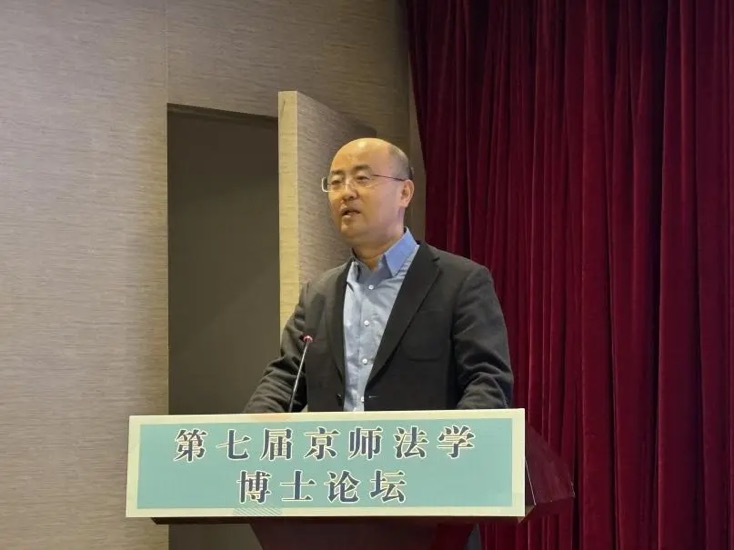
The opening ceremony was hosted by Yan Houfu, an associate professor at the Law School of Beijing Normal University and director of the Academic Graduate Student Work Office. Associate Professor Yan Houfu pointed out that China's hard power has achieved leapfrog improvements, with remarkable achievements in technology and the economy, and there are also many highlights in legal innovation. Through measures such as countering the U.S. long-arm jurisdiction rules on semiconductor exports with long-arm jurisdiction rules on rare earth exports, establishing international mediation institutions, and combating cross-border crime, China has demonstrated a proactive stance in participating in global governance. However, it is necessary to recognize that China's soft power in the field of rule of law does not match its hard power in industrial and technological fields, and there is still significant room for improvement in international discourse power. Therefore, how to enhance China's discourse power and build a new international legal order that is fairer and more conducive to safeguarding global and China's long-term interests is a question that legal professionals in China should seriously consider. In the face of new issues such as domestic artificial intelligence and green transformation, how to make appropriate responses and lead at the level of rule of law is also the mission of all legal professionals.
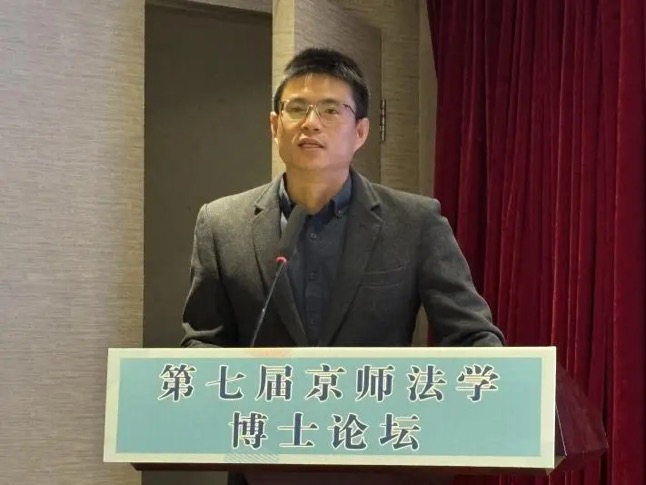
Liang Yingxiu, Dean, Professor, and Doctoral Supervisor of the Law School of Beijing Normal University, pointed out in his speech that the "BNU Law Doctoral Student Forum" has been held for six consecutive sessions, adhering to the purpose of "Doctoral students as the main focus, teachers leading, open communication, and problem-oriented". It has formed a distinct character of "focusing on Chinese issues, maintaining academic confidence, and supporting the growth of young scholars." The Law discipline at Beijing Normal University has undergone 30 years of leapfrog development and is now ranked in the A category of the Ministry of Education's fifth round of discipline evaluation. Next year, it will add a doctoral professional degree program in law, actively improving the talent training system. At the same time, Dean Liang Yingxiu raised three issues that doctoral students should pay attention to in academic research: First, they should adhere to a problem-oriented approach and a Chinese perspective, contributing the strength of young scholars to the construction of an independent knowledge system in Chinese law. Second, they should uphold academic norms and make reasonable use of AI tools. Rigorous research methods, solid data support, and honest academic expression are the essential paths to achieving academic excellence. Third, they should promote interdisciplinary integration and open cooperation, engaging in dialogue with disciplines such as economics, management, computer science, and environmental science. Finally, Dean Liang Yingxiu promised that next year the college will increase its support for the BNU Law Doctoral Student Forum, providing a broader academic exchange platform for young law scholars.
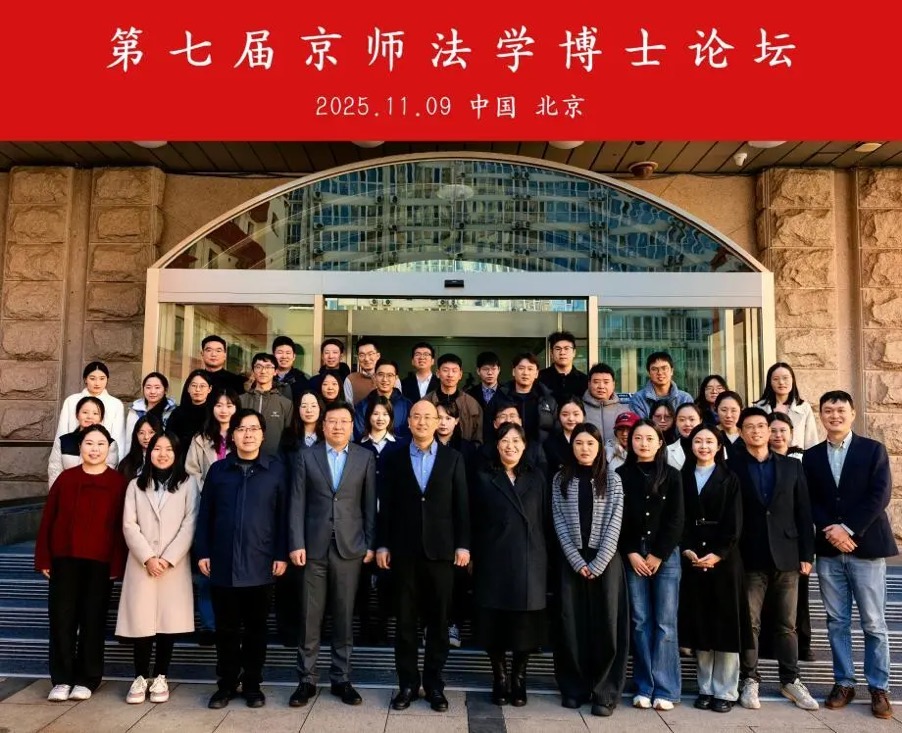
After the opening ceremony, attendees took a group photo together.
Unit 1: Digital Rule of Law and Artificial Intelligence Governance
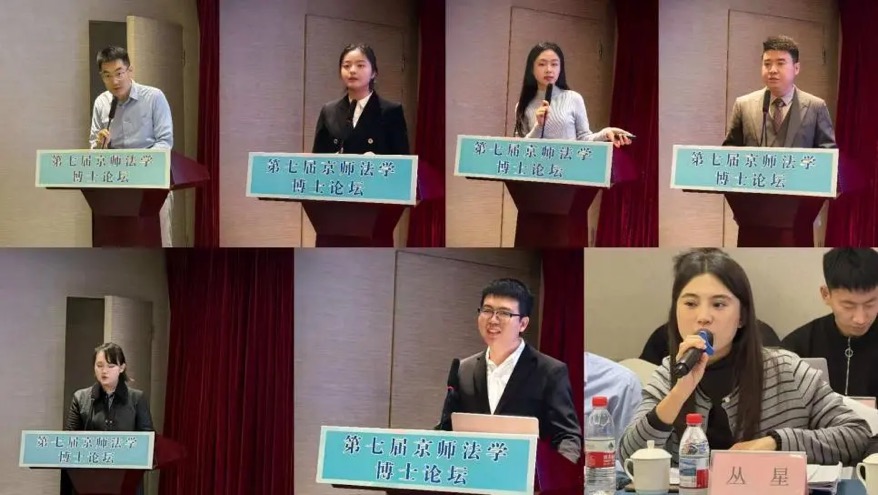
Unit 1 was moderated by Zhao Zhao, a doctoral student at the Law School of Beijing Normal University. The unit featured a series of presentations focusing on the intersection of criminal law and artificial intelligence. Li Jinke, a lecturer at Zhengzhou University Law School, presented a report titled "Research on Criminal Responsibility and Criminal Sanctions of Generative Artificial Intelligence such as ChatGPT." Zhou Shuxi, a PhD student from Renmin University of China, presented on "Assistance or Replacement: The Application of General Artificial Intelligence in Criminal Defense Scenarios." Han Zixuan, also a PhD student from Renmin University of China, presented "The Nature of Preparatory Offenses in Assisting Information Network Criminal Activities and Its Judicial Application." Finally, Wang Wenlong, a PhD student at Beijing Normal University Law School, presented "Establishing Artificial Intelligence as a Subject of Criminal Responsibility: A Perspective Based on Social Defense Theory." The presentations were followed by a discussion involving PhD student Sun Xiaotian from Beijing Normal University and Lecturer Cong Xing from Shandong University of Political Science and Law. Comments were provided by Professor Yin Jianfeng and Associate Professor Wu Shenkuo, both PhD supervisors at the Law School of Beijing Normal University.
During the presentation session, Li Jinke argued that generative artificial intelligence lacks the basis for subjective culpability, necessitating a reconstruction of the elements of crime, and proposed specific regulatory pathways and models for responsibility. Zhou Shuxi discussed the legitimacy of AI-assisted defense but highlighted challenges such as legal language barriers. He emphasized the need to adhere to human-centered principles, strengthen lawyer leadership, and ensure effective human-machine collaboration. Han Zixuan contended that the crime of assisting information network criminal activities should be defined as a preparatory offense. By interpreting "knowing" through the lens of "intended," he argued this crime can transcend the limitations of accomplice theory and provide solutions for the qualification of assisting behaviors in the preparatory stage. Wang Wenlong, drawing on social defense theory, explored how to determine artificial intelligence as a responsible entity when it autonomously engages in harmful behavior and proposed methods for realizing its responsibility.
During the discussion, Sun Xiaotian emphasized the need to clarify whether the issue of criminal responsibility for artificial intelligence is a genuine proposition. He pointed out that scholars should adhere to the principle of "technological humility" to achieve substantive equality between prosecution and defense. Cong Xing provided detailed optimization suggestions for all four speakers. Regarding Li Jinke's research, he suggested further clarifying the subject status of artificial intelligence and its modes of responsibility. For Zhou Shuxi's research, he recommended finding a balance between artificial intelligence and defense attorneys by clarifying the boundaries of artificial intelligence in criminal defense. For Han Zixuan's research, he suggested first clarifying the relationship between "intended" and "will" to avoid making the crime of assistance a catch-all offense; additionally, he noted that the boundary between the crime of assisting and upstream crimes needs clarification. Regarding Wang Wenlong's research, Cong suggested that further optimization and exploration should be conducted in the area of criminal liability for artificial intelligence.
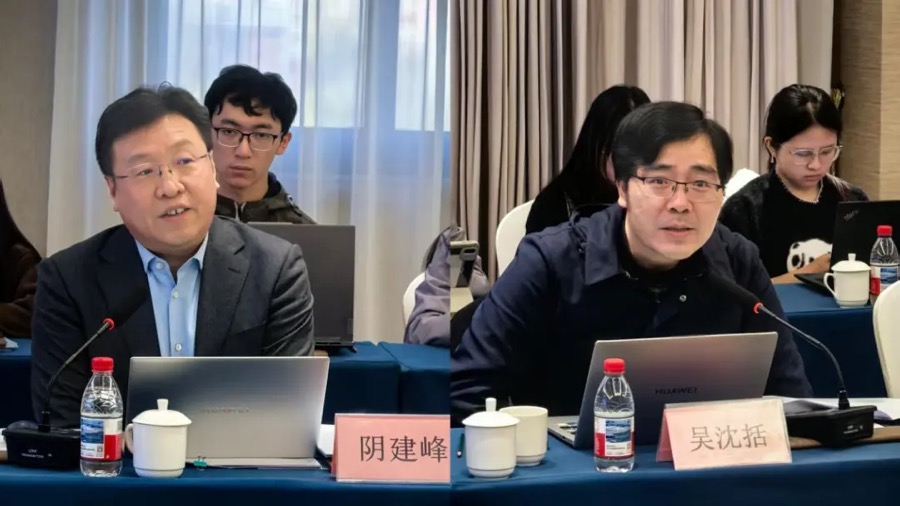
During the expert review session, Professor Yin Jianfeng remarked that Li Jinke's research would benefit from a stronger argument regarding AI's lack of subjective will, as well as a clarification of the logic of culpability in relation to the traditional crime composition system. Concerning Zhou Shuxi's research, Professor Yin suggested that future studies should precisely define the technical connotation of "Universal AI" and deepen the analysis of AI's limitations in dimensions such as emotion and ethics. Regarding Han Zixuan's work, Professor Yin noted that the argumentation could be improved by addressing academic semantic doubts concerning the term "to be" and by conducting a quantitative analysis of the urgency of legal interests harmed by assistive behaviors. As for Wang Wenlong's research, Professor Yin emphasized the need to solidify the theoretical basis for "de-voluntarization" and to refine the argumentation regarding the compatibility of social defense theory with AI subject qualifications. In response to the research presented by the four doctoral candidates, Professor Wu Shenkuo summarized four key insights. First, technological development must adhere to the bottom line of "people-centeredness," establishing a prohibition on the research and development of AI that might replace or even eliminate humanity. Second, the tool attribute of artificial intelligence must always be upheld to ensure it serves established goals, such as judicial fairness. Third, researchers must adhere to foundational principles. Fourth, the resolution of legal issues should be grounded in the existing institutional framework; future research should fully utilize and improve these regulations to ensure practical foundation and value.
Unit 2: The Rule of Law of Digital Government and Digital Power
The second unit was moderated by Feng Yuqing, a doctoral student at Beijing Normal University. The session featured presentations focusing on the intersection of digital governance, artificial intelligence, and legal frameworks.
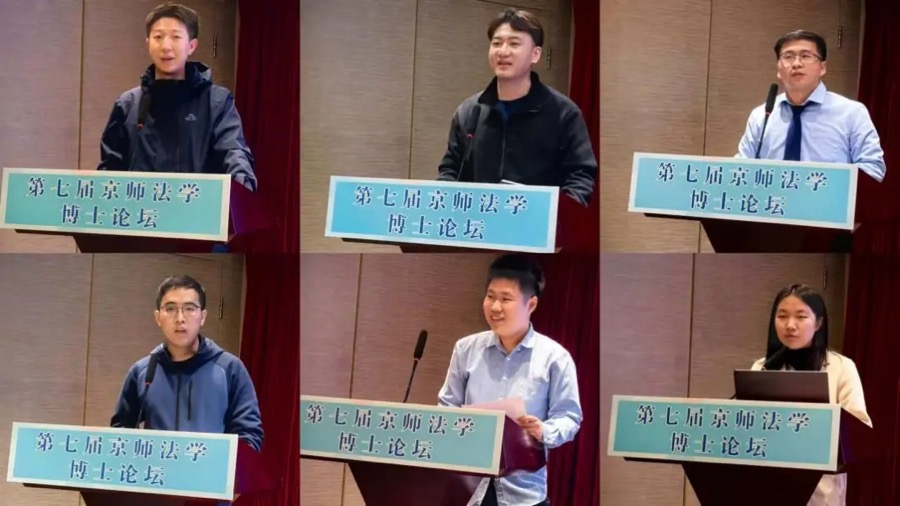
Lu Zhengyang, a PhD student from the Law School of China University of Political Science and Law, presented a report titled "The Applicability and Limitations of Informed Consent Rules in Handling Students' Personal Information in Universities." Liao Jialin, a PhD student from the Law School of Central University of Finance and Economics, presented "Generative Artificial Intelligence Embedded in Digital Government Construction: Mechanisms, Risks, and Regulations." Xiao Yuanhang, a PhD student from the Law School of Southeast University, presented "Beyond the Public-Private Dichotomy: The Normative Spectrum of Digital Power." Hong Yifan, a PhD student from the Law School of China University of Political Science and Law, presented "On the 'User Decision-Making Participation' in Platform Content Governance: Based on Cooperative Regulation Models."
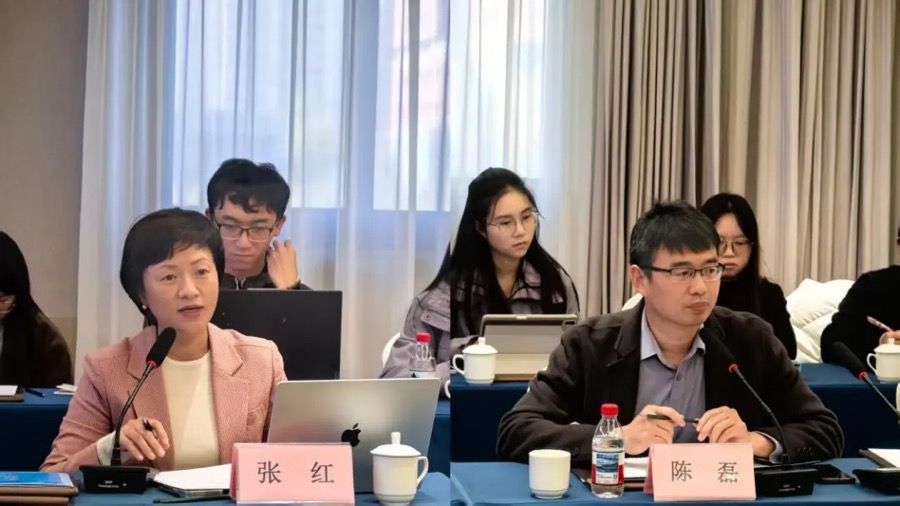
The presentations were followed by a discussion involving Chen Yanqing and Gong Yu, both PhD students from the Law School of China University of Political Science and Law and Beijing Normal University, respectively. Comments were provided by Professor Zhang Hong, a PhD supervisor at the Law School of Beijing Normal University, and Associate Professor Chen Lei from the Law School of Capital University of Economics and Business.
During the speaking session, Lu Zhengyang addressed the issue of excessive collection of student information by universities, exploring the legal positioning of public universities. Liao Jialin discussed the bidirectional relationship between generative artificial intelligence and digital government, while also presenting the risks and regulatory pathways faced by AI embedded in digital government. Xiao Yuanhang examined the traditional framework of the "public-private dichotomy" in digital power, pointed out its existing problems, and innovatively redefined it to construct a more suitable normative system. Hong Yifan focused on "user decision-making participation" in platform content governance, arguing for the value of user participation and highlighting potential risks and the necessity of institutional construction.
In the discussion session, Chen Yanqing affirmed the practical urgency and innovation of Lu Zhengyang's research, suggesting the addition of a literature review to enrich empirical materials and placing the research within the broader context of national personal information protection. Regarding Liao Jialin's research, Chen Yanqing suggested emphasizing the uniqueness of generative artificial intelligence and optimizing the argumentative logic. In response to Xiao Yuanhang's research, Gong Yu believed that his "normative" framework transcended the traditional public-private law framework, offering a very profound perspective. Regarding Hong Yifan's research, Gong Yu noted that it resonates with the concept of multi-governance and demonstrates a strong sense of practical concern.
During the expert review session, Ms. Zhang Hong affirmed the value of the research conducted by the four doctoral students, offering suggestions from both editorial and academic perspectives. Ms. Zhang suggested that Lu Zhengyang should strengthen the logical connection between the distinction of "academic/non-academic affairs" and personal information protection. She noted that Liao Jialin needs to address the issue of regional development imbalance caused by digital technology. Regarding Xiao Yuanhang's work, she advised further contemplation on the institutional implementation path of the theory. For Hong Yifan, she recommended clarifying the research object and enriching the specific manifestations of cooperative regulation within the "government-platform" and "platform-user" dual relationships to refine the operational path. Mr. Chen Lei also affirmed the practical significance and innovation of the four papers, providing specific suggestions for improvement. He advised Lu Zhengyang to supplement case support, streamline the discussion on the legal nature of universities, and strengthen model construction. For Liao Jialin, he suggested highlighting existing problems and refining solutions by supplementing empirical cases of data security risks. Regarding Xiao Yuanhang's research, he recommended detailing the legal attributes, legitimacy basis, and differentiated regulatory paths of digital rights. Finally, for Hong Yifan, he suggested supplementing core harm cases related to the lack of user participation and clarifying the incentive mechanisms, timeliness, and division of responsibilities for user participation.
Unit 3: Optimization and Innovation of a Rule of Law Business Environment
Unit 3 was chaired by Yuan Yongquan, a doctoral student from Beijing Normal University. Chen Haixin of the China University of Political Science and Law’s Law School presented "Research on the Company’s Sub-Authorization Mechanism: Governance Model, Power Boundaries, and Review Framework," while Liang Yalun, also from the same institution, discussed "Practical Patterns and Paradigm Updates in Promoting Legislation: A Case Study of the ‘Private Economy Promotion Law.’" Li Jinfeng from Shandong University Law School explored "The Legal Nature of Buyout Rights in Betting Agreements and Their Exercise Period," and Zhang Huichao of Xi’an Jiaotong University Law School analyzed "Logical Reflection and Normative Restructuring of Unfair Damage Relief: Insights from Article 89, Paragraph 3 of the New ‘Company Law.’" Li Luting (China University of Political Science and Law) and Shen Zifan (Beijing Normal University) contributed to the discussion. Professor Zhang Qinyu, a doctoral supervisor at the same university’s School of Civil and Commercial Economic Law, also commented on Associate Professor Fan Shiqian’s work.
During the presentations, Chen Haixin examined the internal delegation framework under the revised Company Law, focusing on authority distribution between shareholders’ meetings, boards of directors, and general managers. Liang Yalun critiqued the Private Economy Promotion Law, highlighting its limitations and advocating for a paradigm shift to strengthen legislative enforceability and responsiveness. Li Jinfeng argued that buyout rights in betting agreements constitute "constitutive rights" and proposed an innovative exercise period for cases lacking contractual terms. Zhang Huichao evaluated challenges in applying Article 89, Paragraph 3 of the new Company Law to shareholder oppression remedies, referencing the UK’s "unfair prejudice" system to refine theoretical and practical claims.
In the discussion, Li Luting recommended four improvements for Liang Yalun’s research: aligning theoretical interpretations with national economic policies and macroeconomic factors like taxation; addressing enforceability gaps in soft law through supplementary rules; tackling regional disparities in private sector development; and analyzing financing and payment challenges via case studies. Shen Zifan praised Chen Haixin’s clear framework but urged greater practical relevance, commended Li Jinfeng’s "1-year + 6-month" structure as innovative yet called for stronger justification of buyout rights as constitutive, and advised Zhang Huichao to refine criteria for "reasonable expectations" and differentiate applicability across corporate types.
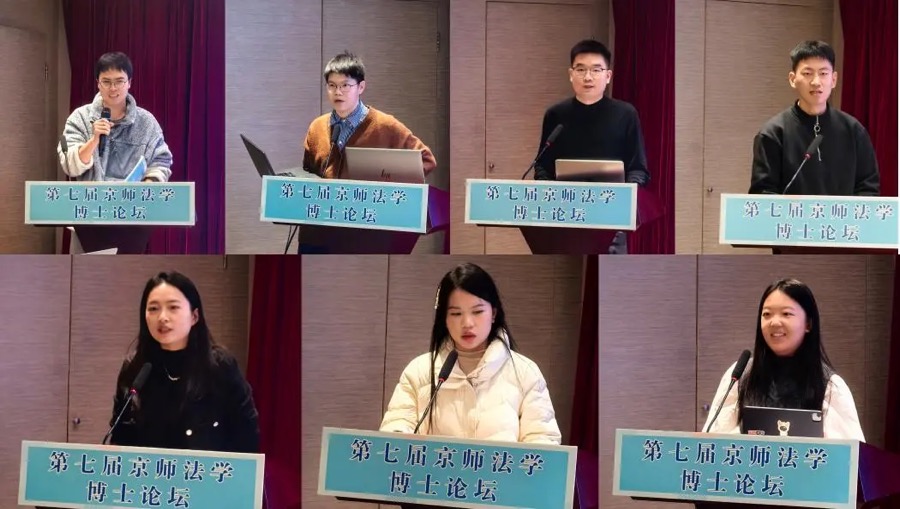
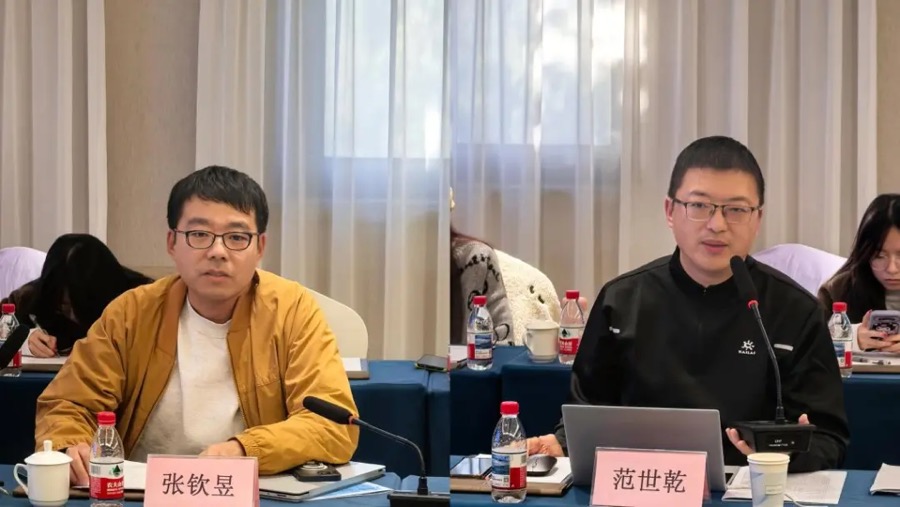
During the expert commentary session, Mr. Zhang Qinyu provided targeted feedback on the four papers. He noted that while Chen Haixin’s research conclusions were reasonable, the logical connection between the preceding analysis and institutional design required reinforcement to better articulate the value of the proposed three-tier governance framework. For Liang Yalun’s study, he emphasized the need to deepen exploration of mandatory provisions in the Private Economy Promotion Law and clarify their theoretical positioning within economic law. Li Jinfeng’s discussion on repurchase rights was praised for its rigor, though expanding the research scope, particularly through cross-jurisdictional comparisons, was recommended to strengthen its academic depth. Zhang Huichao’s use of the British "unfair prejudice" system as a reference was commended, with specific encouragement to focus on its practical application to Article 89, Paragraph 3 of China’s Company Law. Mr. Fan Shiqian also affirmed the papers’ practical innovation and offered further suggestions for refinement. He urged Chen Haixin to strengthen analysis of transfer mechanisms within corporate governance structures, Liang Yalun to address enforceability gaps in soft legislation by incorporating hard law norms, and Li Jinfeng to refine the classification of formative rights through subcategory analysis. For Zhang Huichao, he recommended clarifying the scope of remedial applicability under the new Company Law to enhance its real-world relevance.
Unit 4: Environmental Rule of Law and the Future Development of Humanity
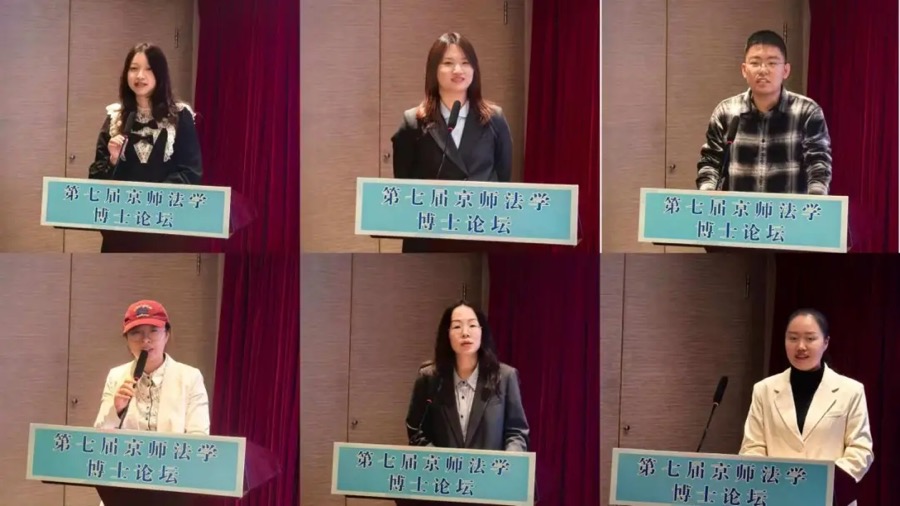
Unit 4 was moderated by Zhang Tianshuo, a doctoral candidate from the Law School of Beijing Normal University. Liu Muhan, a doctoral student at Peking University Law School, delivered a presentation titled "Enhancing Environmental Risk Control of Emerging Pollutants in the 'Ecological Environment Code'," while Sun Xiaoyu, a doctoral candidate from Wuhan University Law School, presented "Reflection and Adjustment of the Legal Liability System in the Ecological Environment Code." Gao Tengfei, another doctoral student from Peking University Law School, discussed "Compatibility Design and Adjudication of Natural Resource Use Rights," and Ren Wenhong, a postdoctoral researcher from Tsinghua University's School of Environment, presented on "Systematization of Corporate Environmental Responsibility in the Context of Codification." Luo Yuan, a doctoral student from Wuhan University Law School, and Jiang Chao, a doctoral student from Shanxi University Law School, participated in the discussion. Associate Professor Wu Kaijie from Peking University Law School and Professor Pan Jia from Beijing Wuzi University Law School offered their comments.
During the presentation session, Liu Muhan delved into the necessity of incorporating new pollutants into the legal framework, the challenges associated with such inclusion, the current goals of the draft code, and put forward comprehensive recommendations. Sun Xiaoyu reviewed the 413 mandatory obligations outlined in the draft code, identifying that many mandatory obligations lack corresponding legal liabilities, and proposed improvement suggestions. Gao Tengfei explored solutions to conflicts arising from the use rights of natural resources, such as marine area usage rights and aquaculture rights, addressing both substantive and procedural dimensions. Ren Wenhong took the incident of Ancestor Bird setting off fireworks in the Himalayas as a case in point to discuss the ambiguity surrounding corporate environmental responsibility boundaries and the fragmentation of existing regulations, proposing avenues for enhancement and optimization.
In the discussion, concerning Liu Muhan's research, Luo Yuan acknowledged its practicality and urgency, suggesting a clarification of the core and hierarchy of value conflicts. Regarding Sun Xiaoyu's research, Luo Yuan proposed the development of a collaborative mechanism for multiple responsibilities and a deeper excavation of empirical data. For Gao Tengfei's research, Luo Yuan commended the precision of the topic selection and the clarity of the framework, suggesting that the fifth part be integrated into the conclusion. Regarding Ren Wenhong's research, Luo Yuan praised the clarity of the argumentation path, suggesting accelerating the introduction of the topic, incorporating comparative research into the analysis of the current situation and improvement suggestions, and refining the standards for differentiated corporate responsibilities. Jiang Chao also shared his insights. For Liu Muhan's research, he recommended establishing a cross-departmental coordination mechanism to clarify the hierarchical relationship between the principles of overall process management and risk prevention. For Sun Xiaoyu's research, he suggested addressing the issue of dual legal sources in the compilation and enriching the mechanism for realizing preventive obligations and responsibilities. For Gao Tengfei's research, he recommended conducting a deeper exploration of forest rights. For Ren Wenhong's research, he recommended introducing the EU environmental management system certification and compliance defense system, with a focus on the systematic nature of corporate environmental responsibilities.
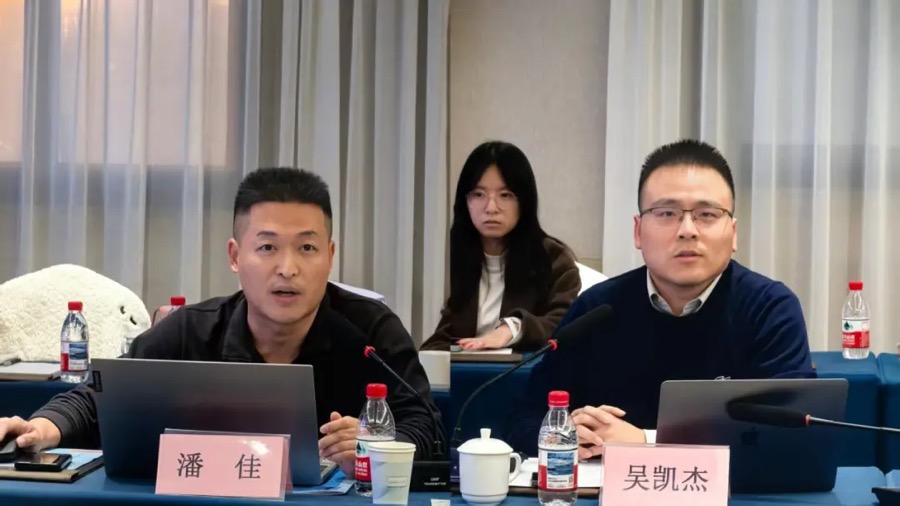
During the expert review session, Mr. Pan Jia acknowledged that Liu Muhan's research topic was in line with current governance priorities and accurately identified key challenges. He recommended optimizing the title for clarity, minimizing discussions on functionality and necessity, enhancing the organization of systems and practices, and strengthening the case for public participation. Additionally, Mr. Pan Jia recognized that Gao Tengfei's research topic addressed practical issues and featured an innovative framework. He suggested refining the problem statement, clarifying the distinction between the concept of "compatibility" used in the study and its academic counterpart, elucidating the relationship between usage rights and property rights, and providing a detailed classification of conflict types. Mr. Wu Kaijie affirmed the practical significance of Sun Xiaoyu's research topic. He proposed narrowing the title to better reflect the study's focus, strengthening theoretical analysis, considering the classification of obligation types, and delving deeper into the underlying reasons for the mismatch between obligations and responsibilities. Furthermore, Mr. Wu Kaijie commended Ren Wenhong's topic for its high degree of relevance and specificity. He recommended clarifying problem awareness, defining the scope of the concept of "corporate environmental responsibility," optimizing the article's structure, and emphasizing the core aspect of "systematicness."
Closing Ceremony
The closing ceremony was presided over by Li Dejia, an associate professor who also serves as the Deputy Director of the Academic Graduate Student Work Office at Beijing Normal University. Associate Professor Li extended his heartfelt gratitude to the leaders, external experts, and participating doctoral students for their support of the forum. He thanked everyone for selecting this particular forum amidst numerous similar platforms and for contributing high-caliber papers. Furthermore, he emphasized that the Beijing Normal University Law Doctoral Forum remains committed to fostering academic research and facilitating exchanges among law doctoral students.
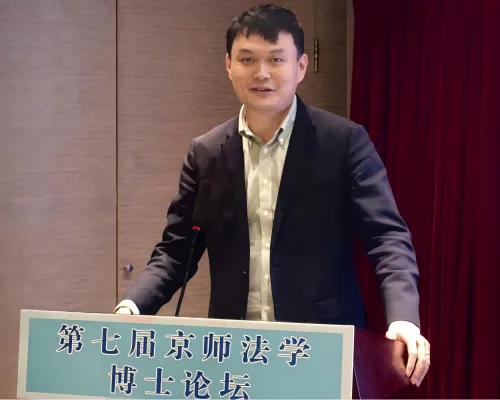
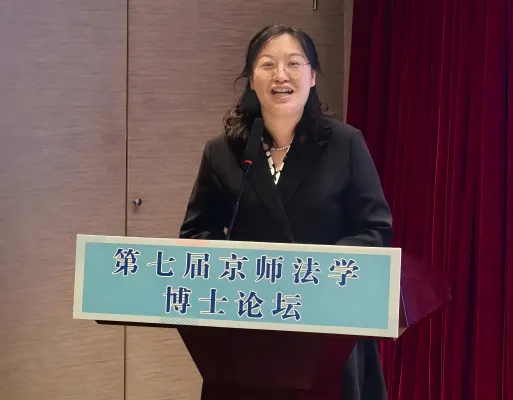
He Dan, Vice Dean and Professor of the Law School at Beijing Normal University, delivered the closing remarks. She highlighted that this forum had upheld the two defining features of its previous seven editions: firstly, its "Doctoral Centralism," which centers on doctoral students, direct-entry doctoral candidates, and young faculty members who have recently earned their doctoral degrees, offering a platform for in-depth communication and fostering friendships among law doctoral students. Secondly, the active involvement of guest commentators, who diligently reviewed the papers beforehand and provided insightful feedback on both theoretical and practical dimensions during their critiques. This year marks the 30th anniversary of the law discipline at Beijing Normal University. The school has established research centers in digital law and foreign-related rule of law, and boasts relevant research bases in areas such as juvenile protection and anti-corruption. Next year, it will admit law doctoral students and will strive to broaden participation in the forum, with the goal of further enhancing its quality. She called upon all mentors and students to maintain their active engagement. Finally, on behalf of the Law School at Beijing Normal University, she expressed her sincere gratitude to the participants for their meticulous preparations, to the expert commentators for their valuable time and contributions, and to the organizing committee for their tireless efforts.
Amidst resounding applause, the Seventh Beijing Normal University Law Doctoral Student Forum drew to a triumphant close.
This forum delved deeply into a host of legal challenges encountered in the process of establishing and enhancing national governance, fostering robust academic exchanges between our institution and law doctoral students from diverse universities.
May all participants carry forward the valuable insights and enduring friendships forged during this event as they continue their diligent research endeavors in the field of law. We eagerly anticipate welcoming you back next year!
The Award-Winning Papers of the 7th BNU Law Doctoral Student Forum
First Prize
Xiao Yuanhang (Doctoral student, School of Law, Southeast University):
Beyond the Public-Private Dichotomy: The Normative Spectrum of Digital Power
Gao Tengfei (Doctoral student, Peking University School of Law):
The Compatibility Design and Judgment of Natural Resource Usage Rights
Second Prize
Han Zixuan (Doctoral student, School of Law, Renmin University of China):
The Nature of the Preparatory Offense in Assisting Cybercrime and Its Judicial Application
Li Jinfeng (Doctoral student, School of Law, Shandong University):
Research on the Nature of Buyback Rights and Exercise Period in Gambling Agreements
Liu Muhan (Doctoral student, School of Law, Peking University):
Improvement Ideas for Environmental Risk Control of New Pollutants in the 'Ecological Environment Code'
Third Prize
Hong Yifan (Doctoral student, School of Law, China University of Political Science and Law):
On 'User Decisional Participation' in Platform Content Governance — Based on Cooperative Regulation Models
Li Jinke (Lecturer, School of Law, Zhengzhou University):
Research on Criminal Responsibility and Criminal Sanctions for Generative Artificial Intelligence like ChatGPT
Chen Haixin (Doctoral student, School of Law, China University of Political Science and Law):
Research on the Mechanism of Company Sub-authorization: Governance Models, Power Boundaries, and Review Frameworks
Ren Wenhong (Postdoctoral Fellow, School of Environment, Tsinghua University):
"Systematization of Corporate Environmental Responsibility in the Context of Codification"