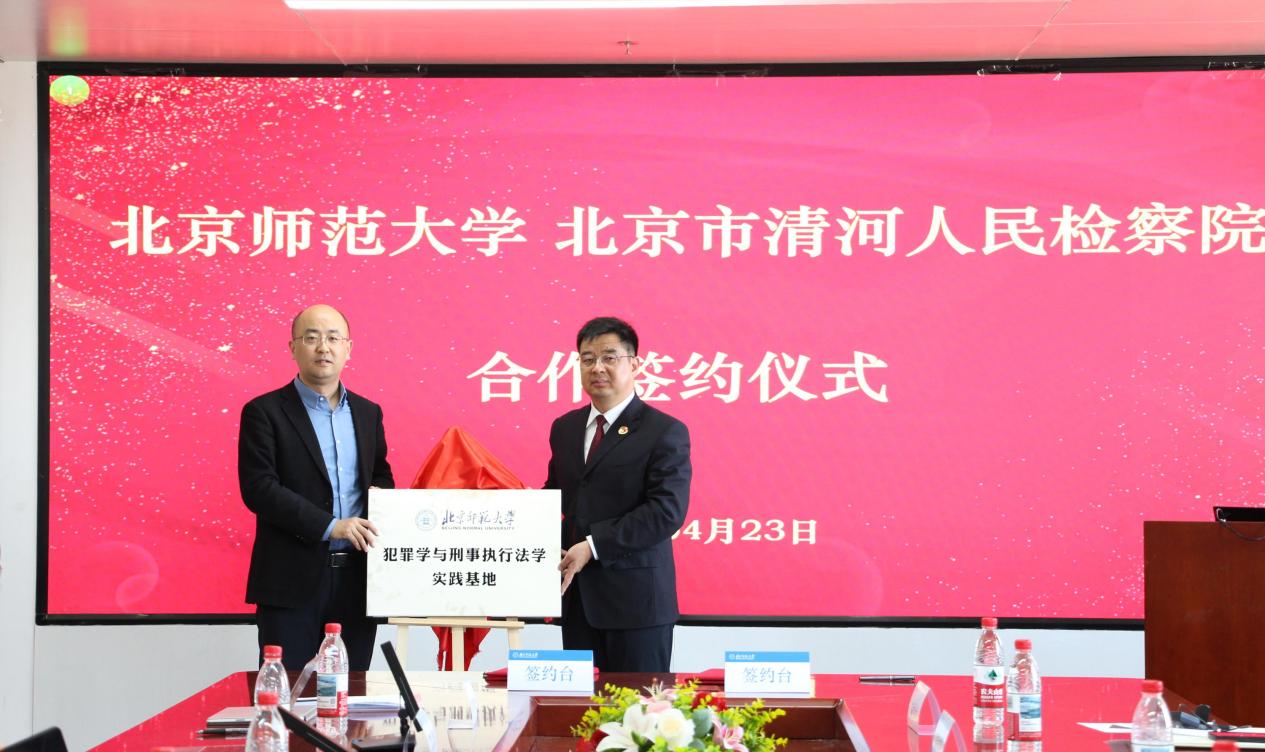
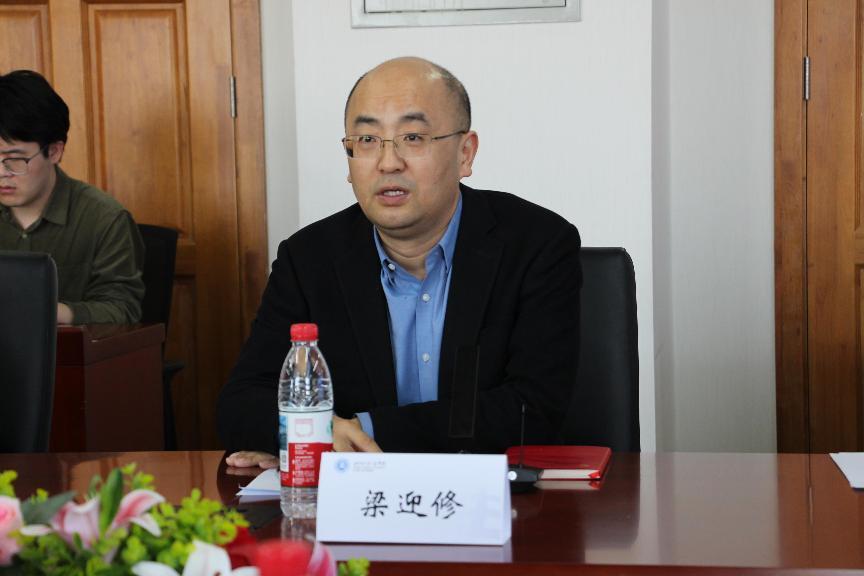
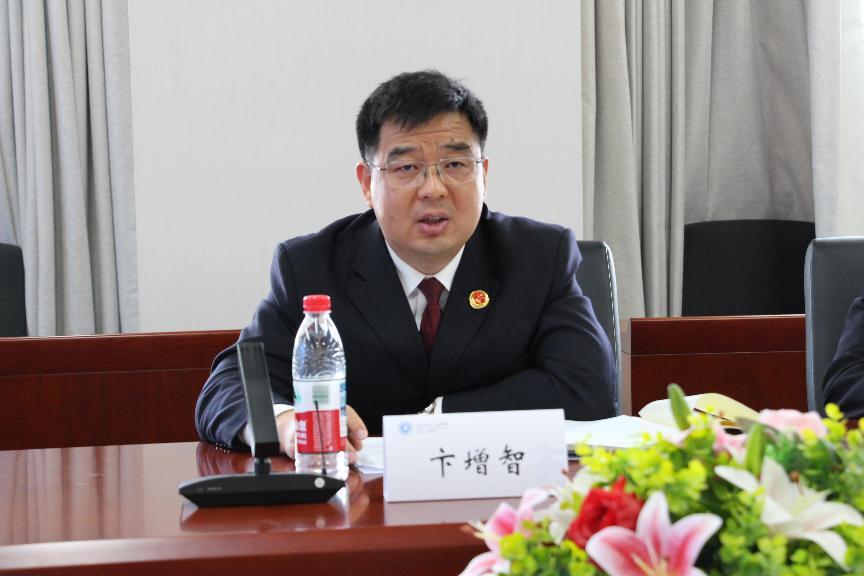
On the afternoon of April 23, the Law School of Beijing Normal University (BNU) and the Qinghe District People’s Procuratorate of Beijing officially signed a cooperation agreement during a research seminar on collaborative development. This initiative is designed to implement the “Opinions on Strengthening Cooperation between Procuratorial Organs and Higher Education Institutions in the New Era,” jointly issued by the Supreme People’s Procuratorate and the Ministry of Education, thereby advancing the standardized and systematic development of school-procuratorate partnerships. The signing ceremony was attended by BNU Law School Dean Liang Yingxiu and Party Secretary Chai Rong, as well as Bian Zengzhi, Secretary of the Party Leadership Group and Chief Procurator of the Qinghe Procuratorate. Vice Dean Yin Jianfeng presided over the event.
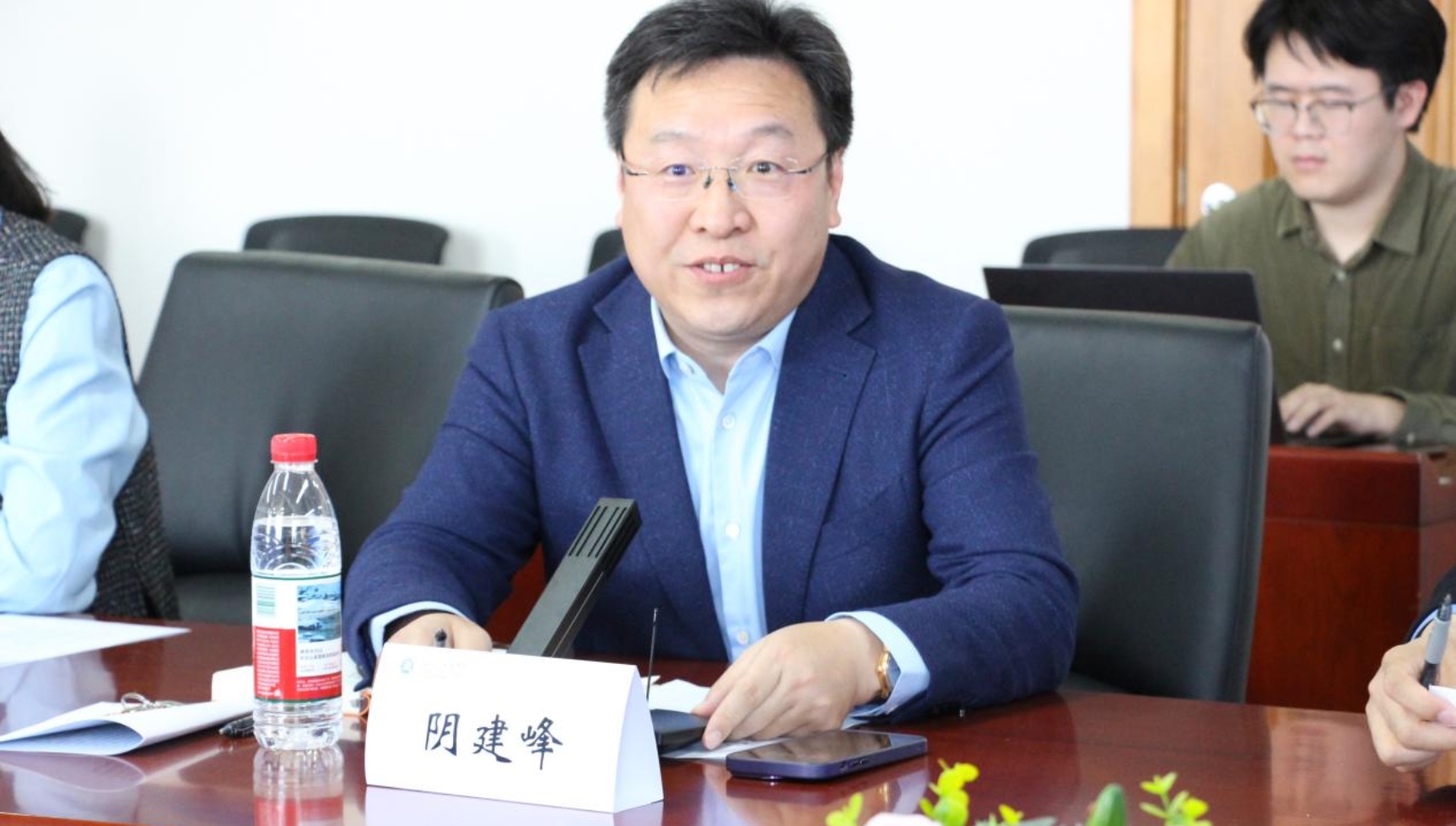
Opening the meeting, Dean Liang Yingxiu warmly welcomed Chief Procurator Bian and his delegation. He noted that the seminar represents a valuable opportunity to deepen bilateral cooperation and establish a high-quality platform for bridging legal theory with judicial practice. Providing an overview of the BNU Law School’s history and current landscape, Dean Liang highlighted the discipline’s commitment to a high-caliber, research-driven, and internationally oriented approach. He pointed out that in recent years, the school has achieved remarkable success in talent cultivation, academic research, and social service, thereby developing a distinct educational identity. He expressed his anticipation that this partnership will foster positive interaction between legal education and prosecutorial practice, to the mutual benefits of both institutions.
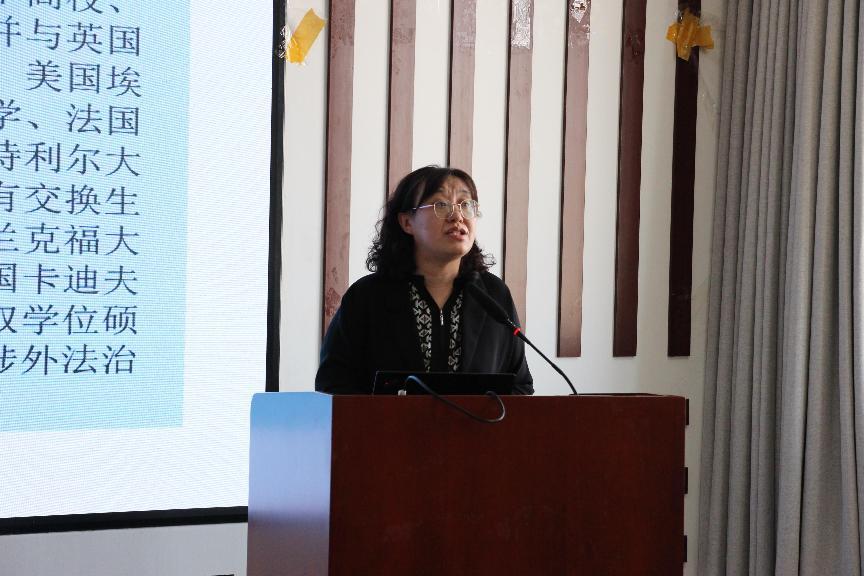
Vice Dean He Dan provided an overview of the Law School’s talent cultivation efforts. She noted that the school operated a comprehensive education system spanning undergraduate to doctoral programs, currently serving over 1,400 students. To cultivate foreign-related legal professionals, the school is actively exploring collaborative training models, continuously enhancing students’ research capabilities, and hosting a variety of academic conferences and exchange programs. Furthermore, the Law School is consistently expanding its engagement with legal practitioners to establish robust internship and practice bases. Concluding her remarks, Vice Dean He expressed confidence in the future cooperation between the two institutions.
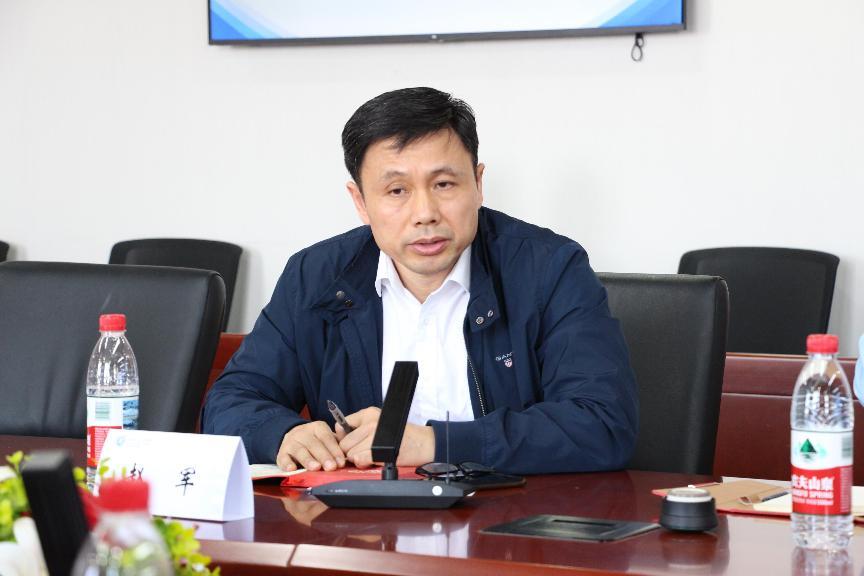
Professor Zhao Jun emphasized the profound significance of partnering with the Qinghe Procuratorate. He noted that collaborating with such a specialized agency presents a distinctive opportunity of considerable value for advancing theoretical research into criminal law execution and legal supervision. This partnership will greatly facilitate in-depth studies on practical issues such as sentence commutation, parole, and recidivism prevention, while also providing a vital platform for examining operational mechanisms within the legal system.
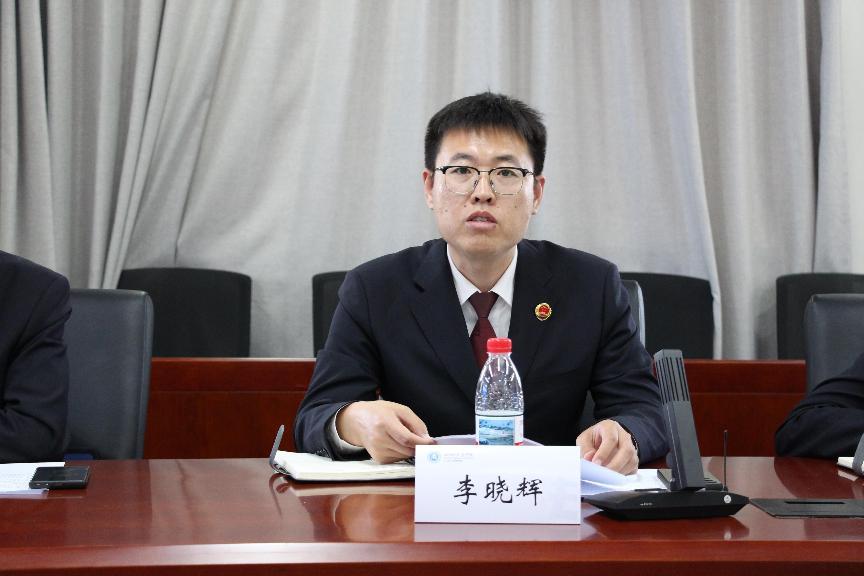
Prosecutor Li Xiaohui drew upon his frontline experience to underscore the value of this partnership in bridging legal theory with prosecutorial practice. He noted that theoretical research in criminal execution prosecution remains relatively underexplored, describing it as a “rich mine” awaiting further academic excavation. Drawing from his daily work, he outlined the practical challenges and complexities surrounding on-site stationed prosecution, the modification of penalties, and commutation and parole procedures. Looking ahead, he expressed his expectation that this collaboration will give rise to substantive research initiatives, ultimately forging a new type of judicial think tank that delivers tangible, impactful outcomes.
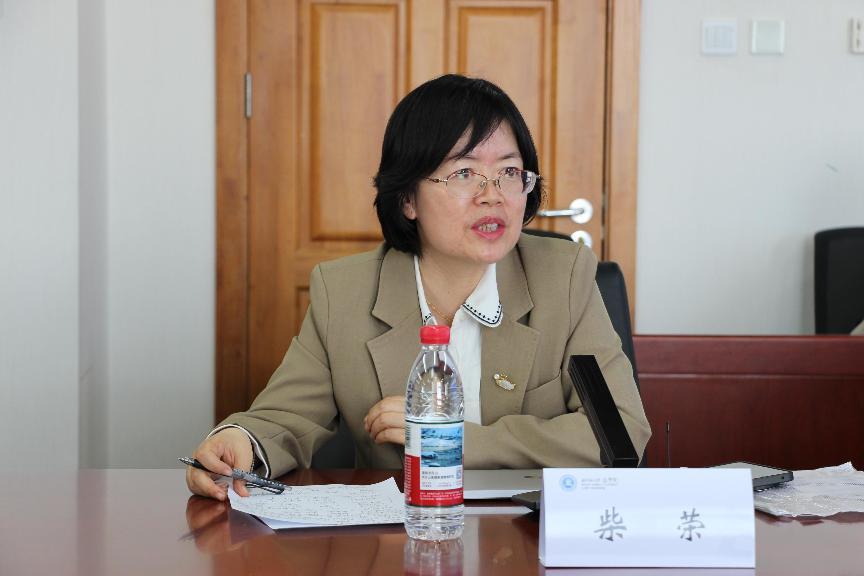
In her concluding remarks, Professor Chai Rong, Secretary of the Law School Party Committee, expressed sincere gratitude to the Qinghe Procuratorate delegation. She characterized the exchange seminar as a profoundly enriching “learning experience.” Emphasizing the extraordinary significance of the cooperation agreement, she noted that it opens a crucial gateway for legal talent cultivation. By providing teachers and students with firsthand insight into the deep-rooted practices of the “last mile” in criminal litigation, this partnership will effectively encourage students to engage with “real-world issues” and contribute to the advancement of the rule of law in China.
The BNU Law School and the Qinghe People’s Procuratorate of Beijing officially signed the Procuratorial-School Cooperation Agreement and inaugurated the Criminology and Criminal Execution Law Practical Education Base. This milestone marks the commitment of both parties to further deepen their collaboration across multiple domains, including talent cultivation, theoretical research in procuratorial work, the development of practical platforms, and prosecutorial professional training.
Also in attendance at the seminar were Guo Yating, Deputy Secretary of the Law School Party Committee; Liu Hang, Director of the General Office; Xu Shulin, Director of the Student Internship Office; along with Zhang Enge, Deputy Chief Procurator of the Qinghe Procuratorate, and prosecutors Chen Jinx, Gao Jinjun, Chen Xiao, and Gao Shule.