

On the afternoon of December 19, 2025, the Law School of Beijing Normal University hosted the 126th session of BNU Distinguished Jurist Lecture Series in Room 204 of Teaching Building 9 at the Haidian campus. The lecture, titled "Contemporary Frontier Issues of the Italian Penal System," featured Professor Mario Caterini of the University of Calabria, Italy, as the main speaker, with PhD student Morena Gallo serving as the discussant. Associate Professor Yang Chao presided over the event, which was attended by more than 40 faculty members and students from the Law School. Prior to the lecture, Professor He Ting, Vice Dean of the Law School, extended a warm welcome to Professor Caterini and his delegation. The two parties also held a brief discussion regarding future development and potential cooperation between their respective institutions.

At the outset of the lecture, Associate Professor Yang Chao reiterated his welcome to Professor Caterini for making the long journey and provided a detailed introduction to his academic background and research interests.
In his address, Professor Caterini offered an in-depth interpretation of the core tenets of the Italian penal system. He emphasized that "re-education" is the central concept permeating the system, a principle derived from Article 27 of the Italian Constitution and the European Convention on Human Rights. These provisions mandate that penalties must adhere to humanitarian bottom line, prohibiting inhumane treatment, with the ultimate goal of facilitating the offender's reintegration into society. The professor further illustrated, using typical case law, that re-education is the primary purpose of punishment and remains applicable regardless of the offender's attitude toward confession. Regarding the execution of punishment, Professor Caterini explained that Italy's prison law establishes a principle centered on the rights of the incarcerated. Under this framework, judges and law enforcement officials collaborate with professionals such as psychologists and social workers to develop personalized treatment plans that are dynamically adjusted for inmates. Additionally, he noted that while the Italian Code of Criminal Procedure focuses on safeguarding defendants' rights by granting them a broad scope of protections, this emphasis also presents the judicial system with the challenge of prolonged trial periods in criminal cases.

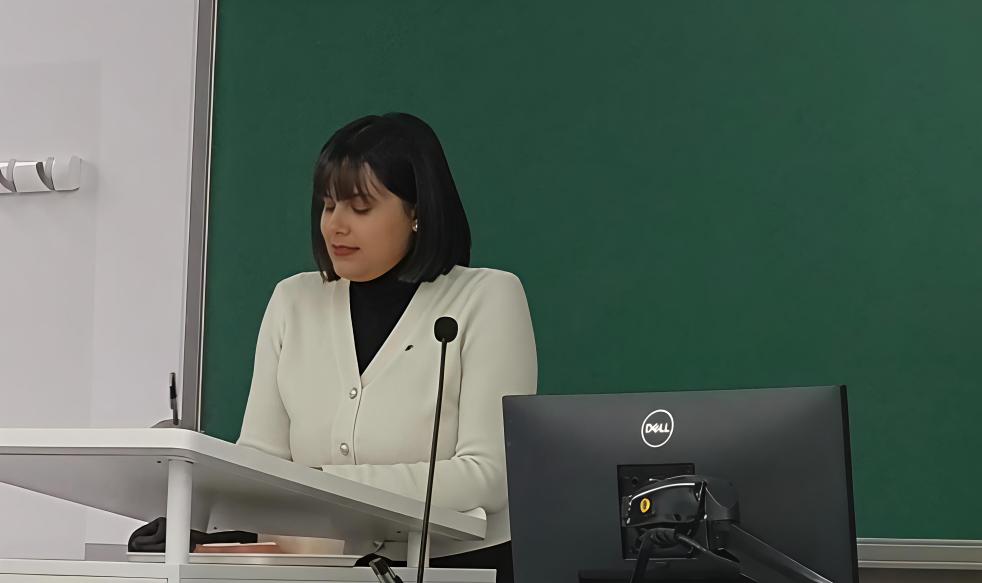
During the discussion session, Morena Gallo, a doctoral student from the Faculty of Law at the University of Calabria, Italy, stated that the content shared by Professor Caterini was very comprehensive. She shared her reflections on the nature and practice of punishment within the Italian legal system, combining her personal experiences and research, and proposed that different value concepts should coexist within the framework of the rule of law, bringing a diversified academic perspective to the students' learning and research.
In the interactive session, Professor Caterini engaged with the students in an in-depth discussion on issues such as how Italian punishment balances the implementation of the re-education concept with the limitations of judicial resources, how to assess the possibility of re-education for defendants, and perspectives on the death penalty. The atmosphere during the lecture was lively, with a strong academic ambiance.

The lecture provided a forward-looking exploration of the re-educational philosophy underpinning the Italian penal system, examining specific measures for general and special prevention as well as the individualized treatment of incarcerated persons. In doing so, it offered significant theoretical insights and practical references for comparative legal studies in the field of punishment.