

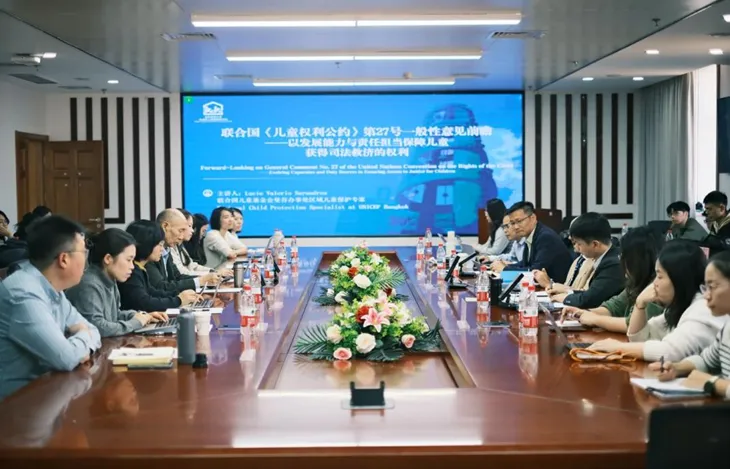
On November 14, 2025, the 7th Minor Law Forum titled "A Forward Look at General Comment No. 27 of the UN Convention on the Rights of the Child - Ensuring Children's Right to Remedy through Developmental Capacity and Responsibility" was held in the Gao Mingxuan Lecture Hall (Room 1822), Rear Main Building, Beijing Normal University.
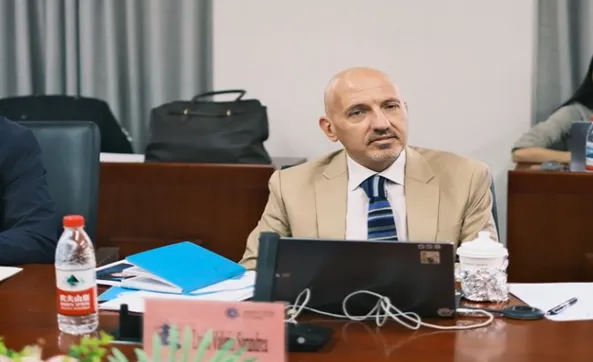
Lucio Valerio Sarandrea currently serves as the Regional Child Protection Specialist at UNICEF Bangkok, where he oversees child protection affairs across Southeast Asia and the Pacific. His portfolio encompasses children's rights, judicial assistance, migration issues, and civil registration and vital statistics. During the forum, Dr. Sarandrea provided a forward-looking interpretation of General Comment No. 27 of the UN Convention on the Rights of the Child.
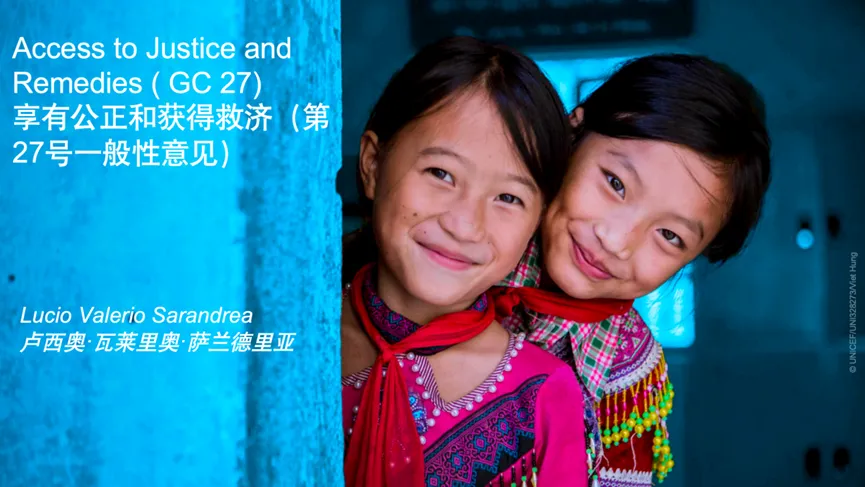
Part One: Background and Issues of General Comment No. 27
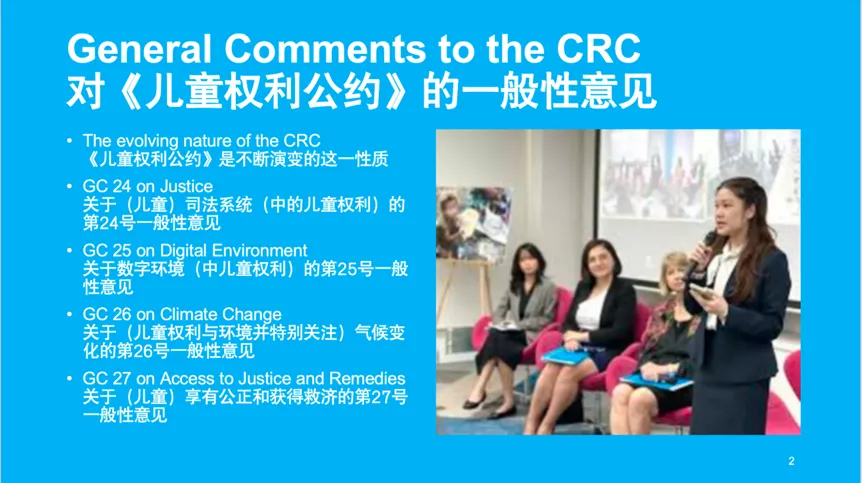
The UN Convention on the Rights of the Child is a groundbreaking treaty adopted in 1989, holding the distinction of being the most widely ratified international human rights treaty in history. Given the significant divergence between the era of its adoption and the current global landscape, it is essential to continuously update and issue new interpretations to address emerging issues and challenges. As the body responsible for monitoring the Convention's implementation, the UN Committee on the Rights of the Child is mandated to provide authoritative and timely interpretations, known as General Comments. The drafting of General Comment No. 27 was initiated after the Committee recognized that pathways for children to access justice under the Convention remained insufficiently clear, particularly regarding the full protection of adolescents' rights. Consequently, General Comment No. 27 focuses on ensuring children's access to justice and their right to effective remedies.
The issuance of general comments by the UN Committee on the Rights of the Child is an evolving process, with a primary focus on the relationship between children and the judicial system being General Comments No. 10 (which has been replaced by General Comment No. 24) and No. 24, but these mainly focus on juvenile offenders or specific judicial environments. In contrast, General Comment No. 27 has a broader scope, covering the avenues for remedies for children in all areas of rights. General Comment No. 27 advocates that children’s access to remedies includes the ability to individually or collectively seek and obtain just, fair, and timely redress for rights violations. It includes the right to recognition before the law, the right to a fair hearing, the right to appeal, the right to equal and timely access to courts, effective judicial protection, and the right to other complaint mechanisms that can lead to effective outcomes. These rights are also key to the rule of law, meaning that every child, including the most vulnerable children in the most remote areas, must be able to access effective remedies. It should be noted that the general comments of the Convention on the Rights of the Child are not legally binding; they serve more as opinions or guidelines to provide direction for the practices of various countries.
Part Two: The Realization of Children's Rights and Effective Remedies
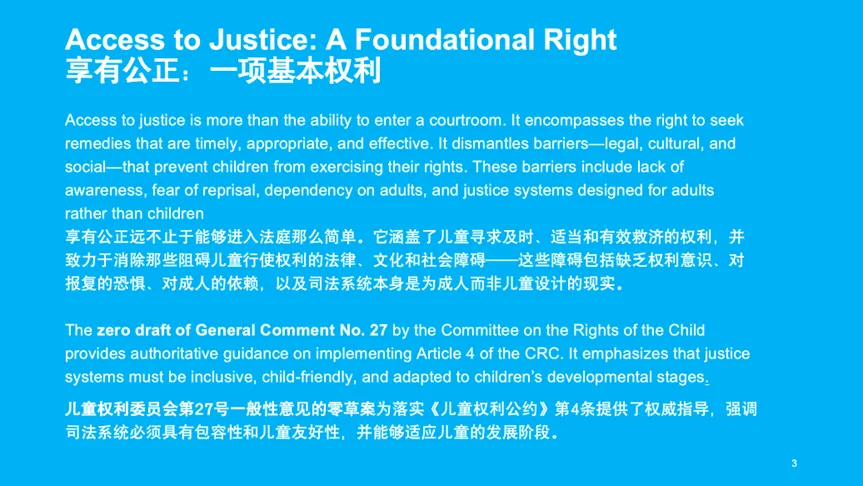
1. Understanding “Justice”: Dr. Lucio Valerio Sarandrea first discussed his understanding of the core expression “access to justice”. He believes that the interpretation of the meaning of 'Justice' is usually approached from a judicial perspective. However, from a practical standpoint, it should not only encompass the entire judicial system, but also correspond to all of children's basic rights, including the right to education, the right to health, the right to nutrition, identity protection, and a series of other rights. The most important goal of General Comment No. 27 is to implement the various rights that children are entitled to. In this regard, Dr. Lucio Valerio Sarandrea provided an example of 100 gold coins to illustrate the issue. "Let us imagine that if you have 100 gold coins, one way is to simply own these 100 gold coins, while another way is to actually hold 100 gold coins in your hand; the feeling is different." Therefore, it is worth considering how the state can ensure that the 100 gold coins, as stipulated in the Convention on the Rights of the Child, can truly be enjoyed and held in hand by children.
2. Common barriers to children’s access to effective remedies: Ensuring justice does not imply simply placing children in a courtroom, but rather guaranteeing that they receive timely, appropriate, and effective remedies whenever necessary. Consequently, Dr. Lucio Valerio Sarandrea emphasizes the need to reflect on the current dilemmas faced by children to provide them with targeted assistance. Currently, the primary obstacles preventing children from obtaining effective remedies include a lack of self-protective awareness and an incomplete understanding of their rights to litigation and redress. Furthermore, children often experience fear, such as concerns regarding retaliation or hesitation in challenging authority. Additionally, while children frequently rely on adults to exercise their rights, their personal wishes may not be fully represented. Finally, legal language is often obscure and difficult for children to comprehend, and existing judicial procedures tend to be unfriendly, failing to adequately account for children's psychological and cognitive characteristics.
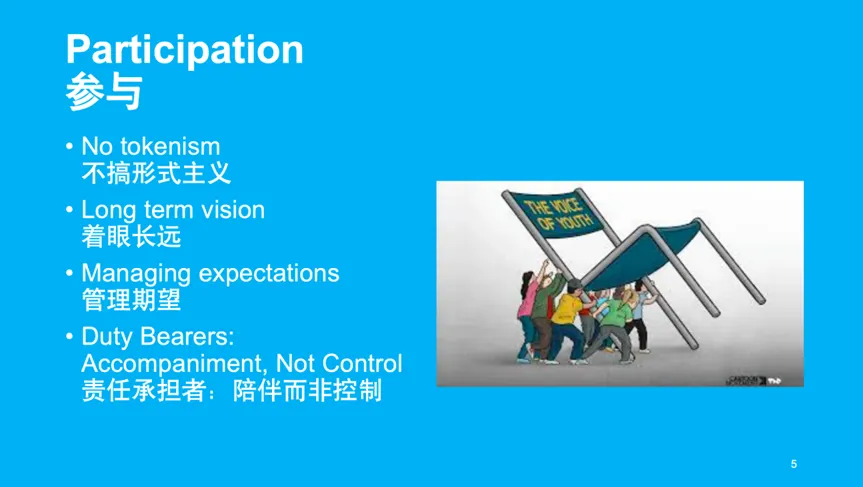
3. Participation in and protection of children's rights: Discussions regarding children's rights require a delicate equilibrium. On one hand, full protection must be afforded to young children, absolving them of specific liabilities; for instance, UNICEF advocates that children under the age of 14 should not bear criminal responsibility. On the other hand, it is crucial to integrate children's voices into judicial decision-making processes as early as possible. This dynamic raises the complex issue of balancing children's rights with their obligations. Dr. Lucio Valerio Sarandrea elucidates the key aspects of this balance by sharing personal anecdotes involving himself and his children. He emphasizes the necessity of fully recognizing children's subjectivity and agency. Children are not merely future rights-holders but are current enjoyers of rights. Therefore, any measures taken to ensure children enjoy justice must include their own voices, fully respecting and supporting their expression of opinions and participation in relevant processes. Furthermore, adults and professionals are tasked with providing sustained support and companionship throughout this journey, ensuring that decisions genuinely affecting children's interests are effectively implemented.
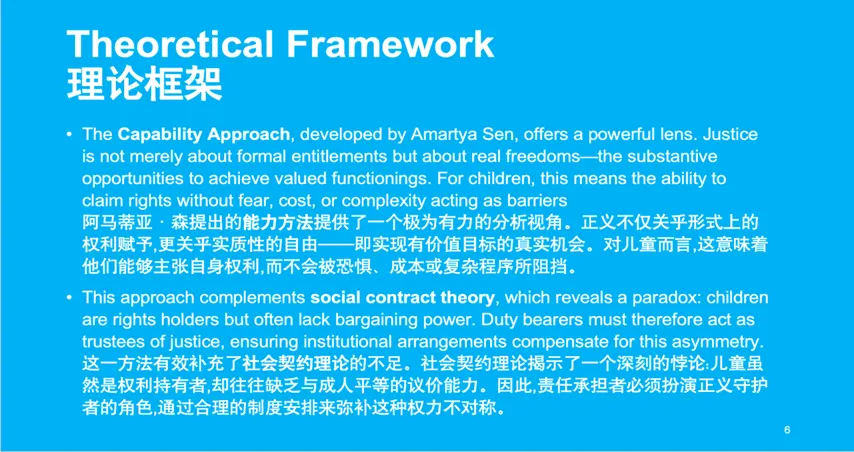
4. Theoretical perspective on children's rights: In some nations, minors constitute up to 67% of the population; consequently, their complete exclusion from the judicial process would effectively amount to a minority dictating the rights of the majority, precipitating a dilemma within the social contract. While the Convention on the Rights of the Child and national legislation grant children a spectrum of rights, they are frequently unable to exercise them in practice. Dr. Lucio Valerio Sarandrea posits that Amartya Sen's capability approach offers a potent analytical framework to address this disparity. By applying this perspective, institutions can be designed to compensate for these deficits, empowering children to assert their rights without being hindered by fear, costs, or procedural complexity. Furthermore, Dr. Sarandrea highlights that children's digital engagement carries a tangible economic weight: studies indicate that for every hour spent on social media, the data provided to internet service providers is utilized to optimize algorithms, generating an estimated economic value of 7. In other words, if a child averages three hours of online activity daily over a five-day week, they generate more than 100 in economic value. Despite the significant value generated by children's online behavior, their data rights and privacy protections remain inadequately ensured.
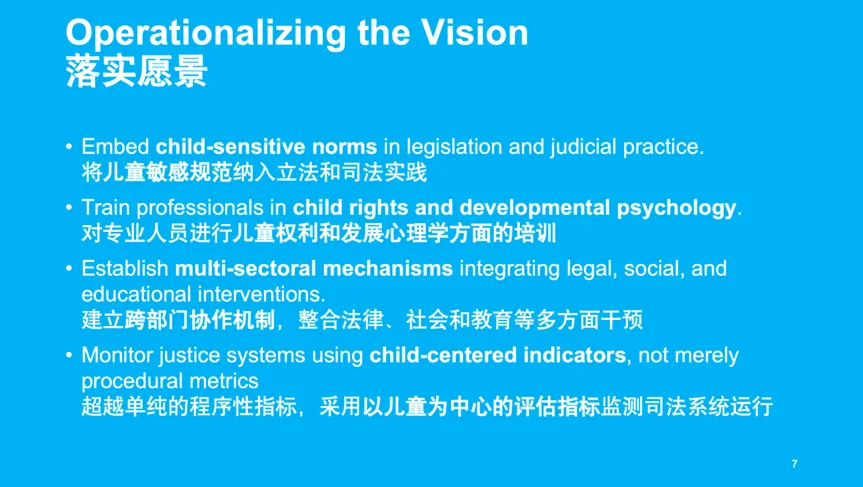
5. Specific solutions and practical approaches: To ensure that children's rights are transformed from abstract concepts on paper into tangible realities, Dr. Lucio Valerio Sarandrea proposes the adoption of proactive measures across several key areas. First, at the legislative and policy level, it is essential to formulate child-friendly laws using simple, accessible language. For instance, the United Nations Committee on the Rights of the Child has issued decisions regarding children's rights in the context of climate change that are comprehensible to children as young as ten years old. Second, the development of professional teams must be strengthened. Providing effective remedies for children requires a multidisciplinary approach involving not only lawyers but also social workers, teachers, and healthcare professionals to offer initial legal support and companionship. For example, some South Asian countries have significantly reduced the incidence of domestic violence by training social workers to conduct home visits. Third, the role of education and schools must be emphasized. Schools serve as critical venues for educating children about their rights and for early intervention. Monitoring indicators, such as rates of developmental delays, should be established to identify problems and intervene in a timely manner. Finally, mechanisms for children's participation must be improved. The decision-making process should actively involve children to gradually cultivate their capacity to exercise their rights. A practical example of this is parents negotiating weekend activities with their children; they should seriously consider the children's opinions, even if not every suggestion is ultimately adopted.
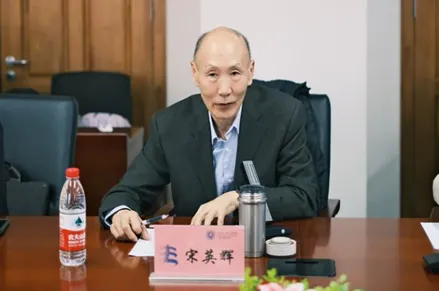
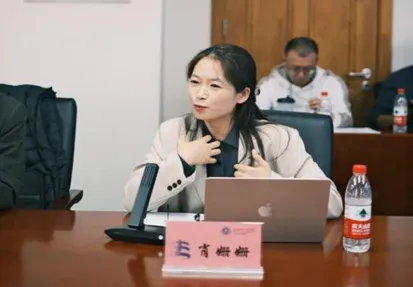
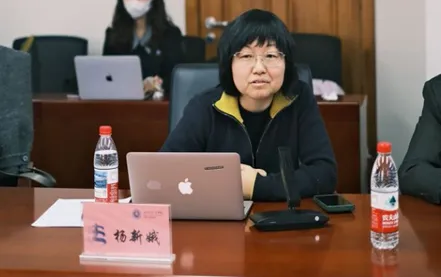
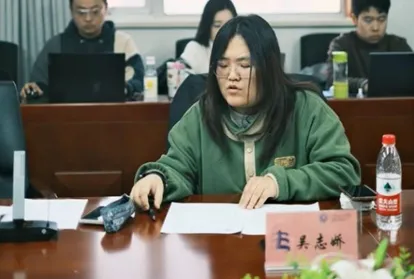
During the discussion, Song Yinghui, professor at the Law School of Beijing Normal University and director of the Research Center on Procuratorial Work for Children at Beijing Normal University, introduced China's exploration and progress on children's rights issues, taking into account the revised Law on the Protection of Minors in 2020. For instance, the four fundamental rights of children have been established: the right to survival, the right to development, the right to participation, and the right to protection. During the legislative process, there was a genuine effort to widely listen to children's opinions, and systems for mandatory reporting, legal aid, and comprehensive judicial protection for minors were implemented. Xiao Shanshan, an associate professor at the School of Law of Hunan Normal University, mentioned that she benefited greatly from today's lecture, which gave her a renewed and deeper understanding of "justice". In addition, it is believed that there should be a focus on protecting children's data rights and considering how to balance the issues of information collection and privacy protection. Yang Xin'e, deputy director of the Juvenile Prosecution Department of the Beijing Municipal People's Procuratorate, believes that as a procuratorial organ, judicial practitioners need to consider how to implement child protection in every judicial process and case handling to ensure that it is truly put into practice. Wu Zhijiao, a social worker at Beijing Chaoyue Youth Social Work Service Center, shared her work experience and pointed out that children do indeed have obstacles in understanding their own rights, and social workers need to go into each family to help children recognize their rights.
During the free discussion session, participants raised questions regarding General Comment No. 27 to the CRC and other related content, leading to a lively discussion.
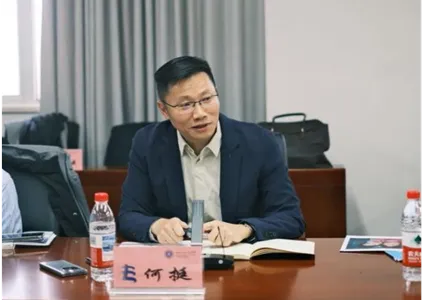
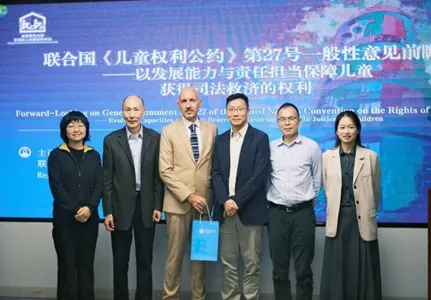
To conclude, Professor He Ting once again extended her sincere gratitude to Dr. Lucio Valerio Sarandrea for his insightful lecture and thanked the participating faculty and students for their active involvement.