

On May 11, 2025, the eighth lecture of the Supreme People's Procuratorate's "Procuratorial Practice Experts Entering Campus" series was successfully conducted in Room 103 of Teaching Building 7 at Beijing Normal University. This event was spearheaded by Wang Xinjian, a distinguished member of the Party Leadership Group and Deputy Procurator General of the Shandong Provincial People's Procuratorate, with Liang Yingxiu, Dean of the Law School at Beijing Normal University, presiding over the proceedings. Over 110 teachers and students attended, including Zhang Yanhua, Director of the Teaching Materials Management Department of the Political Department of the Supreme People's Procuratorate, and Associate Professor Shang Haowen from the Law School of Beijing Normal University.
At the outset, Dean Liang Yingxiu warmly introduced the attending leaders and guests to the faculty and students. She underscored that, in alignment with the strategic blueprint of revitalizing the nation through science and education and fortifying it with talent in the new era, and with a view to comprehensively advancing legal education reform and the construction of legal talent teams, the Supreme People's Procuratorate has, since 2023, innovatively launched the "Procuratorial Practice Experts Entering Campus" initiative at select universities. This initiative aims to forge an innovative platform for the seamless integration of legal theory and judicial practice, effectively propelling the reform of legal talent training models and paving new avenues for nurturing legal professionals in the new era who possess a steadfast political stance, a profound sense of national identity, and robust professional competence. We extend our heartfelt gratitude to the Supreme People's Procuratorate and the Shandong Provincial People's Procuratorate for their unwavering support and professional guidance to the law discipline at Beijing Normal University. The regular implementation of this initiative has become a cornerstone for the Law School of Beijing Normal University in innovating its legal talent training model. As an expert leader, Deputy Procurator General Wang Xinjian's lecture is poised to offer invaluable insights to the teachers and students of the Law School. The Law School also eagerly anticipates further deepening strategic collaboration between procuratorial and educational institutions through this event, jointly scripting a new chapter in the training of legal talents in the new era.
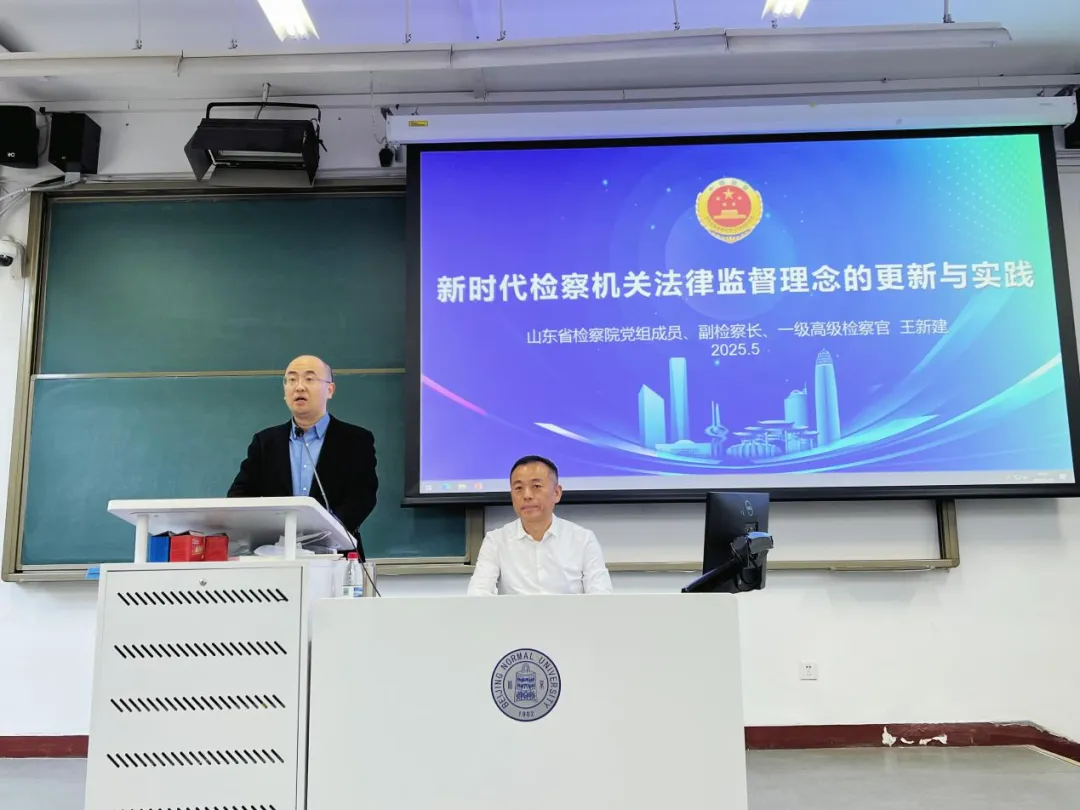
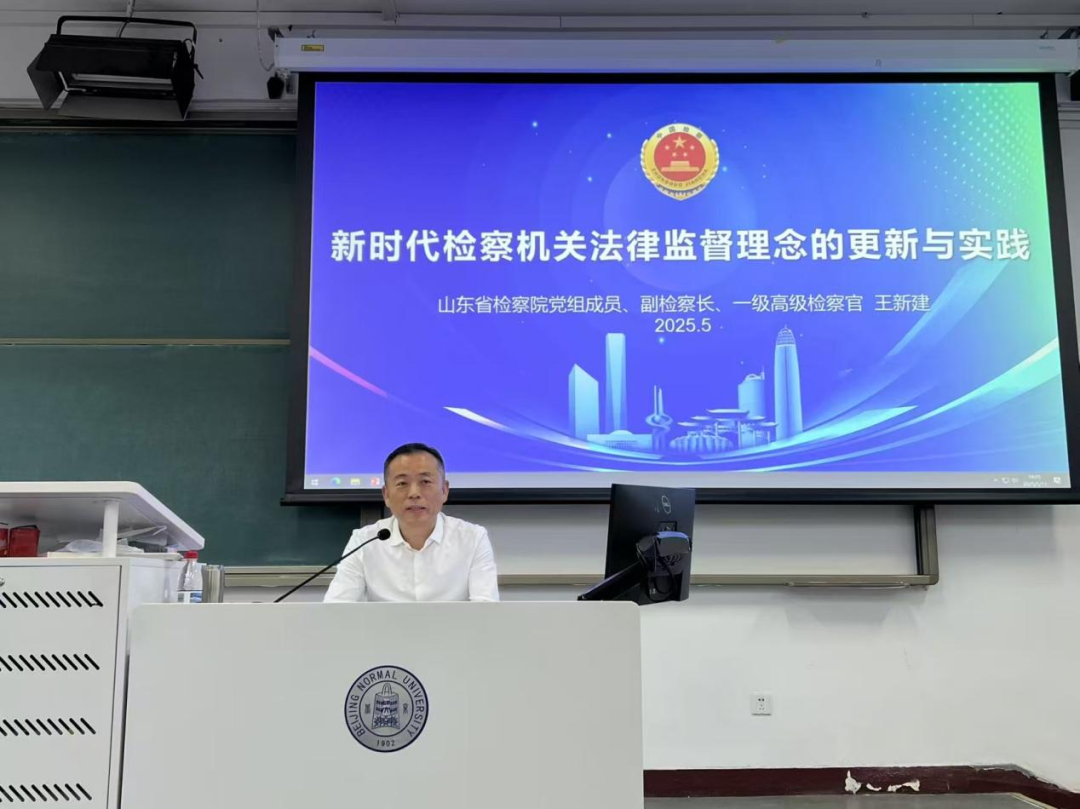
Following the introductions, the lecture commenced in earnest. Deputy Procurator General Wang Xinjian delivered a captivating lecture on "The Update and Practice of Legal Supervision Concepts of Procuratorial Organs in the New Era" to the assembled audience. He emphasized that prosecutors, in discharging their duties, must anchor their actions in facts, uphold the law as the yardstick, maintain an objective and fair stance, and serve as both pursuers of crime and protectors of the innocent. To ensure the realization of fair and just justice, it is imperative to accurately navigate the relationship between evidence and facts, formal review and substantive judgment, and legal norms and the spirit of the rule of law. In terms of procedure, enhancing procedural guarantees and judicial efficiency is crucial for achieving fairness and justice more swiftly. From the perspective of effect, strengthening legal interpretation and reasoning is essential to ensure that the people can perceive and feel fairness and justice. Deputy Chief Prosecutor Wang Xinjian expounded on the significance of pursuing fairness and justice for the construction of socialist rule of law, drawing on the film "Article 20" and a series of judicial practice cases. He guided the audience through a retrospective of China's prosecution system's evolution across four dimensions: creation and development, weakening and rebuilding, reform and progress, and the updating of concepts. Subsequently, he elucidated the work pattern and concept updates of legal supervision in the new era from the vantage points of criminal prosecution, civil prosecution, administrative prosecution, public interest litigation prosecution, and digital prosecution, using classic judicial cases as illustrative examples. Finally, Deputy Chief Prosecutor Wang Xinjian underscored the importance of adhering to innovation while maintaining integrity, strengthening theoretical and practical research on legal supervision in the new era to achieve a profound integration of legal education and judicial practice. Drawing from his own experiences, he offered students invaluable advice on four fronts: in learning, to achieve specialization and systematization of knowledge, enhance writing skills, and engage in interdisciplinary learning; to cultivate deep thinking abilities and problem awareness, to form legal thinking, and to ponder deeply on judicial case handling and career planning, while emphasizing innovation in article writing; in practice, to actively participate in social practice and explore work innovation; to establish a belief in the rule of law, combining legal rules with humanity, ideals with reality.
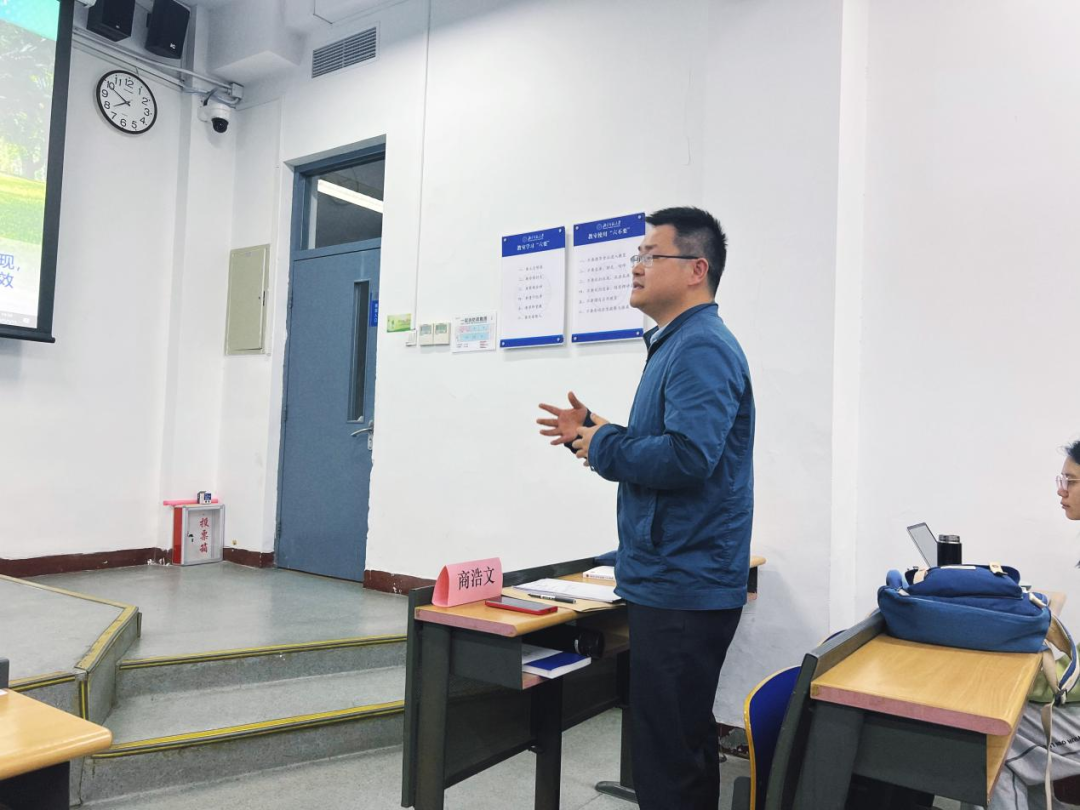
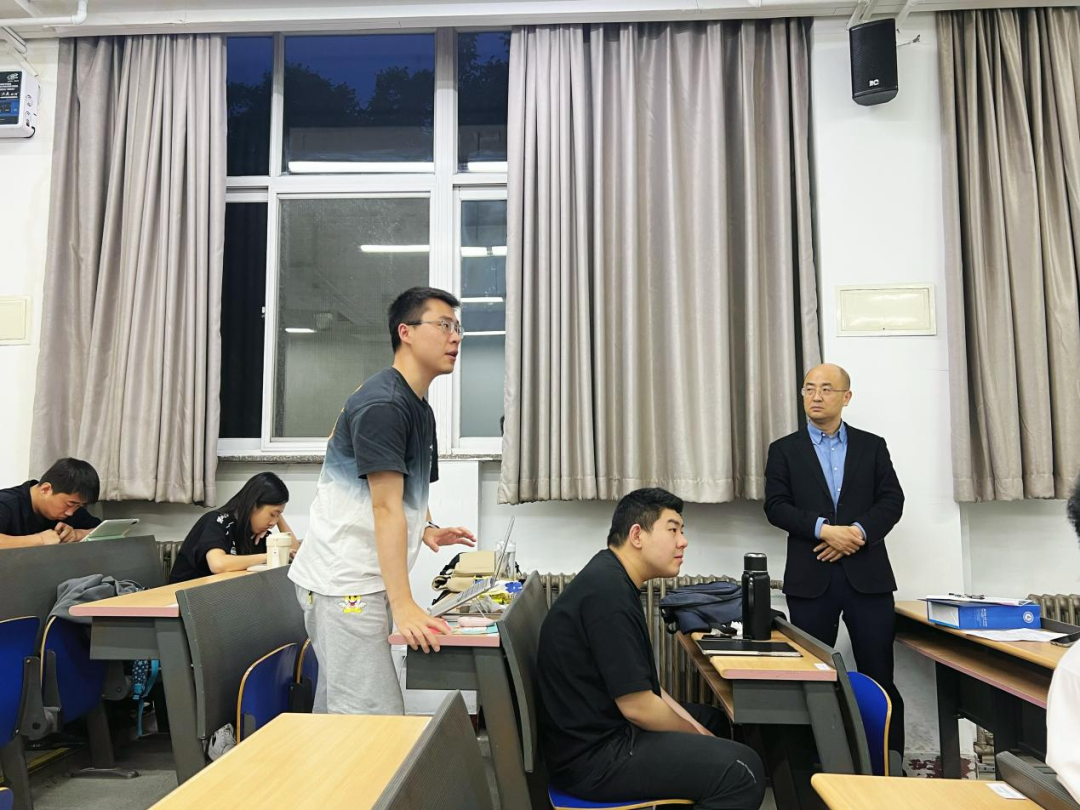
After the lecture, students and faculty engaged in lively interactive discussions with Deputy Chief Prosecutor Wang Xinjian on hot topics and contentious issues in judicial practice, as well as career planning. Associate Professor Shang Haowen opined that Deputy Chief Prosecutor Wang Xinjian's teachings deepened the students' understanding of the legal supervision concepts of the prosecution in the new era. In their future research, students should pay more attention to mastering the thinking method that combines theory and practice, and place greater emphasis on judicial practices such as case studies in their thesis writing. There was also interaction and communication with Deputy Chief Prosecutor Wang Xinjian regarding the effectiveness of mobile investigation rights and prosecutorial suggestions. Subsequently, Deputy Chief Prosecutor Wang Xinjian provided detailed and insightful responses to the questions raised by the attending teachers and students, earning widespread acclaim.
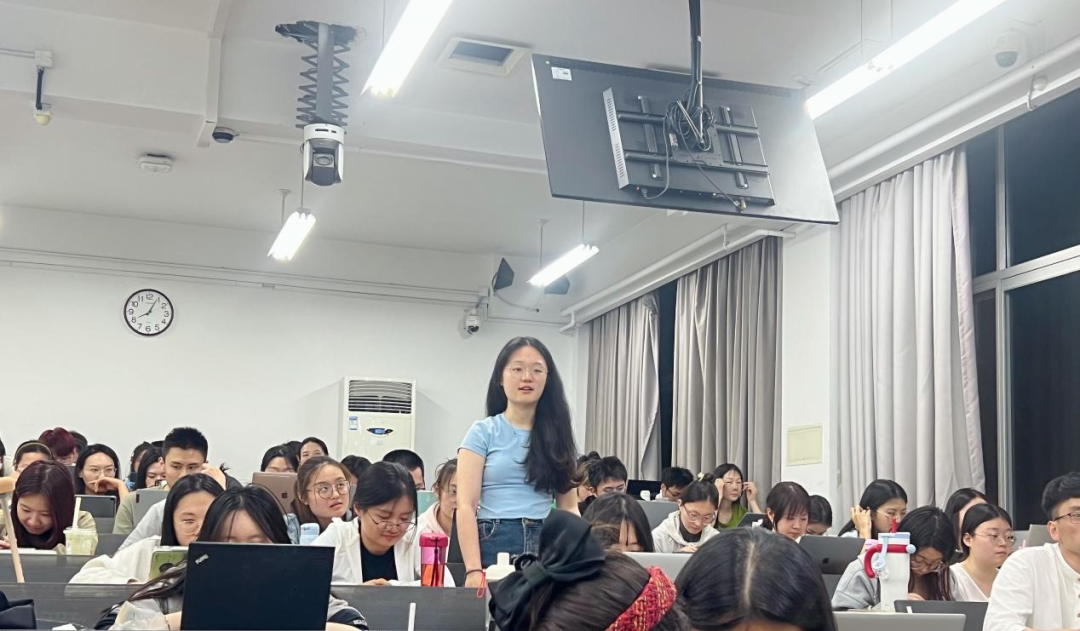
Following the interactive session, Dean Liang Yingxiu expressed her profound gratitude on behalf of the entire faculty and students of the law school for Deputy Chief Prosecutor Wang Xinjian's outstanding lecture. She believed that Deputy Chief Prosecutor Wang Xinjian offered a comprehensive analysis of the prosecutorial agency's work layout and conceptual orientation in the new era, weaving in hot issues and classic cases from judicial practice. The conduct of this lecture truly embodies the spirit of enhancing the education and training mechanism of law schools with a practice-oriented approach and is a vivid testament to the prosecutorial agency's social responsibility in supporting the cultivation of legal talents. Students should place greater emphasis on developing their written and oral expression skills, as well as their ability to learn across disciplines, to truly possess the capacity for deep thinking in their future studies. Dean Liang Yingxiu once again extended her heartfelt thanks to Deputy Chief Prosecutor Wang Xinjian for delivering a high-quality lecture during his personal time and expressed the hope that the prosecutorial agency and the Law School of Beijing Normal University could continue to deepen cooperation in the future, further advancing the practice-oriented education and training mechanism of law schools.
Finally, Dean Liang Yingxiu presented a commemorative certificate to Deputy Chief Prosecutor Wang Xinjian on behalf of the law school and posed for a group photo, marking the successful conclusion of the eighth lecture in the "Experts in Procuratorial Practice Entering Campus" series.
Typesetting: Xu Yiyang
Editor: Shi Tianyu