

How to characterize the conduct of intermediary Luo.
Jia Jidong, Zhang Qianhui, Zhong Wanqun
Editor's Note
We extend a cordial invitation to faculty, students, and legal scholars from law schools nationwide, as well as interested readers, to actively engage in the analysis of the following case, thereby jointly fostering the advancement of theoretical research and judicial practice. While the factual matrix appears straightforward, the legal characterization is intricate, presenting significant academic value. The case involves a convergence of multiple charges—including fraud, embezzlement, bribery, acceptance of bribes, bribery through influence peddling, and the introduction of bribery—all concentrated within a seemingly simple legal relationship. On November 6, 2025, law students from the College of Humanities and Development at China Agricultural University conducted an in-depth academic exchange regarding the manifestations of emerging occupational crimes. The participants demonstrated intellectual vitality and innovative perspectives, reflecting a high standard of academic rigor. The proceedings were subsequently published by the People's Court Daily in both text and video formats, garnering widespread attention and positive feedback from the legal community. Law students at Beijing Normal University also exhibited a keen interest in this subject. Building upon existing research, they integrated emerging issues in criminal law theory and employed innovative methodologies to further advance the academic discourse. We now present the primary viewpoints from this seminar and invite readers to consider these insights.
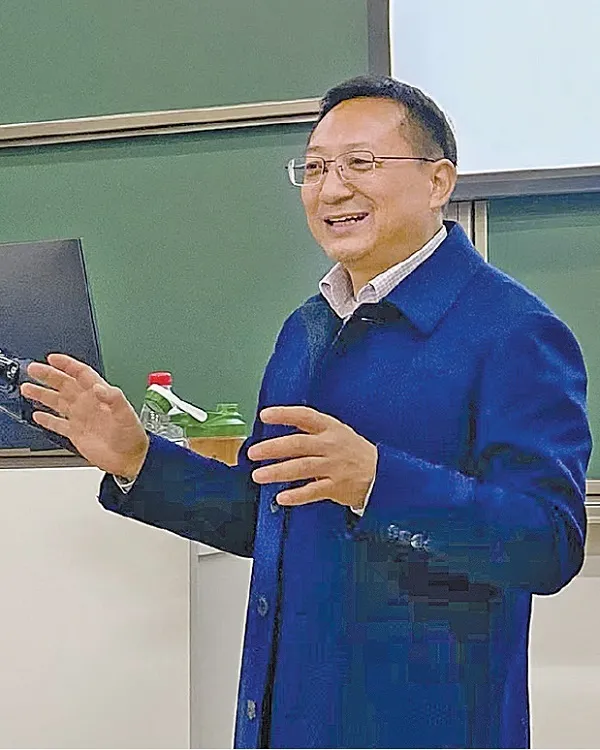
Professor Jia Jidong, Doctoral Supervisor at the Law School of Beijing Normal University

Master's student Zhang Qianhui at the Law School of Beijing Normal University

Master's student Zhong Wanqun at the Law School of Beijing Normal University
On November 11, 2025, students at Beijing Normal University Law School engaged in a spirited in-class debate, employing modern criminal law theories to analyze the legal nature of "intermediary bribery and the receipt of gratitude fees." Under the guidance of their instructor, the students examined the following case, and their primary arguments are summarized below:
Case Background: Wu, a private entrepreneur aware that the defendant, Luo, shared a long-standing friendship with Zhang, a state functionary, entrusted Luo to intercede on his behalf. Wu asked Luo to request Zhang's assistance in expediting the approval of a specific project. Luo subsequently approached Zhang with the request, and Zhang agreed to help. Luo then informed Wu that a payment of 3 million yuan would be required for Zhang; Wu agreed to the amount and remitted the funds to Luo. Luo delivered 2 million yuan to Zhang and misappropriated the remaining 1 million yuan for his own use. Subsequently, Zhang utilized his official position to facilitate the project's approval for Wu. In a gesture of gratitude, Wu later awarded Luo a "thank-you fee" of 500,000 yuan. Discussion Topic: The judicial determination of the intermediary Luo's conduct.
1. How should Luo's facilitation and introduction be legally characterized?
Chen Kou argues that the defendant Luo's actions first constituted complicity in the crime of bribery, satisfying the elements of such complicity. Regarding the subject element, Zhang was a state functionary, and although Luo was not, as an accomplice, he cooperated with Zhang in the commission of bribery by relaying requests and transferring the bribe, thus meeting the requirements for complicity. From a subjective perspective, when Luo conveyed Wu's request to Zhang, he explicitly informed him that "money needed to be given," thereby forming a common intent regarding "receiving property in exchange for conferring a benefit." Both parties were aware of the quid pro quo relationship between Zhang's official acts and the property. Objectively, Zhang performed the act of "using his official position to approve the project," while Luo provided assistance; the two collaborated to complete the power-for-money transaction. It is important to note that Luo's retention of 1 million yuan was an internal distribution of the jointly accepted bribe, which does not affect the establishment of complicity. The amount of the joint bribery should be recognized as the 2 million yuan actually received by Zhang.
Secondly, the defendant Luo constitutes the crime of bribery by utilizing influence. In terms of the principal element, Luo's long-standing friendship with Zhang qualifies him as a "person closely related to a state functionary." Regarding the subjective element, Luo knew that the 500,000 yuan paid by Wu was a "thank you for facilitating Zhang's assistance in the project approval," rather than an "additional bribe for Zhang." Subjectively, he possessed the intent to illegally possess this "intermediary reward." Objectively, the 500,000 yuan thank-you fee was paid by Wu after the project's approval was completed and is unrelated to the previous 3 million yuan bribe. Luo received this amount and did not pass it on to Zhang, which essentially means he exploited his close relationship with Zhang to obtain an improper benefit. This meets the objective criteria of "receiving property through the acts of a state functionary" and should be independently evaluated as the crime of bribery by utilizing influence.
In summary, the defendant Luo's actions constitute both complicity in bribery and the crime of bribery by utilizing influence, and he should face cumulative punishment for both offenses. The 1 million yuan withheld constitutes illegal gains from complicity in bribery, while the 500,000 yuan thank-you fee represents illegal gains from bribery by utilizing influence; both amounts should be confiscated.
Wang Bingxi argues that this behavior constitutes the crime of introducing bribery. Knowing that Wu had specific requests, Luo conveyed these requests to Zhang, a state functionary, and transferred a bribe of 2 million yuan. His actions served as a link between the briber, Wu, and the bribe recipient, Zhang. Therefore, this behavior involves two potential classifications: complicity in bribery and introducing bribery.
First, does this behavior constitute complicity in bribery? According to the standards for classifying accomplices, joint bribery can be divided into three situations: bribery between state functionaries, bribery between state functionaries and non-state functionaries (who have non-public powers), and bribery between state functionaries and individuals who hold no official position. Clearly, Luo's actions in this case fall under the third situation. These subjects can be further classified into "specific relational persons" and "other subjects outside of specific relationships," with different criteria for determining complicity in bribery. A "specific related person" refers to someone who has close relatives, mistresses, or other common interest relationships with state personnel. Therefore, the key issue is whether Luo belongs to "other persons with common interest relationships." Based on the nature of this crime, the common interest should be economic. In this case, Luo's act of appropriating 1 million yuan and receiving a thank-you fee of 500,000 yuan was unknown to Zhang; thus, it cannot be determined that there was a "common interest." Consequently, Luo belongs to other entities outside of specific related persons. The criteria for recognizing the crime of bribery as an accomplice for such entities is that "other persons outside of specific related persons collude with state personnel, who use their official position to seek benefits for the requester and jointly possess the property received from the requester." Regarding the 2 million yuan received by Zhang, Luo and Zhang had prior collusion, but there was no joint possession. Therefore, Luo's act of conveying the request and handing over the bribe of 2 million yuan does not constitute an accomplice in bribery.
After excluding the recognition of an accomplice in bribery, Luo, as an intermediary, connects the parties involved in bribery and receiving bribes, facilitates the realization of the transaction, and given the large amount involved and the serious circumstances, his actions meet the elements of the crime of introducing bribery.
Ding Wenxin believes that determining Luo's behavior as an intermediary should first consider whether he constitutes an accomplice to the crimes of bribery or accepting bribes; if it is difficult to recognize him as an accomplice, the crime of introducing bribery may be considered. When the intermediary has a close relationship with state personnel, it may also constitute the crime of bribery by utilizing influence. The intercepted money and the received thank-you fee are to be confiscated as illegal gains. First, it strictly adheres to the principle of "unity of subjective and objective elements" in criminal law theory. In bribery crimes, the key issue is whether there is collusion between the intermediary and the state official. If Luo had an agreement with Zhang beforehand, and Zhang was aware of or tacitly approved Luo's act of misappropriating 1 million yuan, then Luo and Zhang would form a joint criminal entity for bribery. Conversely, if Luo intercepted the funds without Zhang's knowledge, then Luo and Zhang would lack the joint intent for bribery and thus would not constitute accomplices in the crime of bribery. Second, it flexibly utilizes the system of offenses in the criminal law. When it is impossible to determine that Luo and Zhang are accomplices, the offense of "bribery by utilizing influence" is a more precise choice. Luo took advantage of his close relationship with Zhang, who has been a friend for many years, to seek improper benefits for Wu through Zhang's official actions and thus received a "thank-you fee" of 500,000 yuan. Luo's act of falsely reporting the amount of the bribe to defraud 1 million yuan is independent of the bribery crime itself; it infringes upon Wu's property rights. Third, it reflects the principle of "proportionality between crime and punishment." Luo plays multiple roles in this case: he is both the facilitator of the bribe and a participant in the bribery act, as well as a beneficiary of Zhang's influence. Overall, we need to first determine the core accomplice relationship and then evaluate the independent fraudulent and influence-trading behaviors. This approach avoids both duplicate evaluations and insufficient evaluations, ensuring that the final legal sanctions fully and accurately reflect all of Luo's crimes.
Therefore, I tend to believe that Luo should be separately charged with bribery, fraud, and accepting bribes through influence, resulting in "multiple punishments for multiple crimes." Specifically, Luo and Wu's initial request behavior constitutes a typical attempt to seek improper benefits from state personnel, and their joint actions meet the elements of the crime of bribery. However, regarding the amount involved, Luo fabricated the fact that "Zhang needed to receive 3 million yuan," inducing Wu to provide property under a misunderstanding, and ultimately appropriating 1 million yuan for himself; the victim's own illegal actions do not negate the establishment of fraud as long as their disposal of property is based on a misunderstanding. As for the 500,000 yuan received afterwards, I believe this constitutes a completely different nature of behavior. At this point, the exchange of benefits no longer involves the bribery process, but rather Luo, based on his close relationship with Zhang, sought to benefit Wu by influencing Zhang's official actions, thereby demanding and receiving property. According to the provisions of Article 388-1 of the Criminal Law, the crime of bribery by using influence is constituted, and the core of this crime lies in whether it can "influence the decision-making of state personnel through relationships." Based on the previous discussion, multiple crimes should be punished together for Luo, meaning his actions should be divided into three separate criminal acts: first, the act of soliciting Zhang by him and Wu constitutes the crime of bribery; second, he embezzled 1 million yuan from the bribe money by fabricating facts, which constitutes the crime of fraud; finally, the 500,000 yuan he received later, utilizing his relationship with Zhang, should be recognized as bribery by using influence.
Xu Yimeng believes that Luo's actions constitute both accomplice to bribery and embezzlement. Luo knew that Wu was giving money to seek improper benefits, yet he actively proposed to "handle it" on behalf of Wu and personally handed 2 million yuan to Zhang, a state employee, thereby facilitating state personnel to approve projects for Wu using their official convenience. Subjectively, Luo shared the intent to bribe with Wu, and objectively, they jointly committed the act of bribing state personnel, meeting the constitutive elements of being accomplices in bribery. At the same time, Luo privately intercepted 1 million yuan from the 3 million yuan entrusted to him by Wu, taking it for himself. Although he had legal possession at the time of acquisition, he subjectively transformed it into illegal possession and disposed of it without authorization, constituting the crime of embezzlement. As for other charges, they should be excluded. Luo did not treat "influence" as the object of the transaction, but rather aimed for "monetary bribery," and the final 500,000 yuan is not a crime of bribery by utilizing influence; it was not completed under the condition of influence, but rather a thank-you payment from illegal gains. Therefore, it does not constitute the crime of bribery by utilizing influence. It is not merely a matter of matchmaking; rather, he personally delivered the bribe, which does not constitute the crime of introducing bribery. Moreover, Wu entrusted based on trust and did not dispose of his property due to deception, thus lacking the deceptive structure required for fraud. In summary, Luo has dual illegalities of being an "accomplice in bribery" and "embezzlement of property" in this case, and should be convicted and punished according to the principle of concurrent sentences.
Zhang Xinyue believes that the actions of the middleman, Luo, constitute the crimes of fraud and accepting bribes by abusing influence. Luo's act of possessing the 1 million yuan in this case was unknown to Wu and Zhang. Therefore, Luo's statement to Wu that "he would give Zhang 3 million yuan" was a fabricated fact, leading Wu to mistakenly believe that "the 3 million yuan was necessary for Zhang to complete the entrusted matter," and based on this misunderstanding, he disposed of the 3 million yuan, with Luo obtaining 1 million yuan for illegal possession, which meets the constitutive elements and should be recognized as Luo committing the crime of fraud. In this case, Luo is considered a "person closely related to a state worker," accepting Wu's commission, utilizing the favorable conditions formed by the authority and position of the state worker Zhang, who is closely related to him, to request Zhang to facilitate the approval of Wu's related projects, thereby seeking improper benefits for the client Wu, and obtaining a thank-you fee of 500,000 yuan from Wu for fulfilling the entrusted task, which meets the constitutive elements of Article 388-1 of the Criminal Law, constituting the crime of bribery by using influence. In summary, I believe that the intermediary Luo in this case constitutes the crime of fraud, defrauding property worth 1 million yuan; and constitutes the crime of bribery by using influence, involving property worth 500,000 yuan.
Zhao Yimeng believes that Luo and Wu committed the crime of bribery together, with the amount involved being 3 million yuan. Luo committed deceptive acts against Wu with the intention of illegal possession, leading Wu to mistakenly dispose of his property, resulting in a fraud amount of 1 million yuan. Zhang, as a state worker, used his position to seek improper benefits for others, constituting the crime of bribery. Luo gave Zhang 2 million yuan, making him an accomplice in the bribery crime, with the crime amount being 2 million yuan. Luo constitutes both a joint crime of bribery and a joint crime of accepting bribes, with the two crimes being imagined concurrent offenses. Afterwards, Wu gave Luo a thank-you fee of 500,000 yuan, which constitutes the crime of accepting bribes through the use of influence, with the crime amount being 500,000 yuan. In summary, Luo constitutes imagined concurrent offenses of bribery and accepting bribes, as well as fraud and accepting bribes through the use of influence. Zhao Yimeng believes that Luo does not constitute the crime of introducing bribery, as this crime emphasizes communication between the briber and the bribee, playing a bridging role. In this case, Luo clearly played a substantive role, participating as the main subject in both bribery and accepting bribes, rather than standing as a neutral third party, thus not constituting the crime of introducing bribery.
Zheng Can believes that this behavior constitutes multiple crimes, including being an accomplice to bribery, fraud, and accepting bribes by abusing influence. The legal interest protected by the crime of bribery is the "non-purchasability of state official conduct." The 2 million yuan transferred by Luo directly impacts this legal interest. Luo's actions are inherently those of introducing bribery, but due to his significant role and the large sums of money involved, he is transformed into an accomplice of the crime of bribery. The legal interest protected by the crime of fraud is "the property ownership of citizens." Luo defrauded 1 million yuan, directly infringing on Wu's personal property, which is unrelated to the integrity of state officials' conduct. The previous classmate mentioned that considering Wu as a criminal and labeling him as a fraud undermines the advocacy for social justice. I do not agree with this; even if Wu committed a crime, his legal rights are protected by law, and there should be no difference due to his identity.
Zheng Jinhuan believes that the 2 million yuan bribe should be classified as Wu and Luo being accomplices in the crime of bribery. Luo, entrusted by Wu, delivered 2 million yuan to Zhang, a state employee. Both parties clearly had the intention of "exchanging money for power" in the bribery. Wu hoped to obtain approval convenience through the money, Luo assisted in completing the delivery of the money to facilitate the transaction, and Zhang, after accepting the money, used his position to process the approval for Wu. In this case, Luo and Wu had a shared intent to bribe and engaged in assisting the delivery of the bribe, constituting a conspiracy to commit bribery. Zhang accepted the payment and sought benefits for others, constituting the crime of accepting bribes, with the amount of bribery being 2 million yuan.
Luo's actions should not be broadly classified as the crime of introducing bribery. According to Article 392 of the Criminal Law, the essence of the crime of introducing bribery is to act as a mediator between the briber and state officials, based on the premise of "purely mediating behavior," without substantial involvement in controlling the bribe or distributing benefits. In this case, Luo not only contacted state official Zhang for Wu but also actually controlled the 3 million yuan bribe delivered by Wu, independently deciding the distribution of the funds, and received a 500,000 yuan thank-you fee after the project approval was completed. His actions have exceeded the scope of "introduction," deeply participating in the core aspects of bribery, fitting the characteristics of a co-conspirator in bribery or accepting bribes. If evaluated solely as the crime of introducing bribery, it clearly severs the connection between the act and the essence of the crime.
2. The debate on the characterization of Luo's act of intercepting 1 million yuan.
Chen Kou argues that Luo's actions did not constitute the crimes of fraud or embezzlement, and conducted exclusion analyses accordingly. Regarding the crime of fraud: First, the subjective requirement for fraud is that the perpetrator must possess the intent "to obtain property from others by fabricating facts or concealing the truth." In this case, although Luo intercepted 1 million yuan, his subjective intent was to "retain part of the bribe," which is fundamentally different from the specific intent required for fraud. Second, Wu's payment of 3 million yuan was aimed at "gaining convenience in project approval through bribery," a goal which was ultimately achieved. Therefore, Wu was not misled by Luo's actions in a manner relevant to the crime of fraud. Finally, the 1 million yuan intercepted by Luo constitutes "bribe money," which is considered the illegal gains of a co-conspirator in the crime of accepting bribes. In contrast, the object of the crime of fraud is "the legitimate property of the victim." These two are fundamentally distinct, further excluding the applicability of the fraud charge. Regarding the crime of embezzlement: First, the crime of embezzlement requires that the perpetrator subjectively intends to "illegally possess the legitimate property of another," an intent based on a violation of a legal custody relationship. In this case, Luo's intention to intercept 1 million yuan stems from his use of his own "influence" rather than a violation of ordinary civil custody obligations. Second, the objective premise of embezzlement is that the perpetrator "legally holds" the property of another. In this case, Wu's payment of 3 million yuan to Luo was entrusted for the purpose of bribing state officials, constituting an illegal entrustment. Consequently, Luo lacks a legal basis for holding that amount. Finally, the crime of embezzlement protects the legitimate property rights of the rights holder. However, the 1 million yuan intercepted by Luo is considered an "unlawful cause of payment" used for bribery. Wu, due to his own illegal purpose of bribery, has lost the legitimate right to request the return of that amount, meaning it does not fall within the category of legitimate property protected by the crime of embezzlement.
Second, the subjective aspect of fraud requires the perpetrator to possess direct intent for the purpose of illegal possession, which clearly does not apply to Luo. From the perspective of general intermediary practice, Luo's overall intent was to facilitate project approval for Wu through his special relationship with Zhang, thereby obtaining corresponding remuneration, rather than deceiving Wu to obtain his property. The subjective purpose of withholding 1 million yuan was not "illegal possession," but rather a "service fee" deserved for contacting state personnel and advancing the entrusted matter.
Finally, the object of the crime of fraud is the ownership of public and private property. In this case, the 2 million yuan that Luo transferred to Zhang has already been evaluated under the categories of embezzlement and bribery crimes. The generation of the 1 million yuan in question is similarly rooted in the close relationship between the intermediary Luo and state personnel Zhang, with the purpose remaining the facilitation of project approval through state personnel. Essentially, both the 1 million yuan and the 2 million yuan in question pertain to the violation of the national integrity system and the probity of official duties, infringing upon the same legal interest.
Ma Yimeng posits that the analysis should focus on whether Luo's conduct constitutes fraud. She argues that Luo's retention of 1 million yuan in bribe money and receipt of a 500,000 yuan thank-you fee are intrinsically linked to bribery offenses, differing fundamentally from the logic of fraud. Regarding the element of fabricating core facts, Luo did not fabricate key facts directly related to Wu's disposition of property. Wu's primary objective was to secure project approval by bribing Zhang. Luo not only refrained from fabricating the necessity of bribing Zhang but actually fulfilled the request, facilitating Zhang's use of official power to approve the project, thereby fully realizing Wu's purpose. Luo neither fabricated a promise of assistance from Zhang nor concocted false conditions that 3 million yuan was a mandatory requirement for approval.
Regarding the element of falling into a misunderstanding, Wu knew from the outset that the 3 million yuan payment constituted a bribe intended to exchange for Zhang's official favors. His disposition of property was an active choice driven by an illegal purpose, rather than a cognitive error induced by deception. Even if Wu had known that Luo only transferred 2 million yuan to Zhang, provided the project was approved, he would have consented to the payment. Regarding the causal link between property disposition and misunderstanding, Wu's direct motive for paying 3 million yuan was to obtain the benefits of project approval, not a reliance on the specific figure cited by Luo. Consequently, Wu's disposition of property is not directly causally linked to Luo's embezzlement, nor was it a choice made due to deception, effectively severing the causal chain required for the crime of fraud.
Sun Yuhan contends that regarding the amount involved, Luo fabricated the fact that "Zhang requires 3 million yuan," inducing Wu to dispose of property under a misunderstanding, and ultimately appropriating 1 million yuan for himself. This sequence aligns perfectly with the constituent logic of fraud. The fact that the "victim engaged in illegal conduct" does not preclude the establishment of fraud, provided that the disposition of property was based on a misunderstanding. Therefore, Luo's act of embezzling 1 million yuan constitutes the crime of fraud.
Song Jie argues that Luo's embezzlement of 1 million yuan constitutes fraud, while excluding the crime of misappropriation. The core misconception regarding the charge of misappropriation lies in equating the "existence of a fiduciary relationship" with the "legitimacy of holding property." However, in this case, the fiduciary relationship itself was established based on Luo's deception. Wu transferred the funds believing that "the entire 3 million yuan was designated for bribery," rather than granting Luo a broad mandate to "independently dispose of the funds." The 1 million yuan embezzled by Luo never constituted "legally held property for safekeeping"; rather, it was property obtained directly through deception. This is fundamentally distinct from the crime of misappropriation, which involves "converting property after legal possession." In summary, Luo defrauded Wu of 1 million yuan by fabricating the bribe amount and concealing the embezzlement, fully satisfying the complete logical chain of fraud—"deceptive conduct, misunderstanding, disposition of property, and illegal possession"—and should be convicted and punished accordingly.
Wang Bingxi argues that the act of withholding 1 million yuan constitutes fraud, while excluding embezzlement. This is because Luo lied to the petitioner, Wu, claiming that 3 million yuan was required to bribe the state functionary Zhang, whereas he actually delivered only 2 million yuan and retained 1 million yuan for himself. Luo possessed the subjective intent to illegally possess the 1 million yuan, and his conduct satisfies the objective elements of fraud, specifically "fabricating facts and concealing the truth." Consequently, Wu, acting under a misunderstanding (believing the full 3 million yuan was utilized for the bribe), disposed of his property, resulting in Luo's illegal possession of the funds. Does this behavior constitute embezzlement? The crime of embezzlement is predicated on the perpetrator having legal possession. In this instance, Wu's purpose in handing over the 3 million yuan was bribery; thus, the nature of these funds is that of a criminal instrument (a bribe), which does not fall under the category of "property of others" protected by law. Therefore, Luo's act of intercepting this amount does not constitute embezzlement.
Zhao Yimeng argues that Luo's possession of the 1 million yuan does not constitute embezzlement. Embezzlement involves converting property belonging to another into one's own, where the other party retains a legitimate right to claim its return. However, since the 1 million yuan is classified as illicit funds (stolen money), Chinese criminal law does not afford protection to such funds. Therefore, as Wu has no legitimate right to claim the return of the 1 million yuan, Luo's actions do not constitute embezzlement.
Zheng Jinhuan believes that the misappropriated 1 million yuan should be classified as bribery by taking advantage of influence. Luo and Zhang share a "long-standing friendship," placing Luo in the category of "persons with close relationships to state functionaries" as stipulated in Article 388-1, Paragraph 1 of the Criminal Law. Wu's payment of 1 million yuan to Luo was primarily aimed at "obtaining Zhang's official favor through Luo's influence," which satisfies the elements of the crime of "bribing a person with influence." Since the funds were actually delivered, the crime is established. Correspondingly, Luo's acceptance of the 1 million yuan and his utilization of his special relationship with Zhang to benefit Wu constitutes the crime of bribery by taking advantage of influence. From a subjective perspective, Luo viewed the intercepted amount as a deserved reward for facilitating the transaction, rather than an intent to illegally possess property through deception. Thus, he lacks the subjective intent required for property crimes, and consequently, Luo's actions do not constitute fraud, embezzlement, or other property offenses.
3. How should Wu's subsequent act of giving Luo a thank-you fee of 500,000 yuan be characterized?
Sun Yuhan maintains that the receipt of the 500,000 yuan constitutes an act of a fundamentally different nature. At this stage, the exchange of benefits no longer pertains to the bribery process itself; rather, it involves Luo, relying on his close relationship with Zhang, seeking to benefit Wu by influencing Zhang's official actions, thereby demanding and receiving property. According to the first paragraph of Article 388-1 of the Criminal Law, this represents a typical instance of bribery by using influence. The core of this offense does not hinge on whether the perpetrator is a state functionary, but rather on whether they can "influence the decision-making of state functionaries through connections." Luo's close relationship with Zhang, which effectively facilitated Wu's gain, provides sufficient grounds to establish this charge.
Zheng Jinhuan contends that the intermediary Luo's receipt of a 500,000 yuan thank-you fee constitutes the crime of accepting bribes by taking advantage of influence. This sum was paid by Wu to Luo in gratitude for "facilitating the transaction" following the project's approval. In essence, Luo's capacity to obtain the thank-you fee remains rooted in his special relationship with Zhang. This conduct meets the criteria for the crime of bribery by utilizing influence, defined as using close relationships with state functionaries to obtain improper benefits for a client, and soliciting or accepting property from said client. Therefore, Luo's act of receiving a thank-you fee of 500,000 yuan should be characterized as bribery by utilizing influence, while Wu's corresponding conduct constitutes the crime of bribing an influential person.

Scan the code to watch the related video.
The above text and images are sourced from the People's Court Daily.