

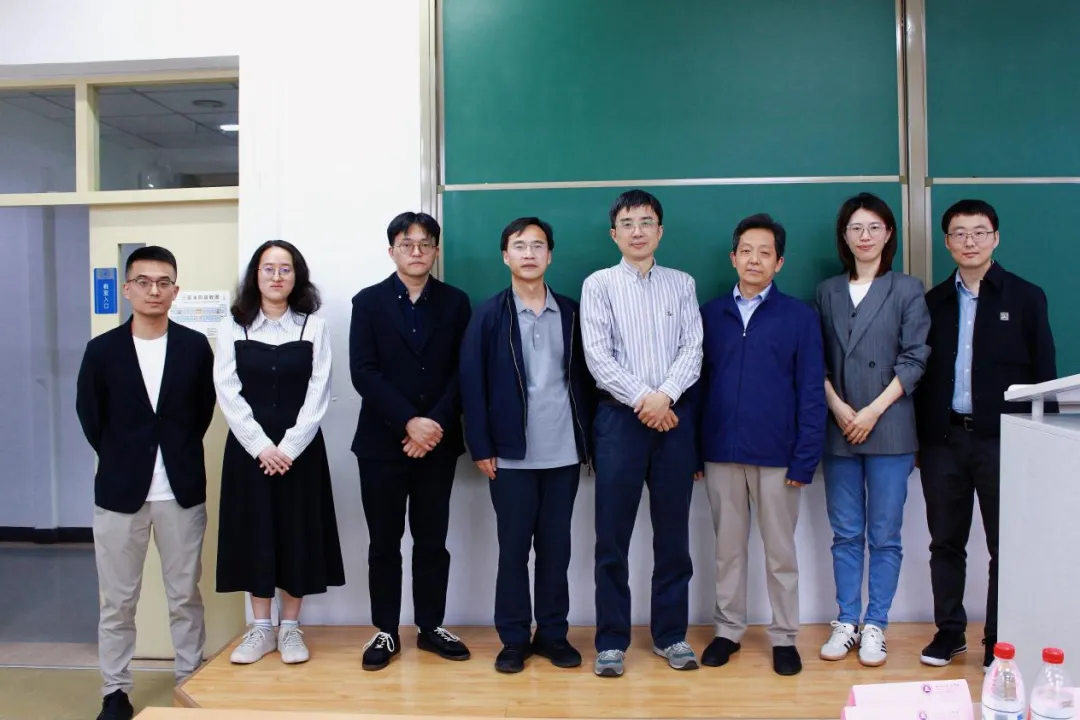
On the afternoon of April 26, the 45th lecture of the BNU Law Lecture Series, titled "The Binding Force of Contractual Rights," was successfully held in Room 301 of the Second Teaching Building at Beijing Normal University's Haidian Campus. The lecture was presented by Professor Xie Gen from the Law School of Nanjing University. The discussion panel comprised Professor Dai Mengyong from the School of Civil and Commercial Economic Law at China University of Political Science and Law, Associate Professor Sun Xinkuan and Lecturer Yang Xu, both from the Law School of Beijing Normal University. Professor Yuan Zhijie, also from the Law School of Beijing Normal University, served as the host for the event. The audience included a distinguished group of attendees, such as Associate Professor Shen Zhaohui from the Law School of Tsinghua University, Lecturer Zhang Lanlan from the School of Civil and Commercial Economic Law at China University of Political Science and Law, Editor Qian Yue from the Legal Publishing Division of Peking University Press, along with over a hundred students and legal practitioners from various universities.
At the beginning of the lecture, Professor Xie Gen first clarified the concept of contractual binding force and pointed out that there are a series of issues related to the grounds for liability in our current laws that have yet to be clarified. Whether breach of contract liability constitutes a requirement based on grounds for liability is the first question we should consider. Subsequently, Professor Xie Gen presented various viewpoints through an analysis of empirical legal provisions, while the academic community in our country generally adopts a dualistic theory of "strict liability in principle and fault liability in exceptions." However, this general theory raises difficult questions such as how to determine the grounds for liability in unnamed contracts.
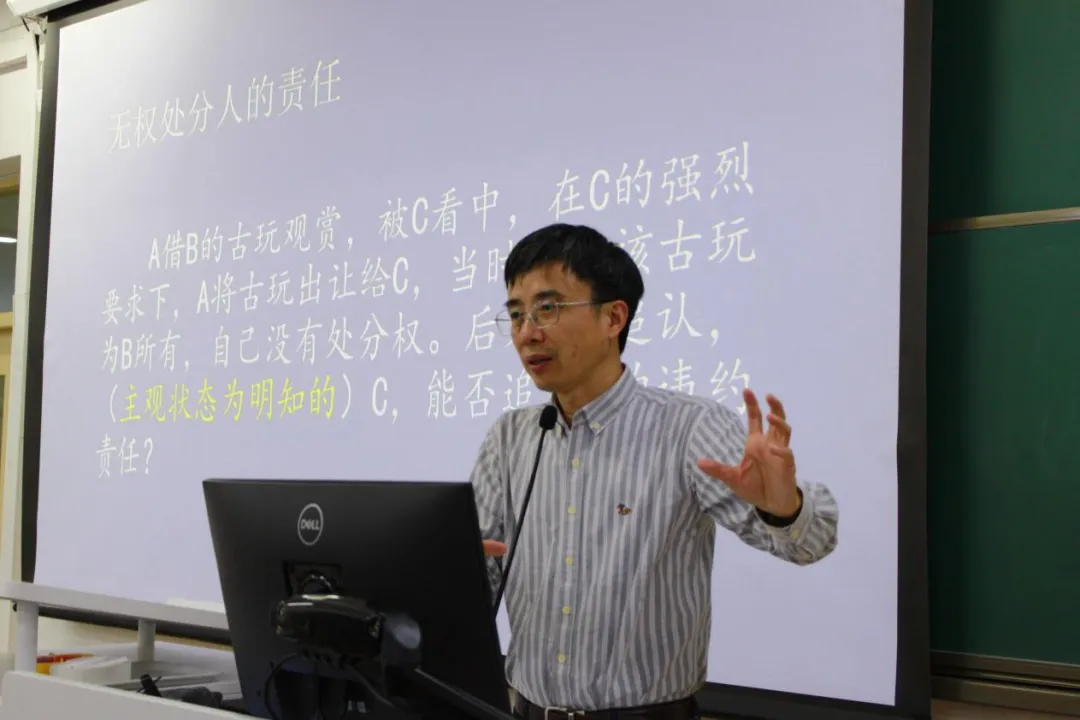
Next, Professor Xie Gen initiated a thought-provoking discussion by posing a series of critical questions: What rationales underpin strict liability and fault liability? How can these two liability frameworks coexist harmoniously within the same legislative framework? Why does a debtor under strict liability shoulder a heavier burden than one under fault liability? To delve deeper into these issues, he introduced the pivotal concepts of means obligations and result obligations. He illustrated his points with practical challenges faced by judges and the legislative gaps concerning the liability of auxiliary performers in debt execution under fault conditions, highlighting the logical inconsistencies in the dual liability attribution system. From this analysis, a preliminary conclusion emerged: relying solely on liability attribution as a theoretical foundation makes it challenging to comprehend the binding force of contractual obligations as a whole, necessitating a paradigm shift. Building on this foundation, Professor Xie Gen systematically reviewed the theoretical models of 'creditor-debtor composition' and 'contract composition' concerning contractual binding force, exploring their implications in purely hypothetical scenarios. The 'creditor-debtor composition' model formalizes obligation content without considering the contract as the cause of obligation. It distills the right to demand specific actions from specific individuals from the obligation, leading logically to the untenable legal effect of 'super obligations,' where the original performance obligation cannot be transformed into a liability for damages. To address these issues, this theoretical framework must resort to external systems for rectification. In contrast, the 'contract composition' model offers a substantive understanding of obligation content, fully acknowledging the contract as the cause of obligation. Under this theory, it becomes sufficient to reasonably ascertain obligation content without relying on external systems introduced in the 'creditor-debtor composition' model. Determining obligation content stands as the core of the contract composition model.
Professor Xie Gen further argued that, under the standard of a rational person, strict liability and fault liability should yield identical outcomes when comparing "breach of contract" in German law with "default" in Chinese law. Hence, strict liability should not impose stricter standards on the debtor.
Subsequently, Professor Xie Gen redirected his attention to Chinese law, asserting that our current legal framework aligns with the "formation of contracts" and should adhere to the principle of strict liability monism. Within this context, he scrutinized the definitions of creditor's rights, the coexistence of risk burden and termination, force majeure, and the inability to perform monetary debts in current legislation, assessing their strengths and weaknesses. He identified the clause concerning "default" caused by third-party reasons as a "particularly significant challenge," as it creates an unbounded super debt but also provides a positive legal basis for transcending the dualism of fault. Finally, Professor Xie Gen focused on the issues of fault offset and the liability of unauthorized disposers, further elucidating the logic of problem analysis using the theory of contract formation.
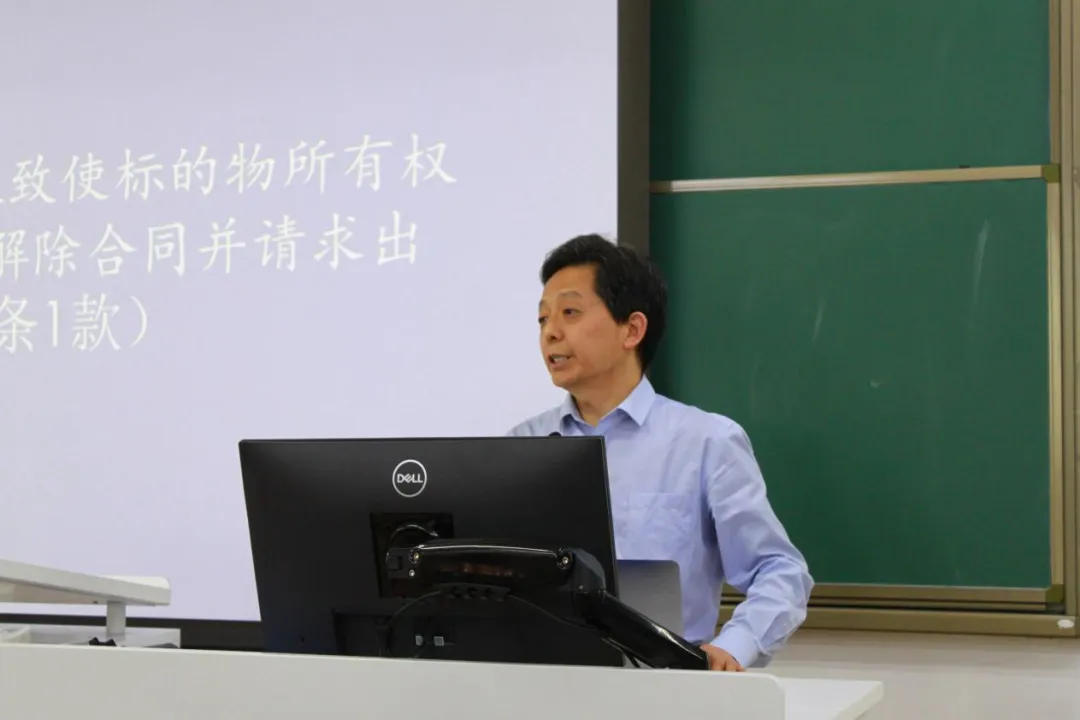
During the lively discussion session that followed, Professor Dai Mengyong offered his insights, noting that the theory of contractual binding power proposed by Professor Xie Gen has its roots in Japanese legal scholarship and brings a fresh perspective to our established debt law system, particularly in the realm of performance obstacle law. He found Professor Xie's theory highly persuasive in explaining numerous legal issues. Professor Dai delved into Professor Xie's views on the principles of liability for breach of contract and contracts involving the sale of others' property, contextualizing them within the legislative backdrop of China's contract law. Regarding the principle of liability for breach of contract, he dissected the rationale behind Article 107 of the Contract Law, which adopts strict liability, through the lenses of literal, systematic, purposive, and historical interpretations. He also shed light on why many provisions in the specific sections of the Contract Law retain stipulations of fault liability. On the topic of unauthorized disposition, Professor Dai highlighted that Article 597 of the Civil Code draws its origins from Article 3 of the 2012 "Interpretation of the Supreme People's Court on the Application of Law in the Trial of Disputes over Sales Contracts." This revision was made to address the uncertainty surrounding the validity of contracts involving unauthorized disposition, such as the sale of another's property, under Article 51 of the Contract Law. Despite a prevailing academic consensus that the validity of sales contracts does not hinge on the seller's right to dispose of the property, he pointed out that many judges in judicial practice remain influenced by past legislation, theories, and customs, often failing to recognize this shift. From this vantage point, he argued that the provision in Article 597 of the Civil Code retains practical necessity. Finally, Professor Dai Mengyong underscored that the crux of Professor Xie Gen's theory of contractual binding force lies in the interpretation of contract content, which determines the obligations and risks undertaken by the debtor. However, he cautioned that due to the absence of sufficiently clear legislative standards, applying this theory in judicial practice might lead to an undue amount of discretion for judges, potentially introducing inconsistencies and uncertainties in legal outcomes.
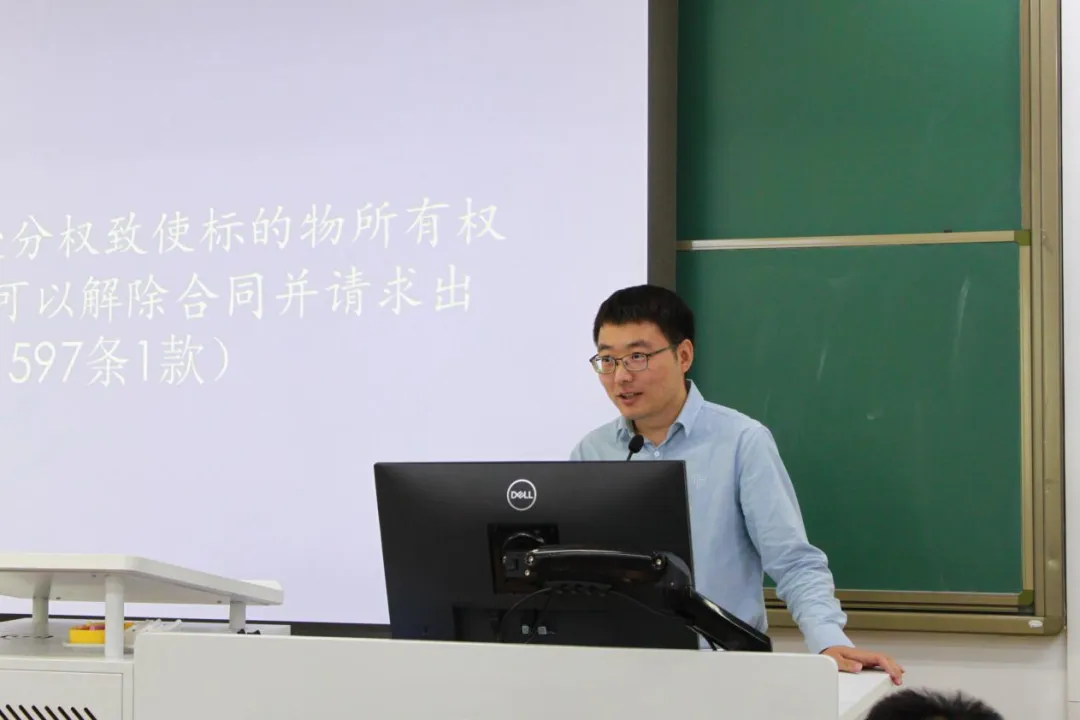
Associate Professor Sun Xinkuan reviewed his academic journey in civil law and his connection with Professor Xie Gen, expressing gratitude for the inspiration brought by Professor Xie in both academic and ideological aspects. For a long time, he regarded the risk-bearing system as a challenging issue in research, while Professor Xie's theory of contract formation provided him with a fresh perspective. He also used the example of the rights and obligations between depositors and banks in cases of third-party fraud to demonstrate the enlightening significance of Professor Xie's related theories. Associate Professor Sun Xinkuan believes that the theory of contract formation can be established within the framework of current law in China, but the challenge lies in how to advance it further. The core issue of Professor Xie's theory is the determination of the content of obligations, and how judges can reach appropriate conclusions through interpretation is a question worthy of scholars' joint efforts to explore.
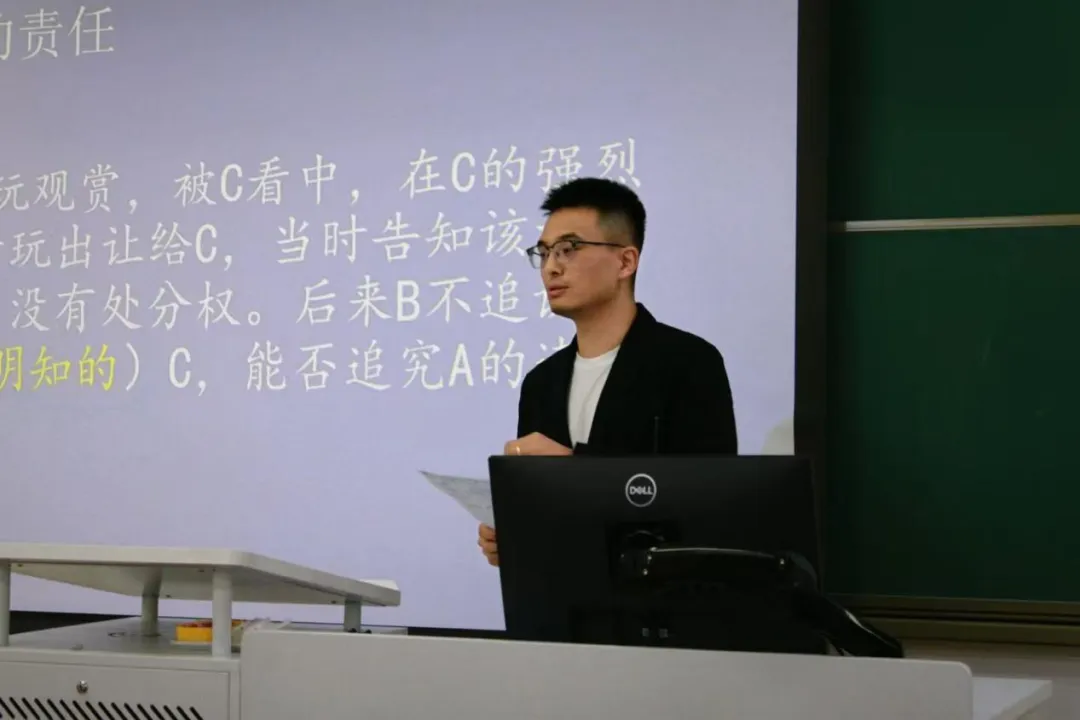
Lecturer Yang Xu shared his learning experiences from three levels: First, the two theories of composition mentioned by Professor Jie Gan stem from two different perspectives: "legal centralism" and "contract centralism," both of which are reflected in the discretionary norms of our Civil Code. Second, by maximizing the autonomy of the parties under the debt law system, the two positions may be reconciled in the general principles of debt law. Therefore, it is necessary to distinguish between the determination of debt content and the non-performance of debt as two independent levels, reflecting the commonalities and individualities of consensual debts and statutory debts at different levels. Third, the core issue of preventing arbitrary judgments by judges in judicial rulings can be resolved through the theoretical construction of contract interpretation, which distinguishes between three stages: contract interpretation, contract supplementation, and contract modification and termination, each with different thresholds for argument.

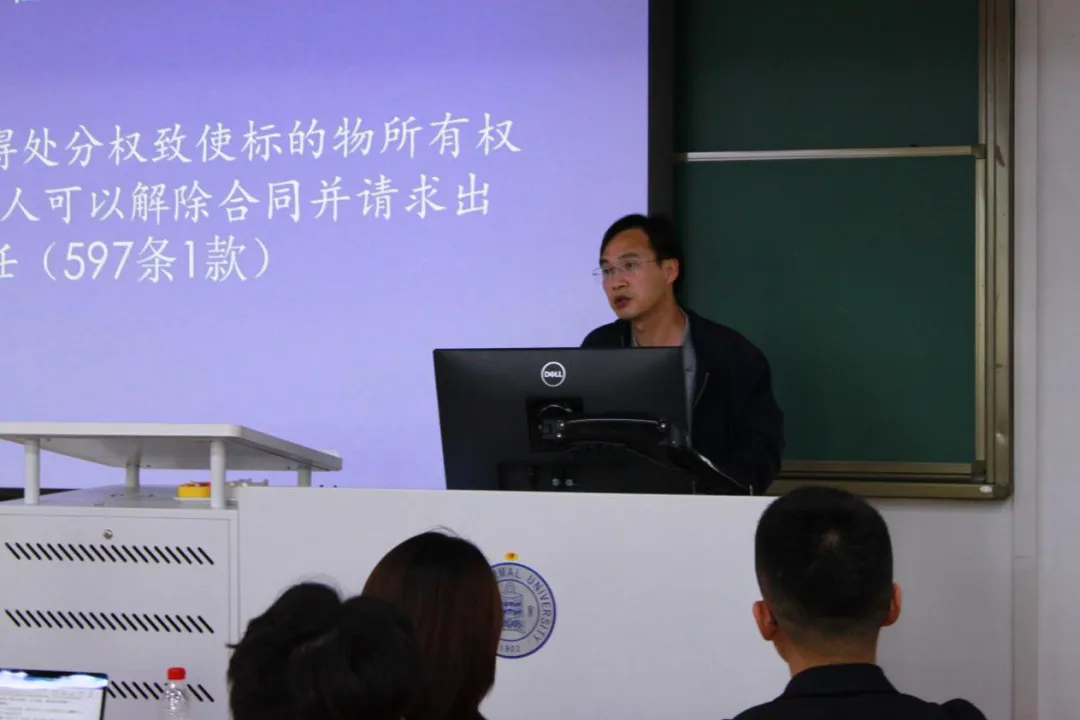
Host Professor Yuan Zhijie shared his views. He pointed out that contracts not only have relativity but also symmetry. Symmetry determines the distribution of rights, obligations, and risks between the parties to the contract. In the commercial field, the considerations of both parties regarding the performance of obligations are more detailed compared to the civil field. Force majeure means tighter price negotiations, risk prevention, and dispute resolution mechanisms for commercial entities. The symmetry of contracts is also reflected in this context. Professor Yuan Zhijie also proposed that the core logic of risk transfer is that the party that can control the risk to the greatest extent should bear the risk. Professor Xie Gen's viewpoint well positions the role of fault in the field of debt.

Subsequently, Professor Xie Gen responded to the questions raised during the discussion session. During the Q&A session, students actively consulted Professor Xie Gen about their doubts regarding the determination of debt content and received detailed answers and signed books from him.

At the end of the lecture, Professor Yuan Zhijie summarized the session and expressed gratitude to the attending experts, scholars, faculty, and students. The lecture concluded successfully amidst warm applause!