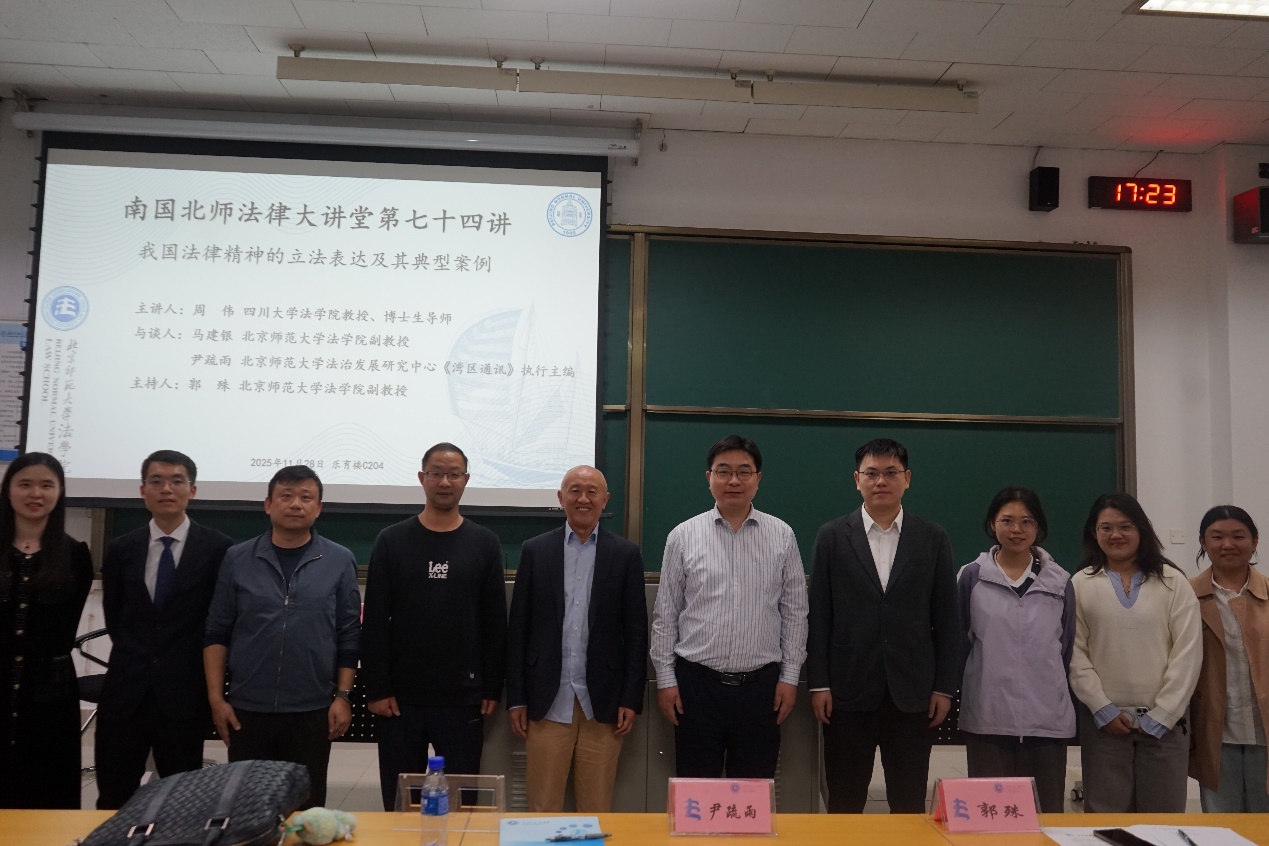
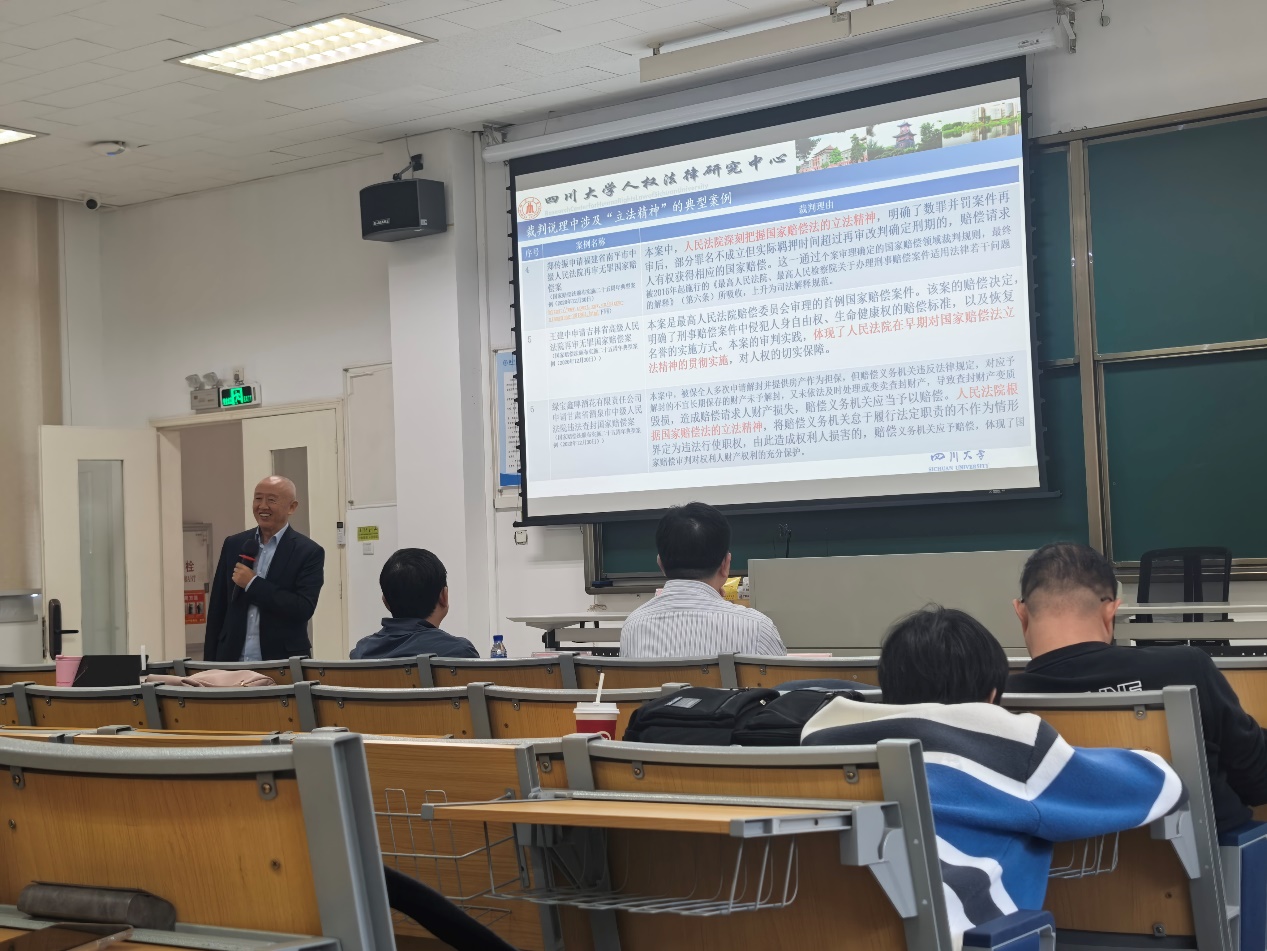
On November 28, the 74th lecture of the BNU Zhuhai Legal Lecture Series, titled “The Legislative Expression of the Spirit of Law and Its Typical Cases in China,” was successfully held in Classroom C204 of the Leyu Building at BNU Zhuhai. The lecture was delivered by Professor Zhou Wei, a Doctoral Supervisor at the Law School of Sichuan University, with Associate Professor Ma Jianyin from the BNU Law School and Editor-in-Chief Yin Shuyu from the Center on the Rule of Law and Development at BNU serving as panelists, while Associate Professor Guo Shu acted as the host.
To begin, Professor Guo Shu formally introduced Professor Zhou Wei to the faculty and students in attendance, highlighting his distinguished standing in the academic community and his prolific research achievements.
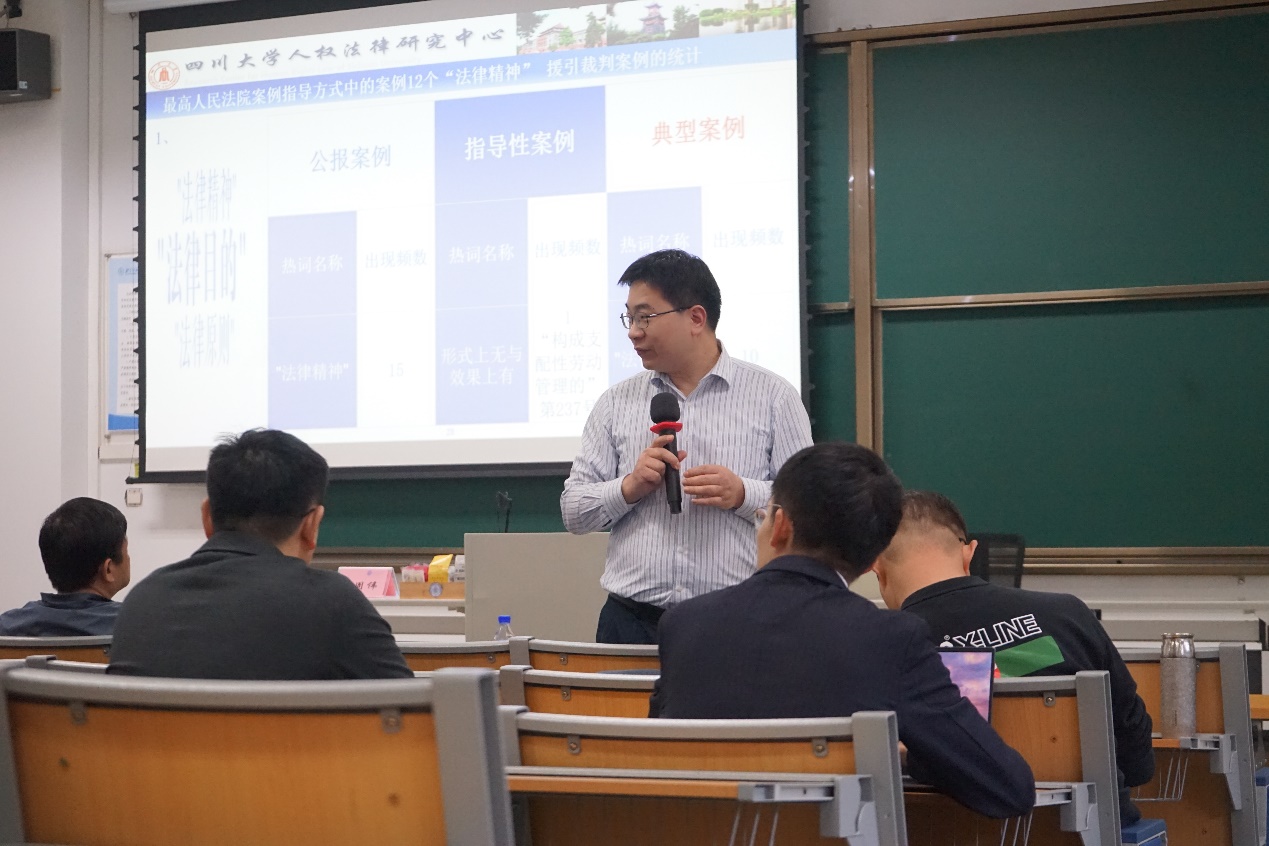
Professor Zhou Wei first introduced the situation regarding the legal examination for JMs and the publication of academic papers, fully affirming the students' professional qualities and academic abilities, which helped to build their confidence in learning. Subsequently, Professor Zhou used the Supreme Court of the Republic of China as a starting point to raise the issue of legal application in practice: how to conduct trials in the absence of legal provisions or when legal provisions cannot be effectively used, thus leading to the core topic of this lecture: the spirit of the law.
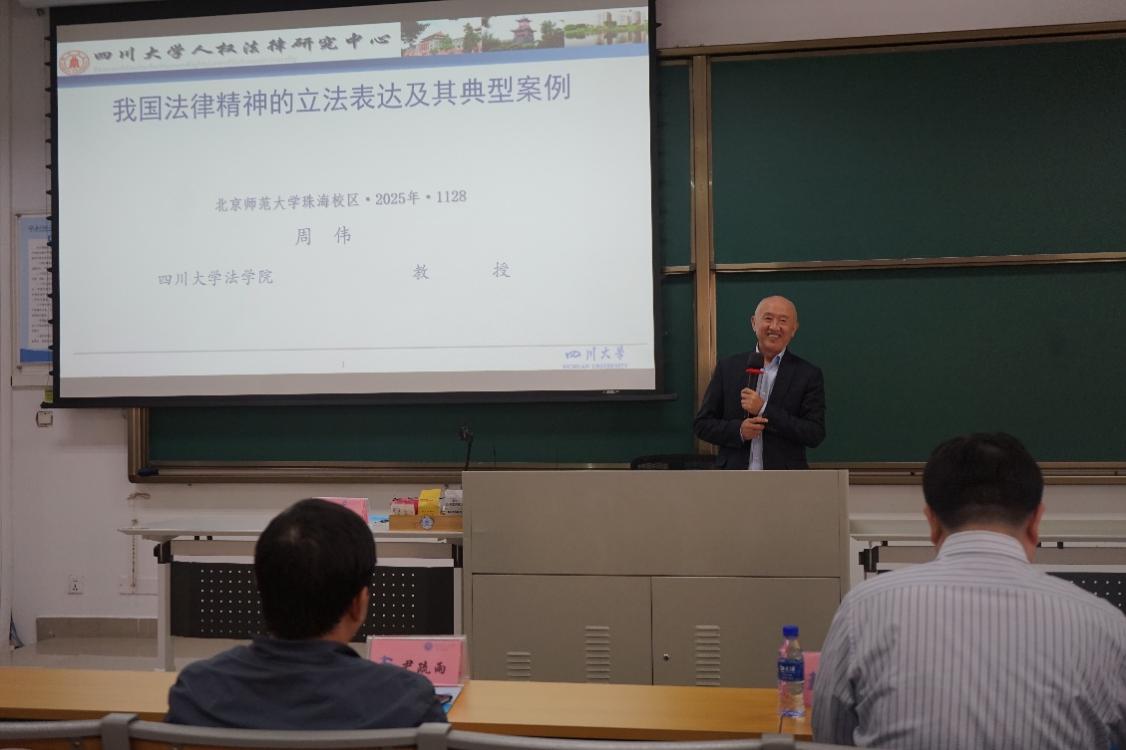
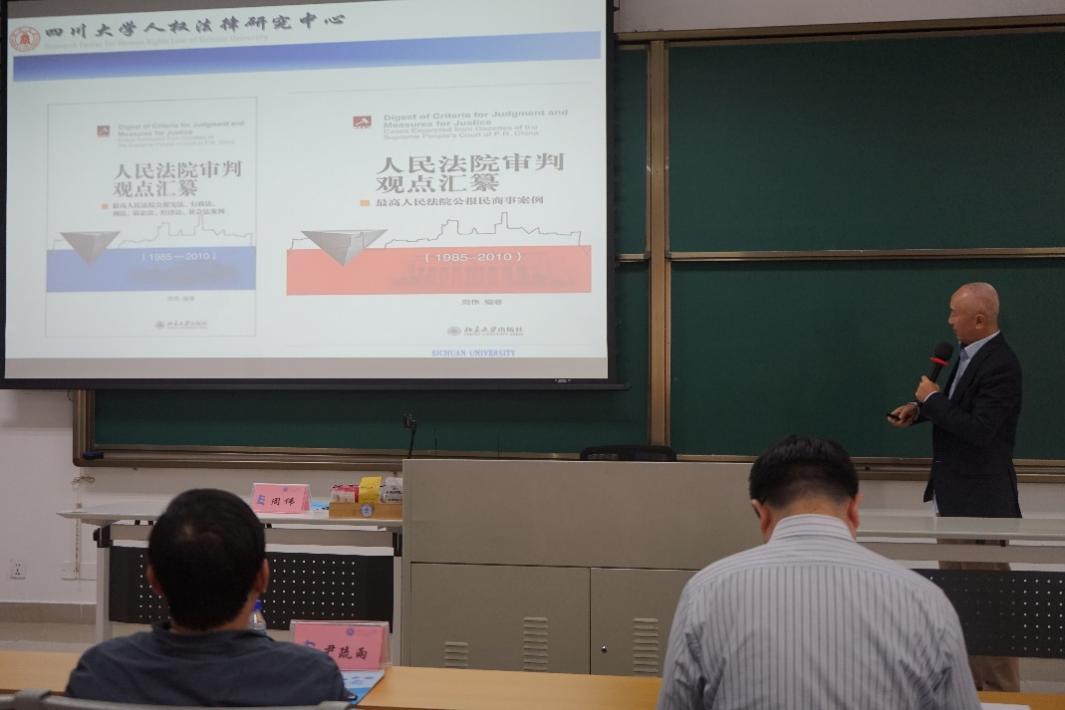
Professor Zhou pointed out that the spirit of the law differs from the purpose and objectives of the law — every law has clear principles and purposes, while the spirit of the law is characterized by abstraction and uncertainty. In light of these characteristics, he introduced works such as "On the Spirit of Law" and "Principles of Legal Philosophy," deepening the audience's understanding of the spirit of the law and further discussing its application in practice.
Professor Zhou combined the latest legal provisions related to anti-domestic violence, citing typical cases such as online copyright protection and abuse of government information rights, pointing out that when there are no clear applicable legal provisions, the invocation of the spirit of the law has been widely applied in practice — many guiding cases, public cases, and typical cases have adopted this approach, and such cases are binding on courts and procuratorates at all levels, serving as direct references for case handling. He further summarized that the unified legal application mechanism mainly includes two categories: judicial interpretations and typical cases. At the same time, a special adjudication situation is mentioned: even if there are clear legal provisions, if applying those provisions would lead to an unjust ruling, the spirit of the law can still be invoked in the judgment. Professor Zhou emphasized that this practice is an exception within the norm, aimed at filling potential gaps in legal provisions, highlighting the important role of the spirit of the law in addressing deficiencies in rules.
During the discussion segment, Professor Ma and Mr. Yin shared their views on the spirit of the law. Professor Ma believes that there are indeed cases in reality where the spirit of the law is used in adjudication, which reflects a practical approach. However, there are challenges in theoretical construction, and we must wait for a response from the theoretical community. Mr. Yin fully affirmed the important value and significance of the spirit of the law, stating that as legal professionals, we must not only understand the spirit of the law but also internalize it. He cited vivid examples to illustrate the importance of understanding the legislator's intent in law enforcement and application, encouraging students to cultivate the qualities of legal professionals and strive for fairness and justice.
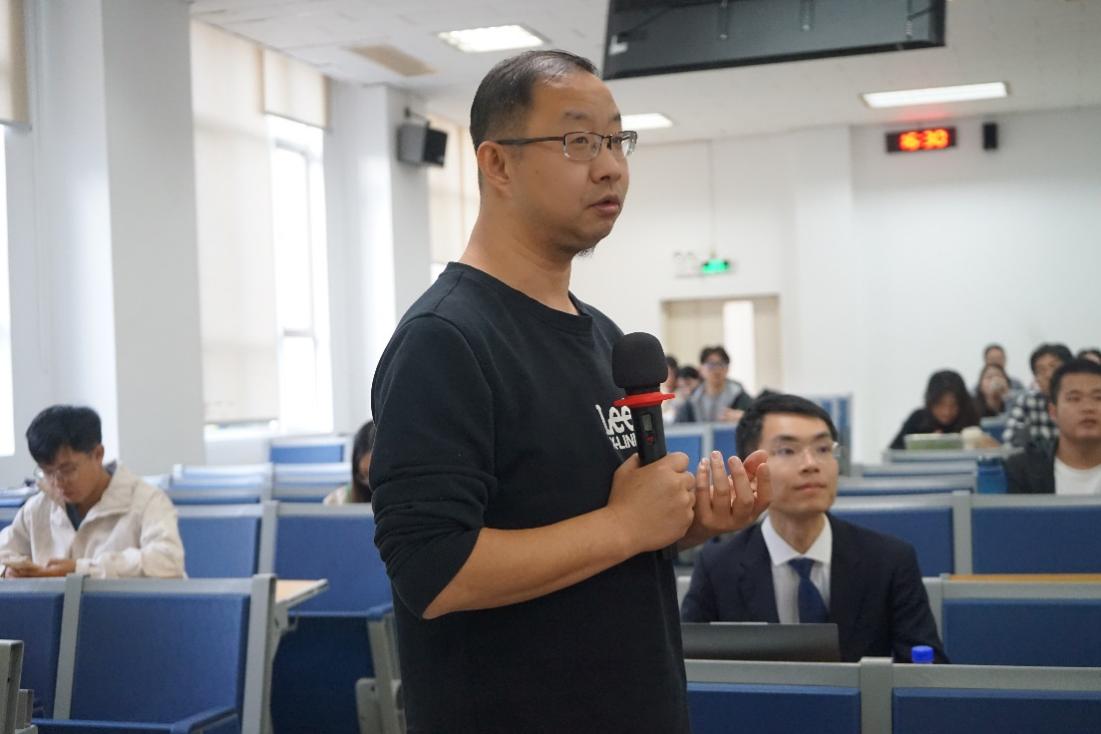
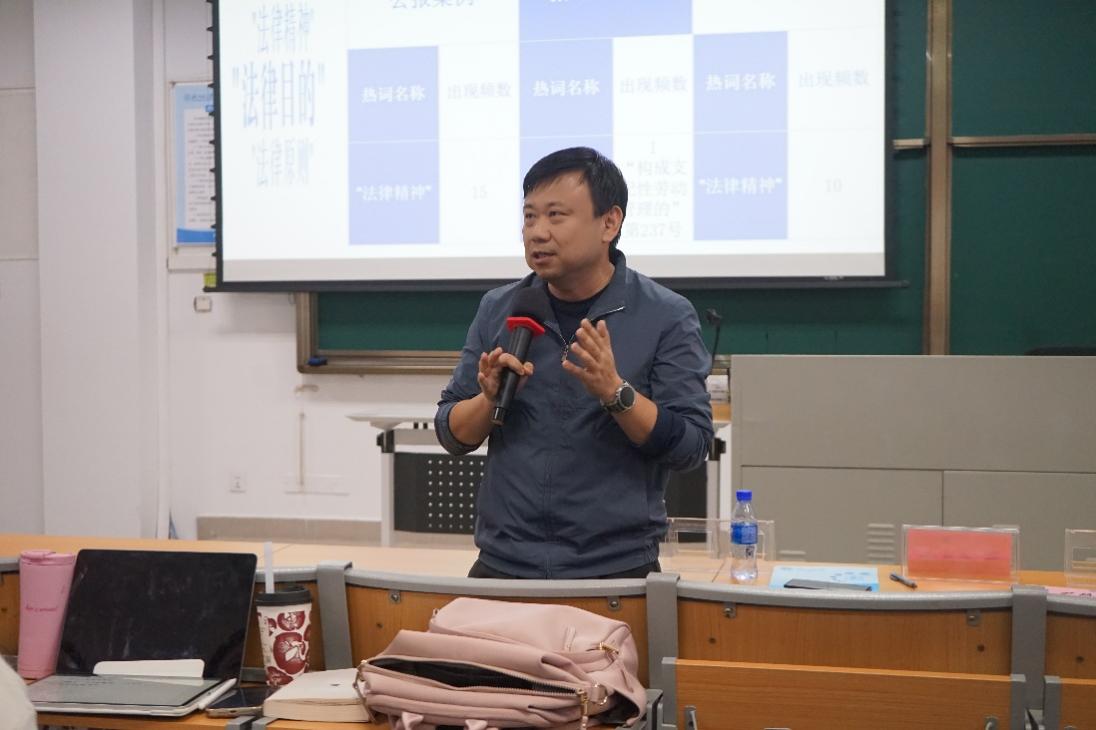
Mr. Jiang Pan from the Party School of the Sichuan Provincial Committee and Mr. Mei Shuai from the Law School of Sichuan University also attended the lecture. Mr. Jiang remarked that the spirit of the law has relatively vague boundaries compared to legal principles and purposes; while principles are often reflected in general rules, the spirit of the law is rarely explicitly stated and should therefore be understood through the lens of common sense. Mr. Mei observed that a review of typical cases published by the Supreme People's Court in administrative adjudication practice reveals their close connection to people's daily lives. Focusing on his field of administrative law, he discussed the application of administrative law principles within the context of digitalization and called upon students to pay close attention to the interaction between legal norms and technological development.
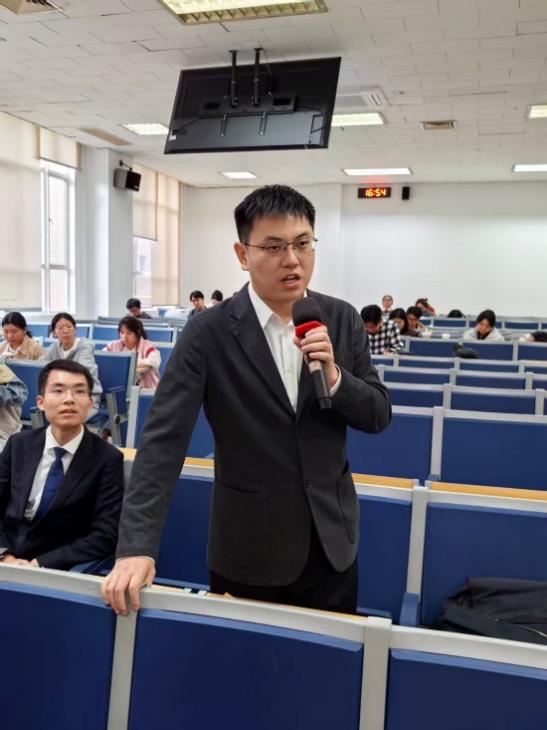
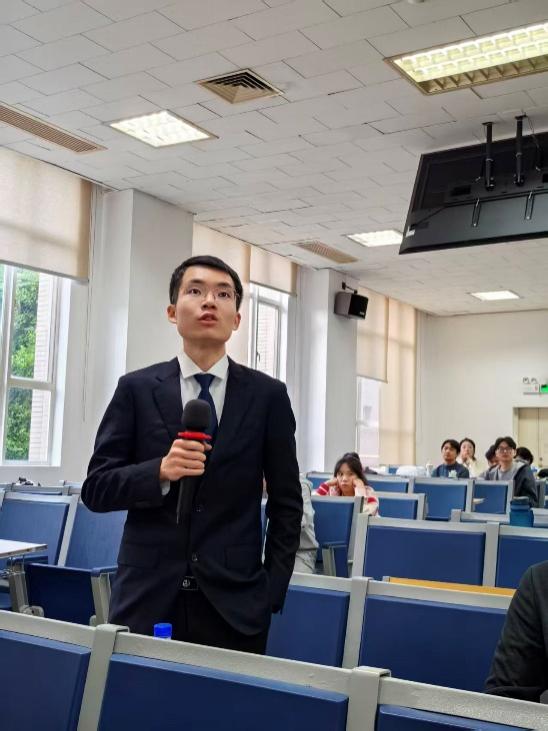
During the interactive session, students asked Professor Zhou various questions, such as his views on the new regulations against domestic violence, and whether there is a confusion between judicial power and legislative power if the two highest courts conduct judicial interpretations with legislative intent. Professor Zhou pointed out that the spirit of the law is temporal, and this common sense is in a state of change. Judicial adjudication should focus on resolving existing disputes in reality, emphasizing fairness and justice in individual cases.
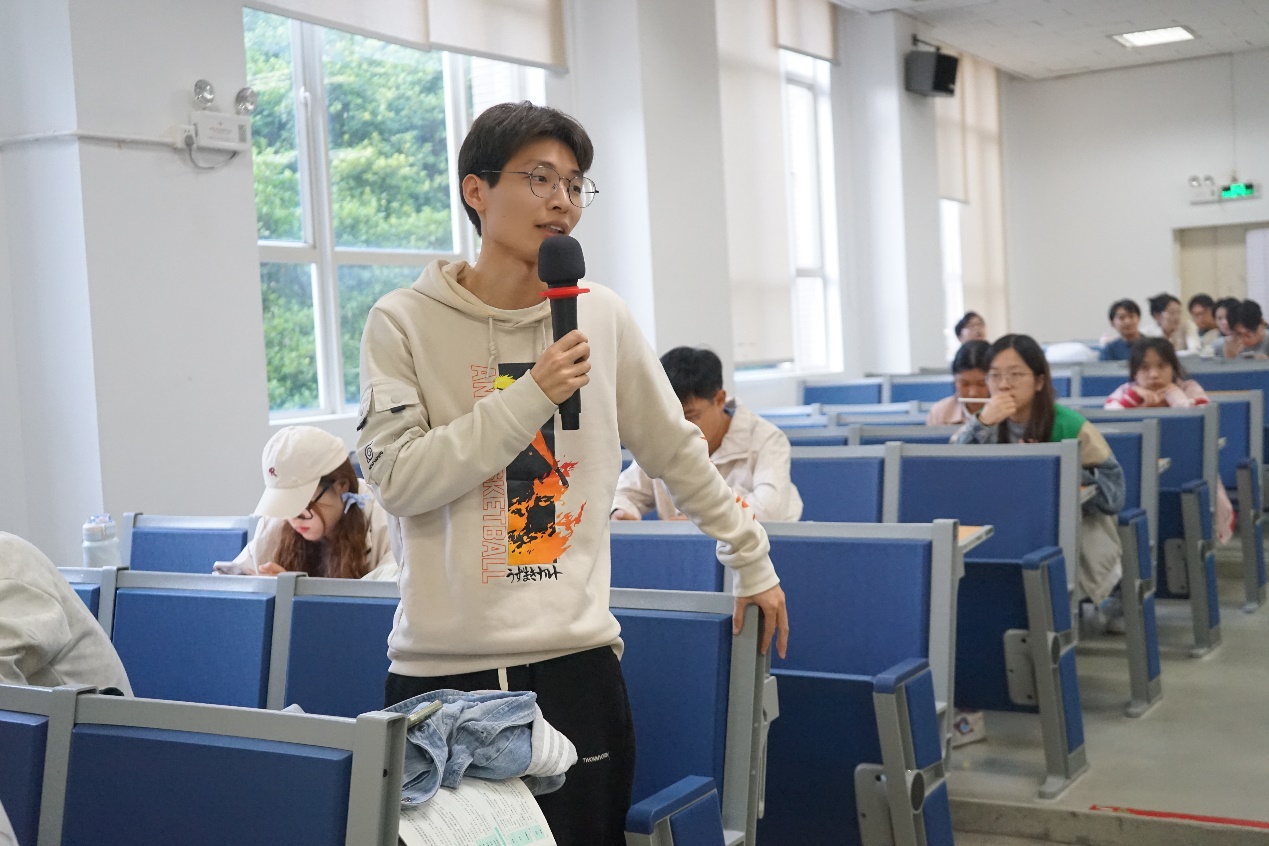
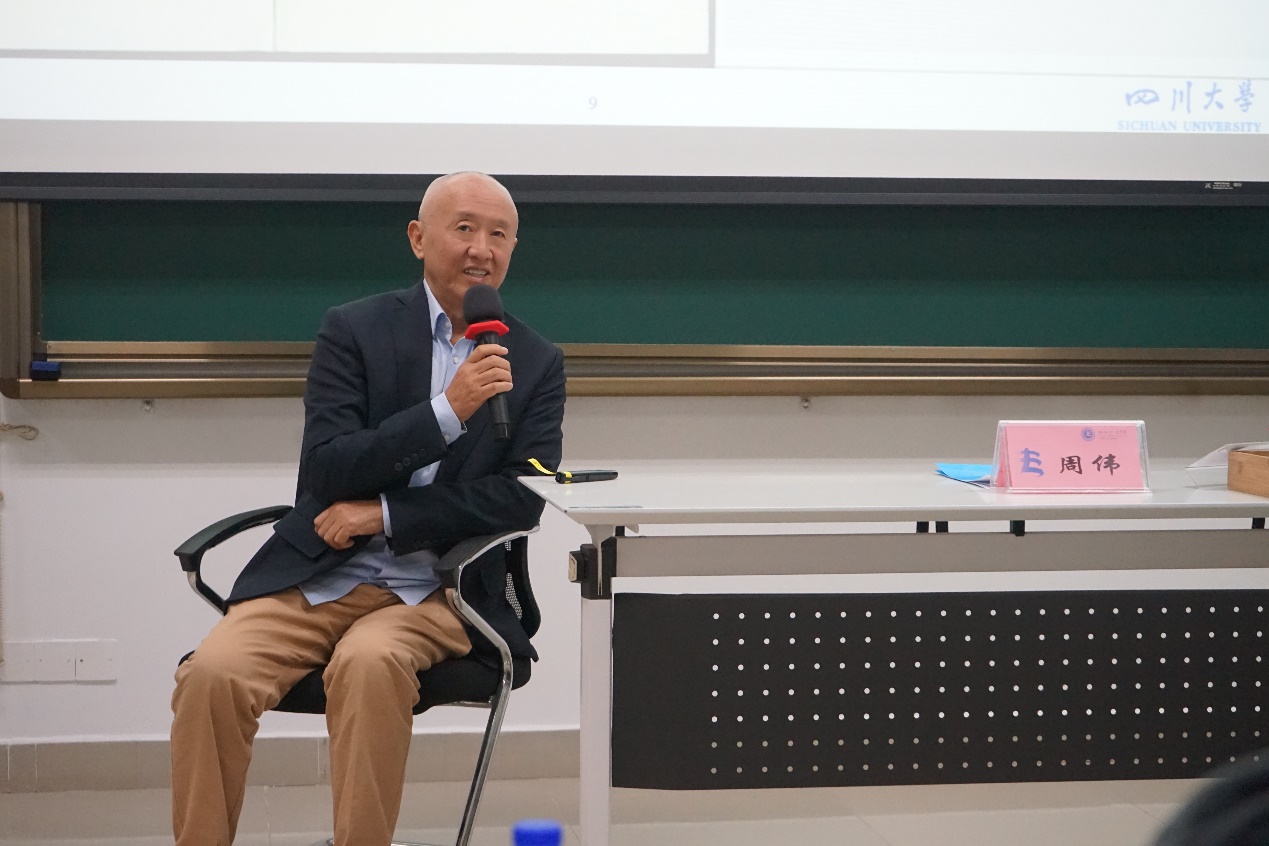
This lecture elucidated the significant value of the spirit of law in judicial adjudication, offering students fresh perspectives on legal application. The event concluded successfully amidst warm applause from the attending faculty and students.