

On April 21, 2025, from 19:00 to 21:00, the inaugural session of the Criminal Defense Professor Lecture Series, hosted by the Law School of Beijing Normal University, was held in the Gao Mingxuan Lecture Hall on the 18th floor of the Rear Main Building at Beijing Normal University. More than ninety experts, lawyers, and students from Beijing Normal University, China University of Political Science and Law, Beijing Jiaotong University, Shandong Qiuxin Law Firm, and other institutions participated in the event.
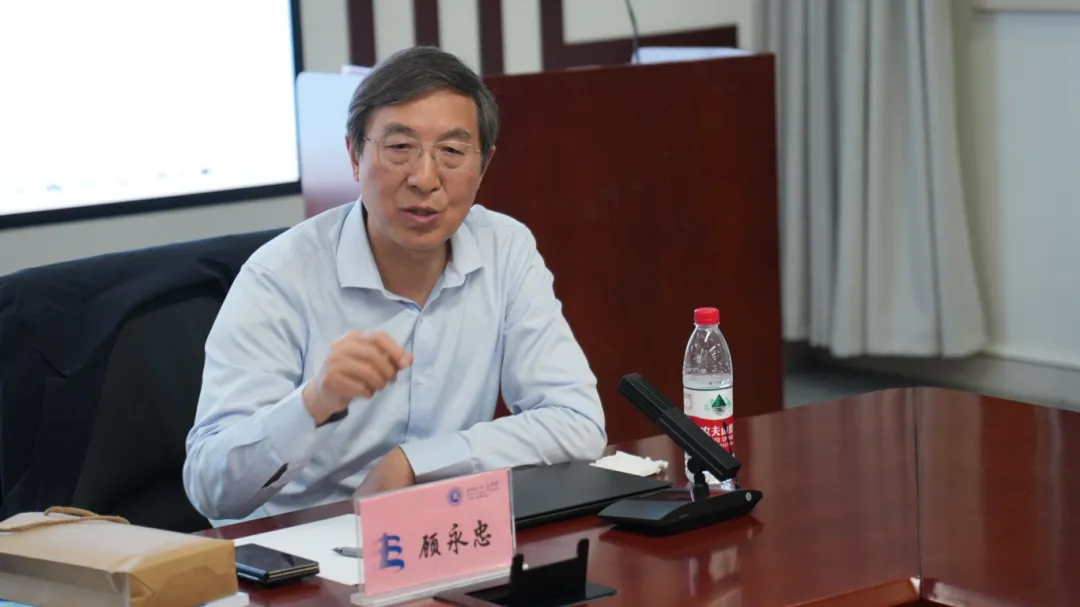
The session featured a presentation by Professor Gu Yongzhong from China University of Political Science and Law, titled "The Leniency System for Pleading Guilty and Its Issues in Criminal Defense." Professor Gu Yongzhong has been engaged in legal studies for over 40 years, having published hundreds of papers in legal journals such as Chinese Law and Legal Studies, authored more than 30 books and textbooks, and undertaken over ten research projects funded by the National Social Science Fund, the Ministry of Education, the Ministry of Justice, and the Supreme People's Procuratorate. As a practicing lawyer, he has handled a number of significant, complex, and influential criminal defense cases both domestically and internationally. He currently serves as the chief expert at the National Legal Aid Research Institute of China University of Political Science and Law, an advisor to the Chinese Criminal Procedure Law Research Association, the director of the Criminal Business Committee of the All-China Lawyers Association, and an expert consultant for the Supreme People's Procuratorate.

This session was hosted by Professor Wang Chao, the director of the Evidence Law Research Institute at the Law School of Beijing Normal University. At the beginning of the forum, Professor Liang Yingxiu, the dean of the Law School of Beijing Normal University, delivered a welcome speech. He introduced Professor Gu Yongzhong's rich experience and outstanding achievements in criminal law research, teaching, and participation in criminal legislation and judicial activities, and highly praised Professor Gu's active contributions to frontline judicial practice in criminal defense. He expressed gratitude to Professor Gu and all the discussants, as well as the enthusiastic participation of the faculty and students of the law school, to celebrate and commemorate the upcoming 30th anniversary of the law discipline at Beijing Normal University and the 20th anniversary of the Criminal Law Science Research Institute, while showcasing the achievements of the Law School of Beijing Normal University in legal education and research.


In this session, Professor Gu Yongzhong drew upon his extensive experience in legislative activities, judicial practice, and research to elucidate the legislative background and process of the leniency system for guilty pleas. Addressing calls for its abolition, he acknowledged implementation challenges but underscored the system's undeniable value. He argued that the plea bargaining system is instrumental in resolving social conflicts, fostering social harmony and stability, bolstering human rights protection in judicial proceedings, enhancing litigation efficiency, conserving judicial resources, mitigating the pressing issue of a case overload relative to the limited number of judges, and concentrating judicial resources to drive trial-centered reforms. This ensures that major, complex, and difficult cases, particularly those involving non-guilty pleas, receive fair and substantive trials. In essence, he emphasized, this system is indispensable for modernizing the national governance system and enhancing governance capabilities, and it will continue to play a pivotal role. Professor Gu also delved into the theoretical legitimacy of the system, asserting that it does not contravene criminal procedure principles or disrupt the fundamental structure and relationships among the prosecution, defense, and judiciary in modern criminal proceedings. He noted that such litigation systems are prevalent worldwide and conform to the objective laws of criminal procedure. Nevertheless, he acknowledged problems and risks in current judicial practice, primarily stemming from the abuse or misapplication by judicial personnel and the irresponsibility or limited competence of lawyers, which have resulted in some innocent individuals being coerced into pleading guilty, some innocent individuals voluntarily pleading guilty, and some guilty individuals pleading guilty involuntarily, as well as a lack of consultation in the formation of sentencing recommendations. To ensure the healthy and effective functioning of the plea bargaining system and realize its original legislative intent, Professor Gu outlined five prerequisites: first, the independence of the prosecution and judiciary must be preserved in the exercise of their legal powers; second, those who do not plead guilty must be entitled to a fair and substantive trial; third, the legal standard of proof must be upheld; fourth, individuals who plead guilty should be permitted to withdraw their pleas without facing adverse consequences; fifth, parties must be guaranteed effective access to legal defense and assistance from lawyers. Regarding lawyers' defense strategies in cases involving the plea-bargaining system, Professor Gu emphasized the need to correctly understand the relationship between the system and criminal defense. He cautioned against the misconception that criminal defense is solely applicable to innocent pleas, noting that there remains ample scope for defense in plea bargaining cases. He observed that guilty and plea cases constitute the vast majority in judicial practice, presenting opportunities or spaces for legal defense that can lead to successful outcomes. He further proposed that lawyers should fulfill three key roles in the leniency system for guilty pleas: first, conducting rigorous reviews and oversight to prevent innocent individuals from "voluntarily pleading guilty" or being "induced to plead guilty"; second, guiding guilty parties to plead guilty sincerely, rationally, and thoroughly, without harboring speculative motives or expecting undue leniency; third, providing adequate legal assistance to those who are genuinely guilty and voluntarily plead guilty, to maximize their chances of receiving lenient treatment and punishment. Additionally, he introduced specific, practical defense ideas and methods, illustrated with concrete case examples.


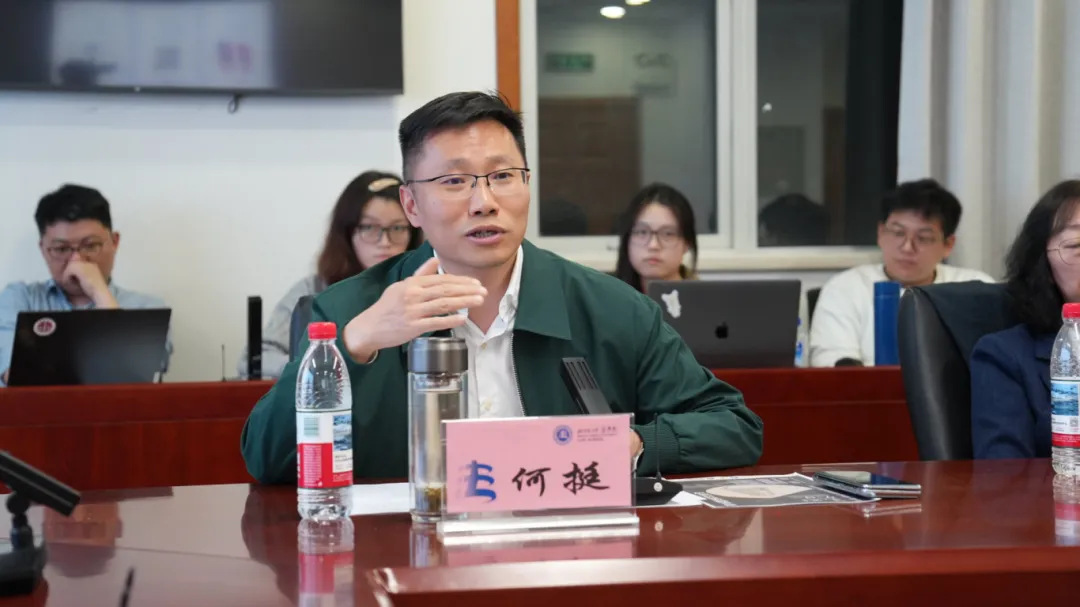
Professor Wang Chao, the host, pointed out that Professor Gu's lecture has a high "gold content", with substantial and rich content, clear arguments, and reasonable and substantial points, especially the proposed defense ideas and techniques, which have strong enlightening significance both theoretically and practically. The meeting then proceeded to discussions. Professor Zhao Tianhong, Vice Dean of the Criminal Justice College at China University of Political Science and Law, responded to Professor Gu Yongzhong's speech, pointing out the current issues in the plea bargaining system, such as some prosecutors repeatedly persuading and inducing, insufficient sentencing negotiations, and parties retracting their confessions and denying penalties, thus emphasizing the need to enhance negotiation skills among all parties and establish a sound sentencing negotiation system, ideally formalizing it within litigation procedures as a necessary step, while also improving the legal literacy of both prosecution and defense personnel. Professor Tao Yang from the Law School of Beijing Jiaotong University praised Professor Gu's teaching style, believing that this lecture grasped the cutting-edge issues of criminal procedure law and has important significance for the revision of criminal procedure law. Regarding the leniency system for guilty pleas, he believes that attention should be paid to the details at the operational level and shared specific operational methods for applying the leniency system in criminal defense. Lawyer Kan Jifeng, director of Shandong Qiuxin Law Firm, focused on analyzing the specific manifestations and reasons for the current failure to properly initiate the plea bargaining system, and discussed targeted solutions and measures, emphasizing the reasonable granting of relevant remedial rights to parties within the legal framework. Professor He Ting, who rushed to the venue after class, also shared his experiences and feelings from studying and researching under Professor Gu, pointing out that Professor Gu's teaching style effectively combines theory and practice, which is worth learning.





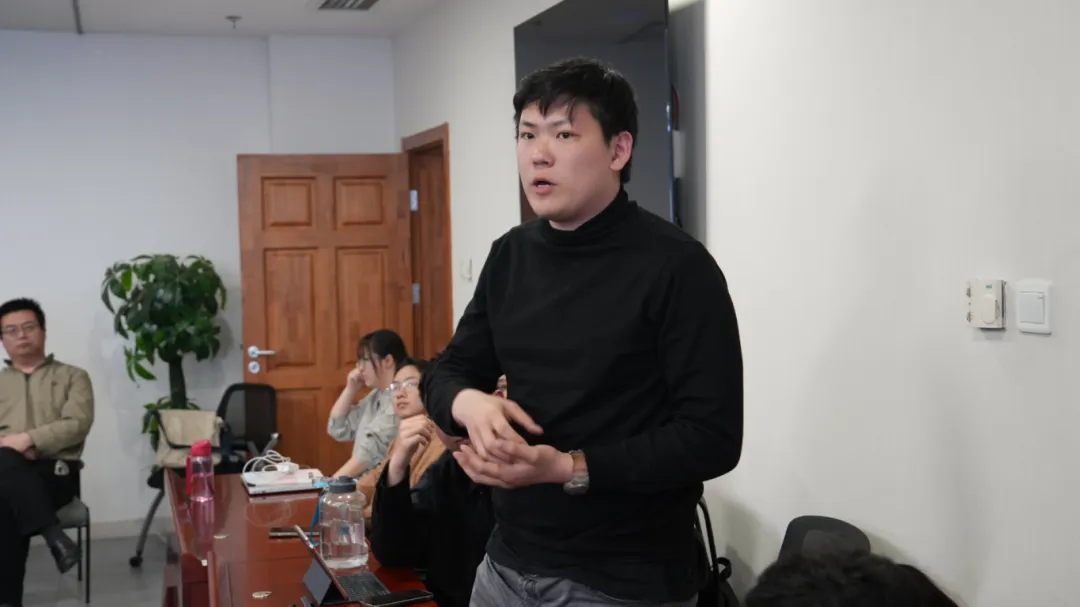
The students present actively asked questions to Professor Gu. One student asked: "With so many guilty pleas currently, is there still room for defense? How can lawyers conduct effective defenses?" In response, Professor Gu Yongzhong believed that it depends on how to determine the size of the defense space; it cannot be said that only not guilty defenses have room for defense. Both not guilty defenses and non-pleas are very rare, while guilty cases are the vast majority, and lawyers should be well-prepared for both guilty and plea cases. Moreover, the lawyer's defense space depends on the facts and evidence of the case, not solely on your efforts to change the evidence and facts, but rather to make the best use of existing evidence and discover any evidence that has not yet been found.



Professor Liu Ke from the Law School of Beijing Normal University provided a summary of the event. He highlighted that, in commemoration of the 30th anniversary of the law discipline and the 20th anniversary of the College for Criminal Law Science at Beijing Normal University, a group of colleagues specializing in criminal law, taking into account the realities of teaching and research as well as their experiences in judicial practice, orchestrated a series of activities known as the "Criminal Defense Professor Lecture Series." This initiative received endorsement from the Law School's party and administrative meetings. Teachers engaged in domestic criminal defense endeavors will be invited to share the accomplishments and insights from their criminal law teaching and practice with peers in the criminal law theory and practice community, along with students and faculty members from law schools, actively implementing Xi Jinping's thoughts on the rule of law, practicing the socialist rule of law concept, promoting the progress of criminal law, and safeguarding the legitimate rights and interests of the public. Thanks to Professor Gu Yongzhong for being the keynote speaker of the first forum, whose wonderful speech sparked enthusiastic discussions and successfully launched this series of activities! Thanks to all the discussants for their insightful comments, and to Professors Huang Xiaoliang, Guo Lirong, Associate Professor Lao Jiaqi, and the students for their support!



Typesetting: Xu Yiyang
Editor: Shi Tianyu