

On May 9th, the 65th installment of the BNU Zhuhai Legal Lecture Series was successfully convened in Room C405 of the Lijiao Building at Beijing Normal University’s Zhuhai Campus. The event featured a lecture titled "The Crossroads of Legal Technology: From Mediation in Macau to Global Arbitration Innovation." The session was led by two experts from the University of Macau: João Ilhão Moreira, Assistant Professor at the Faculty of Law and Deputy Director of the China-Portuguese-speaking Countries Judicial and Legal Research Center; and Liang Jingheng, Senior Tutor at the Faculty of Law, who also serves as the Director of both the Bachelor of Laws (LL.B) program and the Chinese-Portuguese Bilingual LL.B program. The lecture was presided over by Zhao Wenzong, Chair Professor at the BNU Law School, and was attended by numerous students from the Zhuhai Campus.
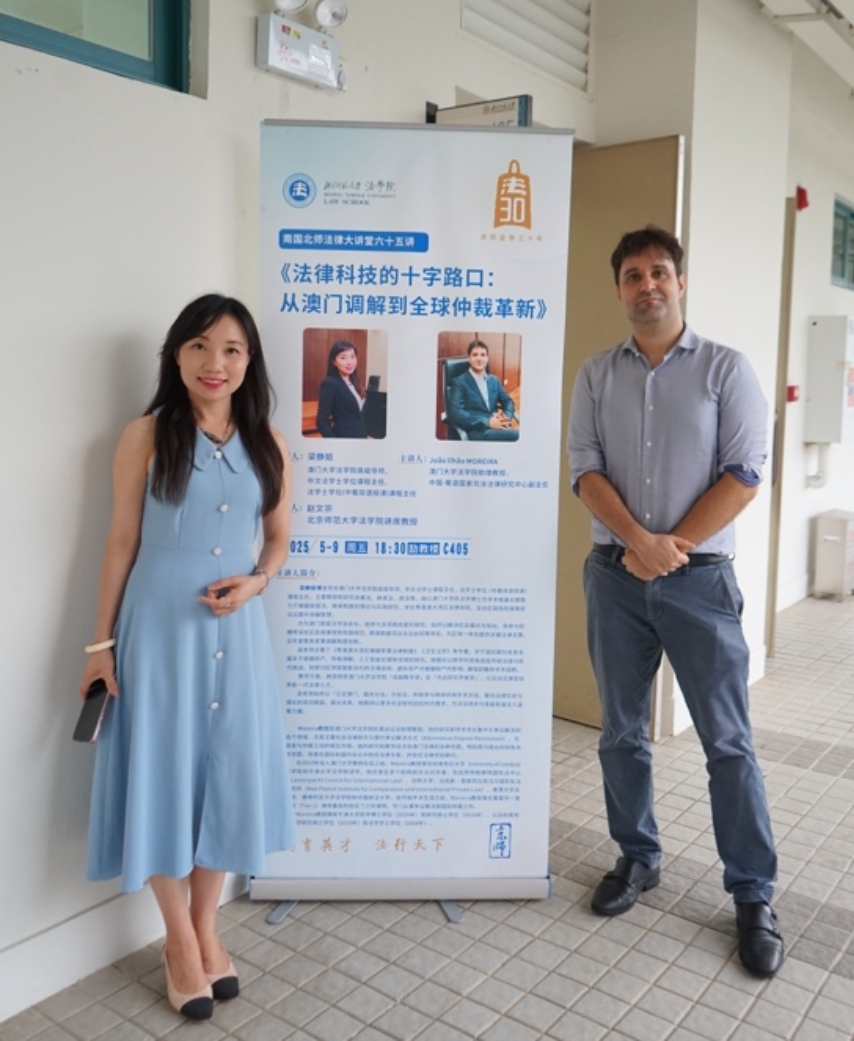
The session commenced with opening remarks by Professor Zhao Wenzong, who formally introduced the speakers' research backgrounds and the lecture's theme, extending a warm welcome to both guests. Taking legal technology as a unifying theme, Assistant Professor João Moreira and Director Liang Jingheng proceeded to discuss the application and impact of Alternative Dispute Resolution (ADR) mechanisms, specifically arbitration and mediation, within contemporary legal practice.
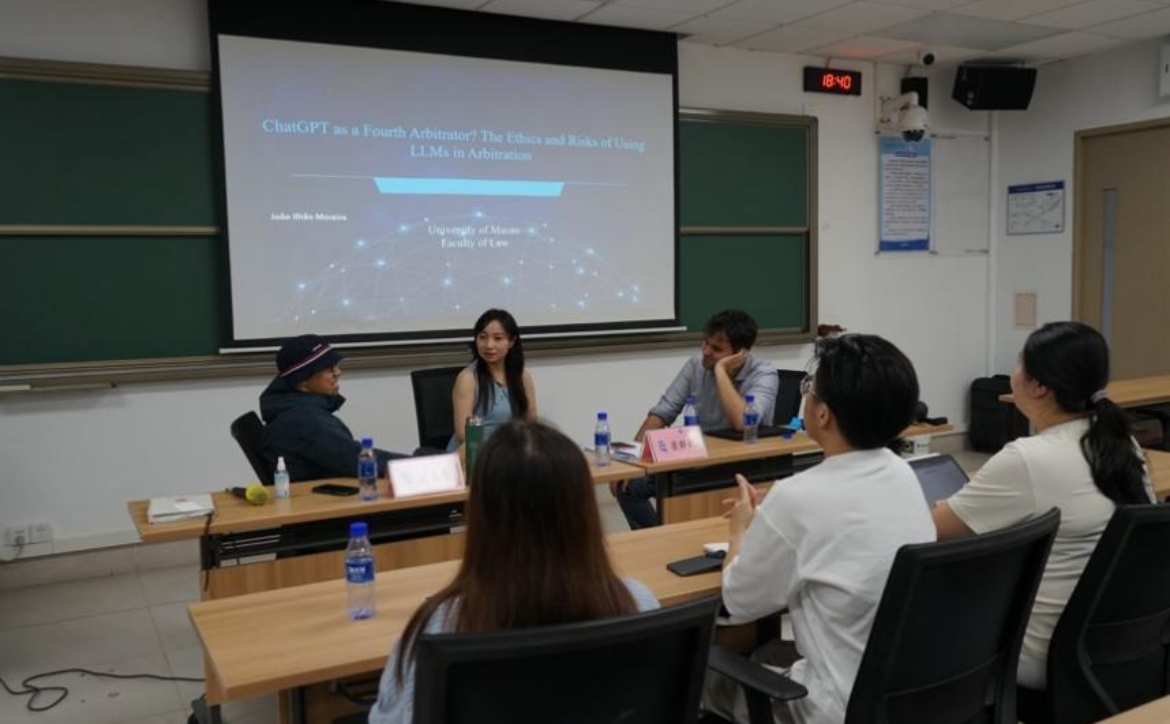
Assistant Professor João Moreira delivered a presentation titled "Artificial Intelligence in Arbitration: Assistant, Fourth Arbitrator, or Ethical Dilemma?" He explored the transformative potential and ethical challenges of integrating Large Language Models (LLMs) such as ChatGPT and DeepSeek into arbitration proceedings.
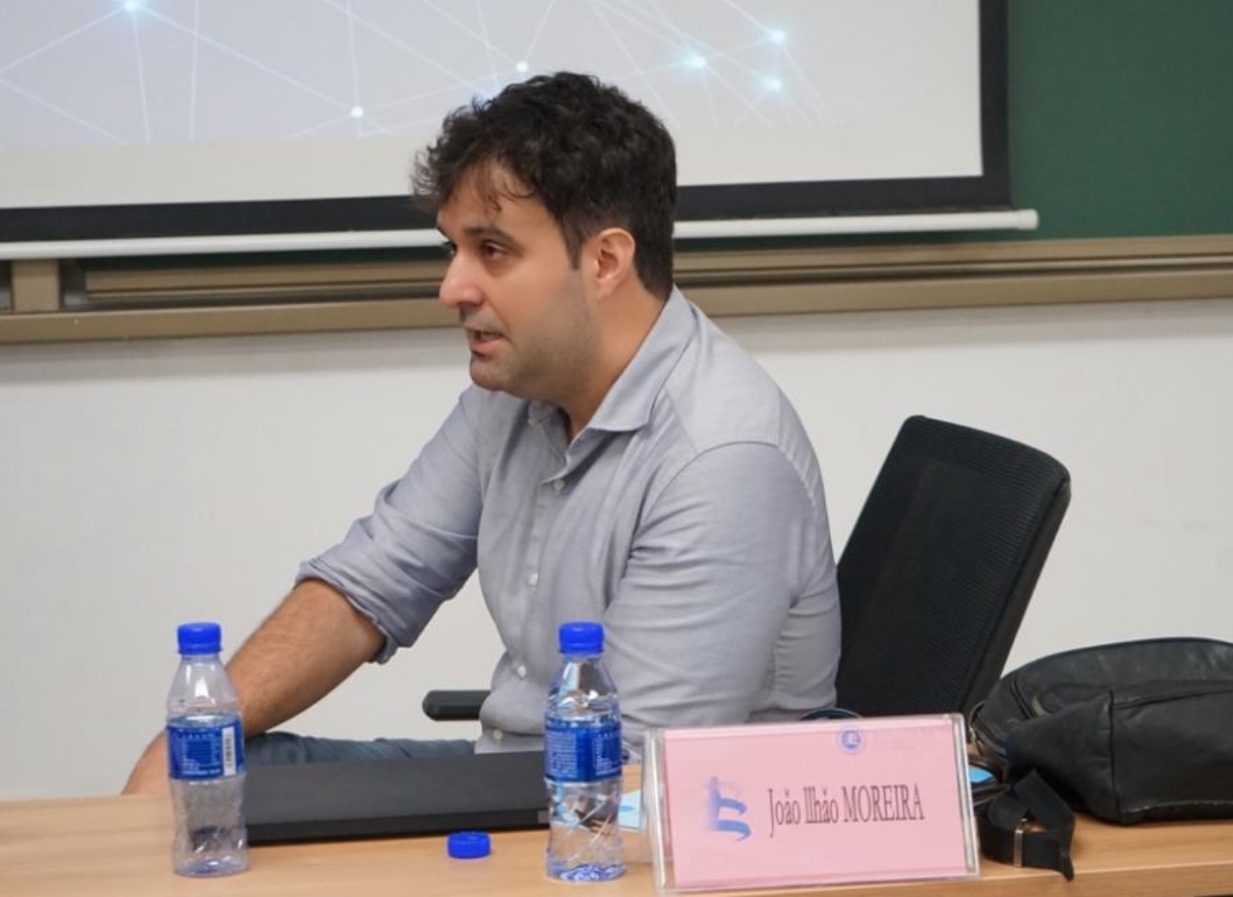
Discussing the transformative impact of Large Language Models (LLMs) on judiciary, Moreira highlighted their unique value in arbitration. He noted that LLMs can uncover legal perspectives that practitioners might overlook, enhance the quality of legal translation, and assist institutions in developing more efficient practices and modern governance frameworks.
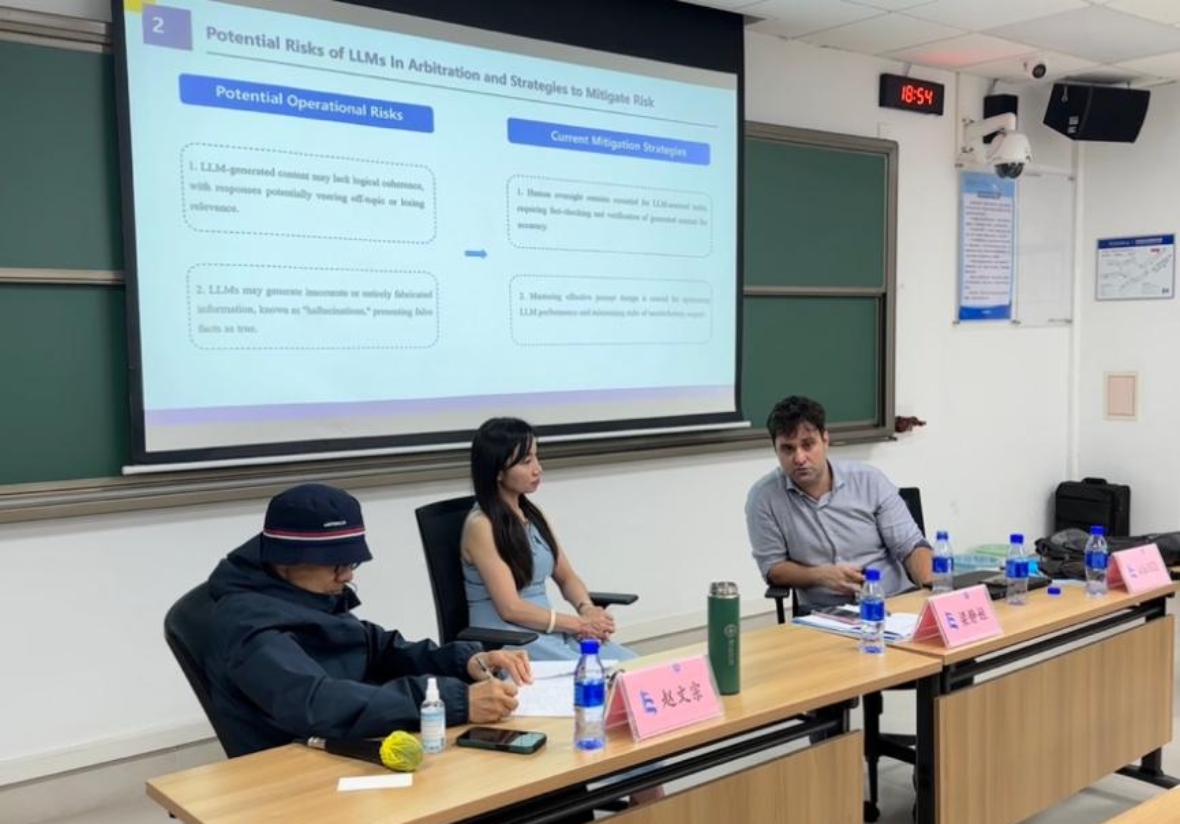
Professor Moreira also emphasized the potential risks associated with LLMs and the necessary mitigation strategies. Regarding operational risks, he warned that AI-generated content may suffer from logical inconsistencies and inaccuracies, making human oversight essential. He further noted that mastering effective prompt engineering is critical for optimizing output quality. On the issue of confidentiality, Moreira pointed out that ambiguous data storage practices and the risk of data leakage have raised significant concerns regarding information privacy.
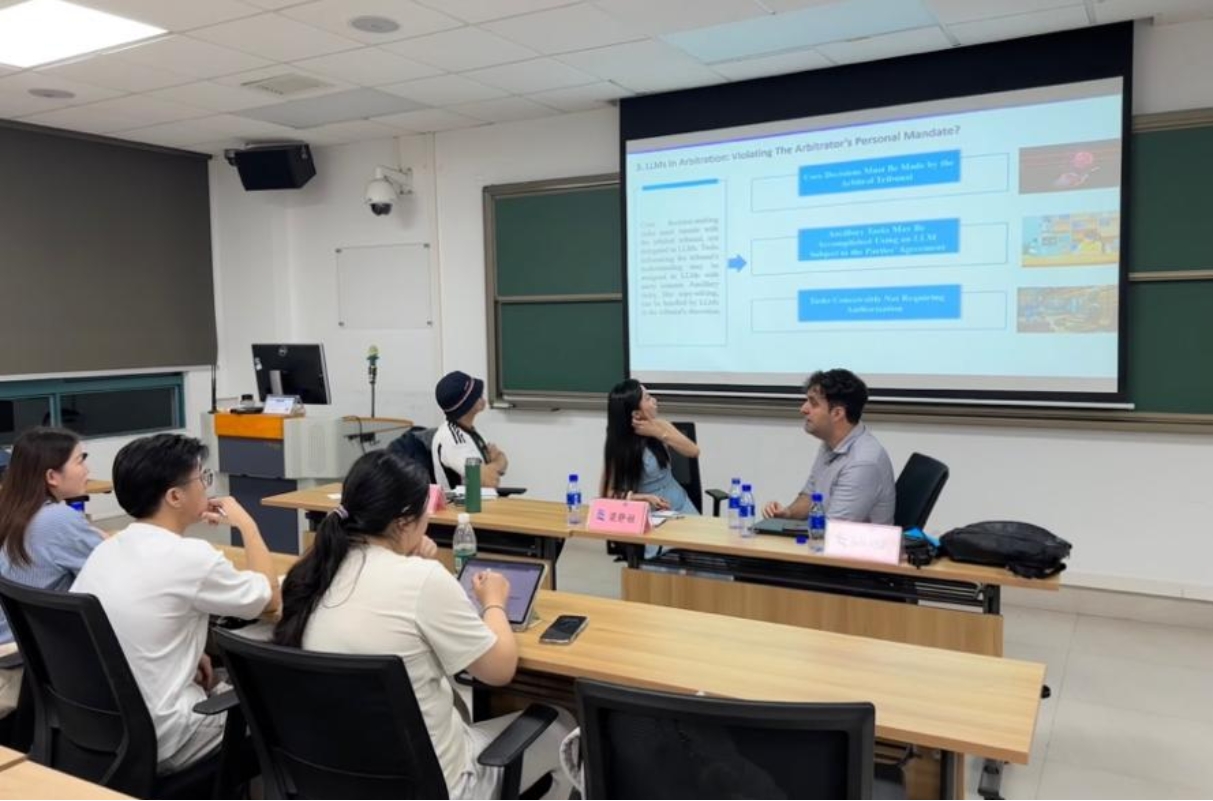
Professor Moreira further explored the issue of whether the use of large language models in arbitration might violate the personal authority of arbitrators. Professor Moreira pointed out that most jurisdictions implicitly require arbitrators to be natural persons. Core arbitration tasks, such as analyzing key evidence, resolving disputed facts, and handling legal issues, directly affect case outcomes and reflect the unique judicial role of arbitrators; therefore, these core tasks must be fully controlled by a tribunal composed of human arbitrators and cannot be delegated to large language models.
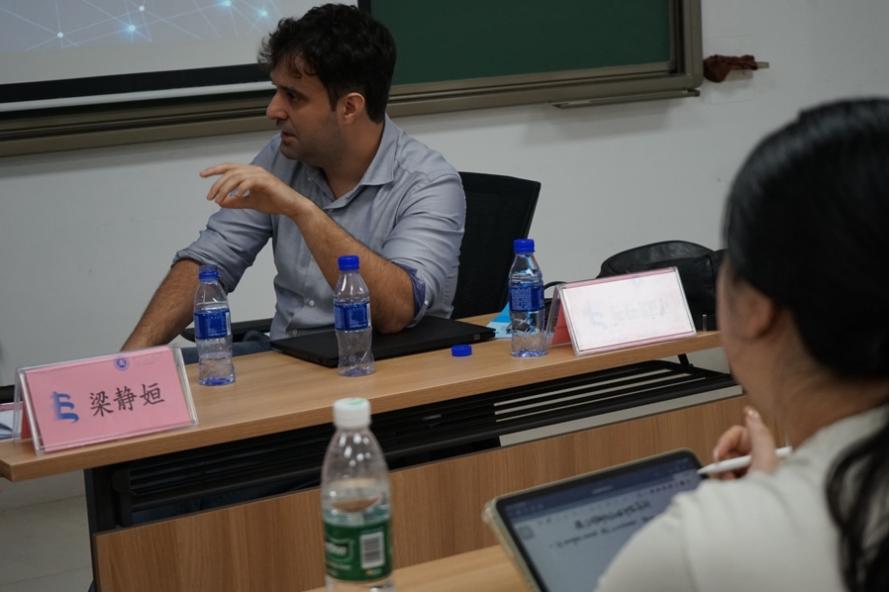
Professor Moreira also mentioned that for other auxiliary tasks, such as legal research, document drafting, and text polishing, whether large language models can handle them depends on whether the tribunal has the authority to decide independently to use large language models in the proceedings. He believes that under current conditions, the tribunal can only use them with the consent of the parties.
At the end of the lecture, Professor Moreira concluded that as the dynamics of human-machine interaction evolve, the legal framework must adapt to real developments to redefine the role of machines in arbitration. Before the relevant rules are clarified, arbitration should address the use of large language models based on the core principles of party autonomy, due process, and efficiency.
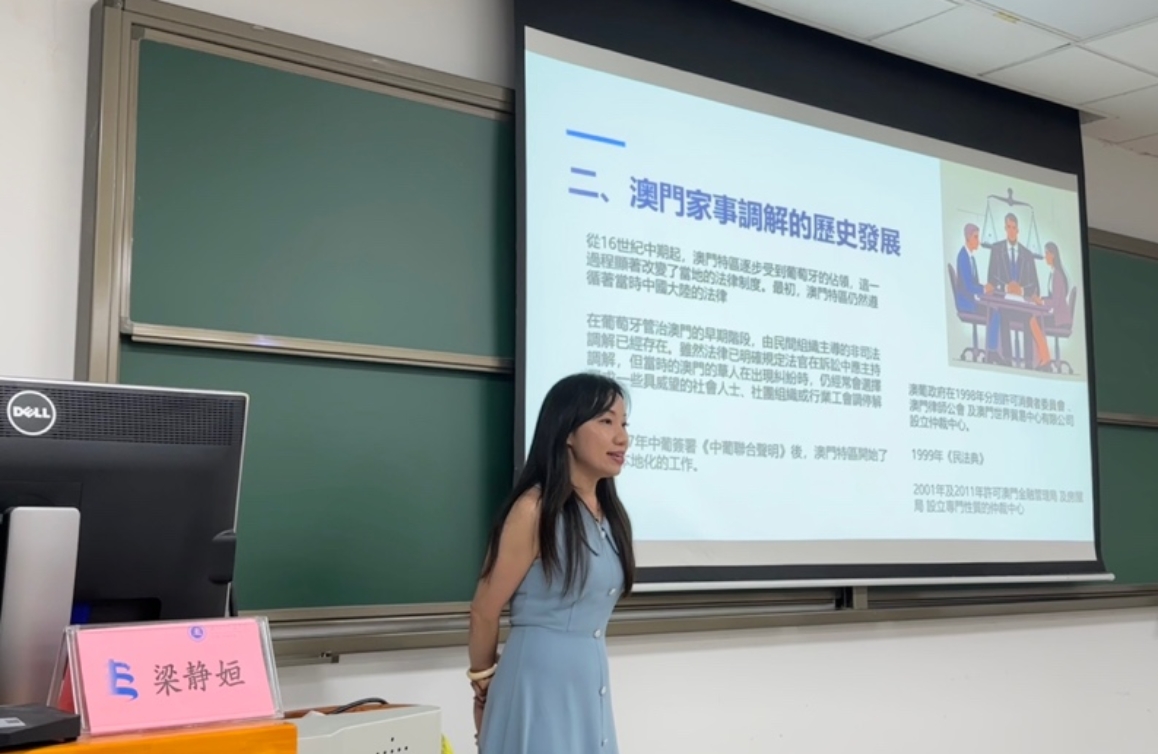
Ms. Liang Jingheng then presented a topic titled "Planning the Future Path: An Interpretation of the Macao Family Mediation System." She introduced the historical evolution of family mediation in Macao and outlined the key characteristics of the "Macao Family Mediation Legal System."
Ms. Liang began by providing the historical background of family mediation in the region. She explained that the unique cultural characteristics of the local Chinese community—shaped by a fusion of Chinese and Western traditions—create a tension with the demands of modern legal procedures. This dynamic has prompted the legislative body of the Macao Special Administrative Region to explore non-adversarial paths for dispute resolution. In 2024, the proposal for the "Family Case Mediation System" marked a pivotal step in the institutional reform of Macao's family justice sector. Ms. Liang noted that the bill has not yet officially come into effect and remains under discussion in the Legislative Council, with an expected implementation date around 2026.
Ms. Liang Jingheng then provided a detailed interpretation of the construction of the Macao family mediation system as outlined in the bill. According to the bill, the family mediation system focuses on four core types of cases: litigation divorce, exercise of parental rights, maintenance relationships, and distribution of family residence. The mediation process has three main characteristics: the priority of mediation replaces voluntariness, the qualifications of mediators are clearly defined as social workers, and it is administratively led.
In addition, the Macao family mediation system also reflects a balance between cultural sensitivity and procedural flexibility. Mediators may invite the parties' relatives to participate in the mediation when necessary, but two restrictions must be followed: the mediator's discretion, which allows invitations only when deemed "necessary" and "appropriate"; protection of the parties' autonomy, as the mediator must not impose agreements, ensuring that relatives' opinions are only for reference, with the final decision-making power resting with the parties.
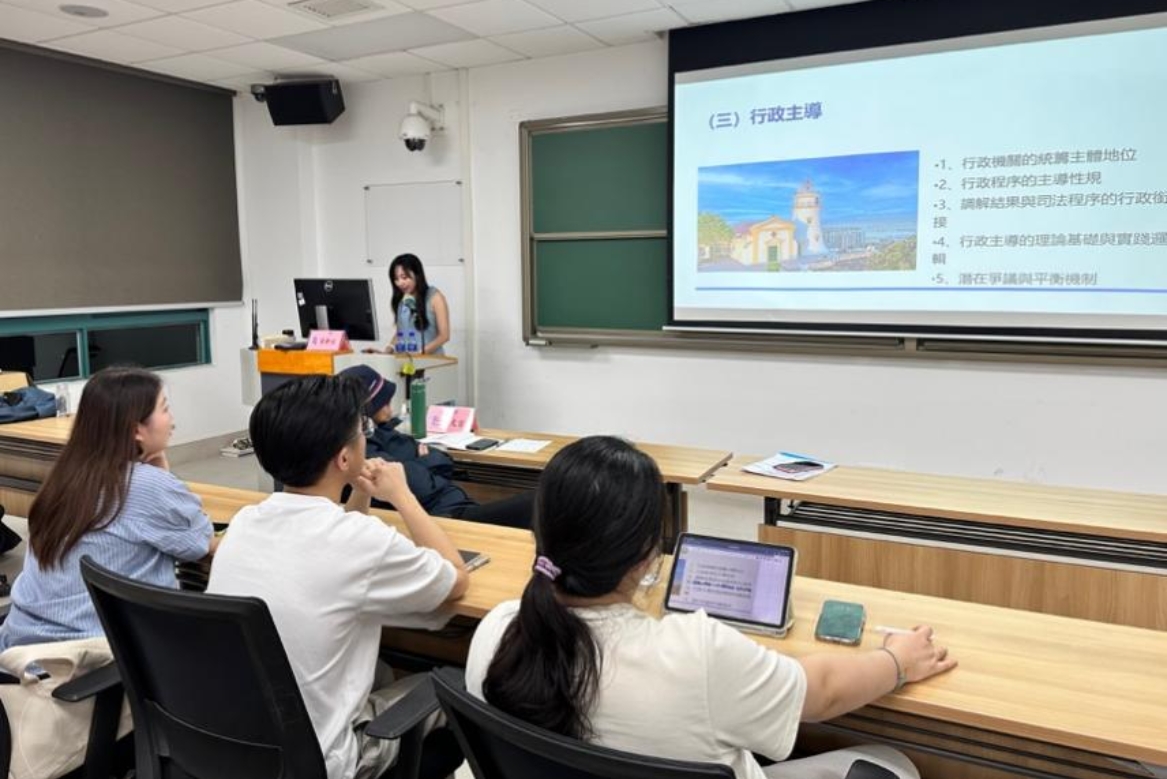
Ms. Liang Jingheng also pointed out that the administratively leading characteristics of this system are reflected in the coordinating role of administrative agencies, the dominant rules of administrative procedures, and the administrative connection between mediation results and judicial procedures. She believes that the effectiveness of this system lies in the dual enhancement of efficiency and professionalism, but it also faces potential challenges in power balance and resource allocation, requiring continuous optimization in dynamic balance in the future.
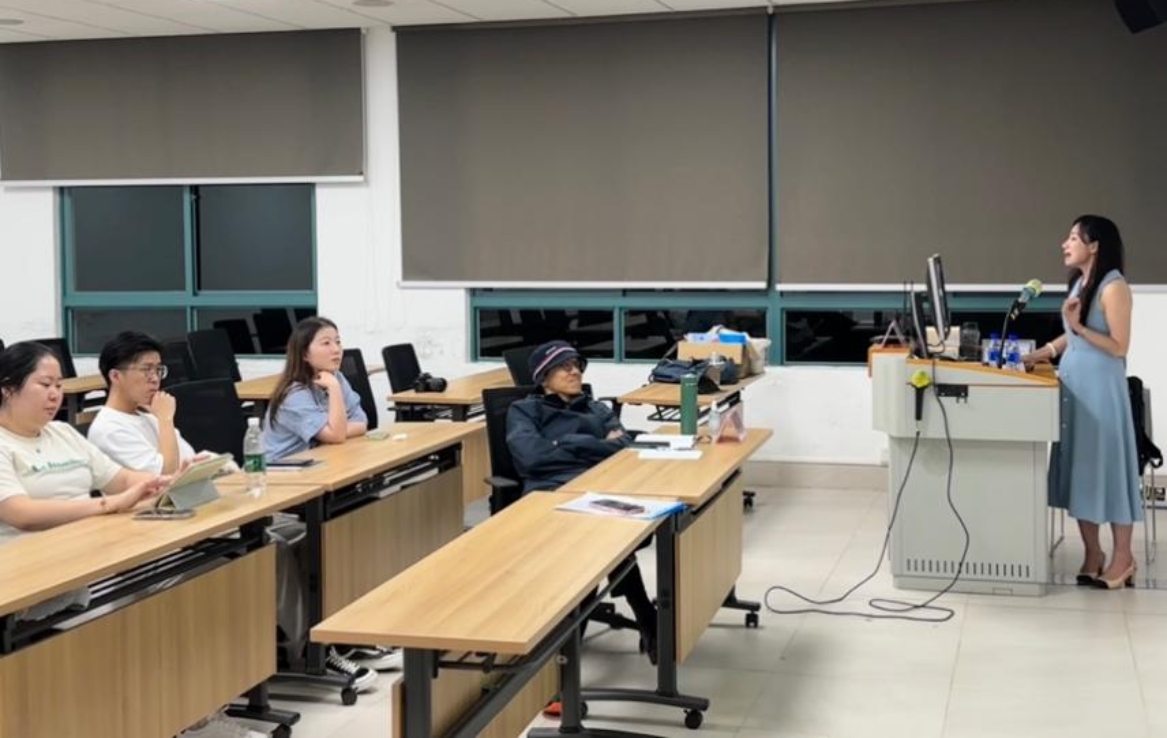
The insightful presentations delivered by Assistant Professor João Moreira and Director Liang Jingheng offered participants fresh perspectives on the application of Large Language Models in arbitration and the evolution of family mediation in Macau. Furthermore, the session provided valuable takeaways on leveraging Alternative Dispute Resolution (ADR) mechanisms to address complex issues in legal practice. The students present actively interacted with the two speakers, engaging in in-depth discussions on related issues, creating a lively atmosphere on site.
Finally, the lecture concluded successfully amidst warm applause.