

On June 8, 2025, the Law School of Beijing Normal University organized a lecture titled "The Regulatory Shift in Platform Governance: A Perspective on the Conflict between Live Streaming Sales and Advertising Law." The event took place in Room 106 of Teaching Building 8 at Beijing Normal University. Liu Xiaochun, the Director of the Internet Law Research Center at the Chinese Academy of Social Sciences University and an Associate Professor at the BNU Law School, was the featured speaker. Associate Professor Li Dejia from the BNU Law School served as the host, while Wang Lei, a researcher at the Intelligent Technology Law Research Center of Beijing Institute of Technology, and Han Na, an Associate Professor at the People's Public Security University of China, acted as panelists.
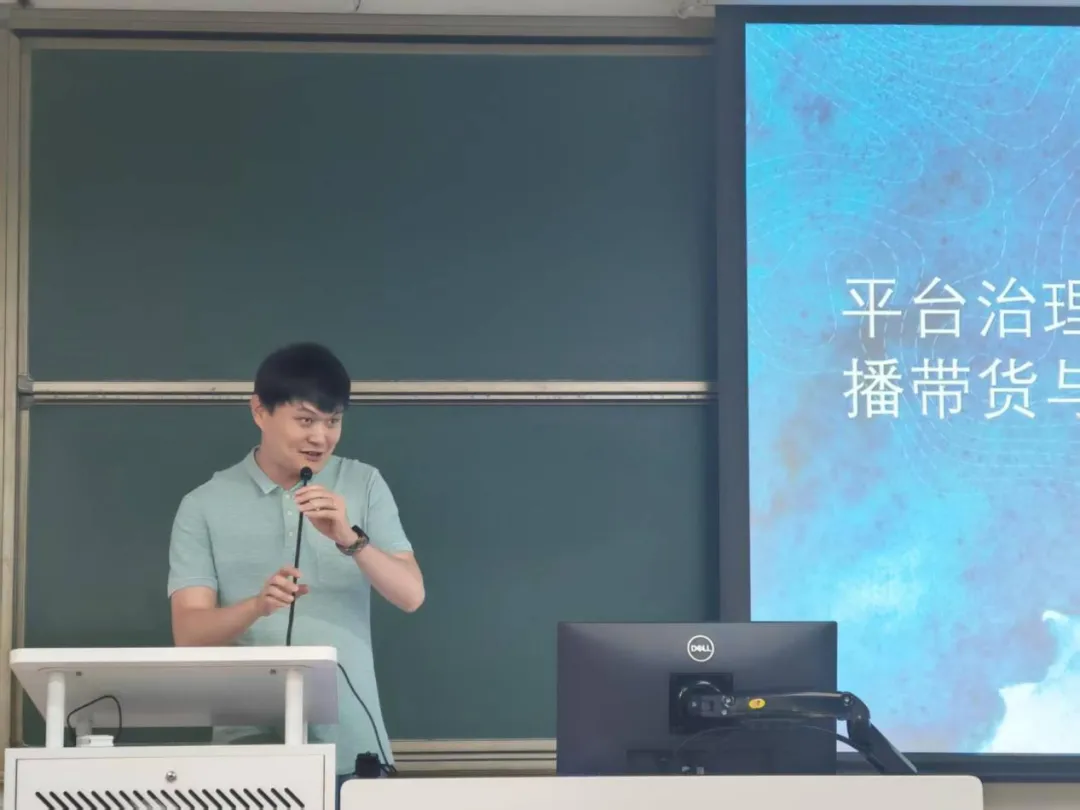
At the outset of the lecture, Associate Professor Li Dejia, on behalf of the BNU Law School, expressed sincere gratitude to Director Liu Xiaochun for her participation. He then proudly introduced Director Liu Xiaochun, commending her remarkable contributions to the legal field. Following this, he introduced the expert scholars attending the lecture and extended a warm welcome to the faculty and students present.
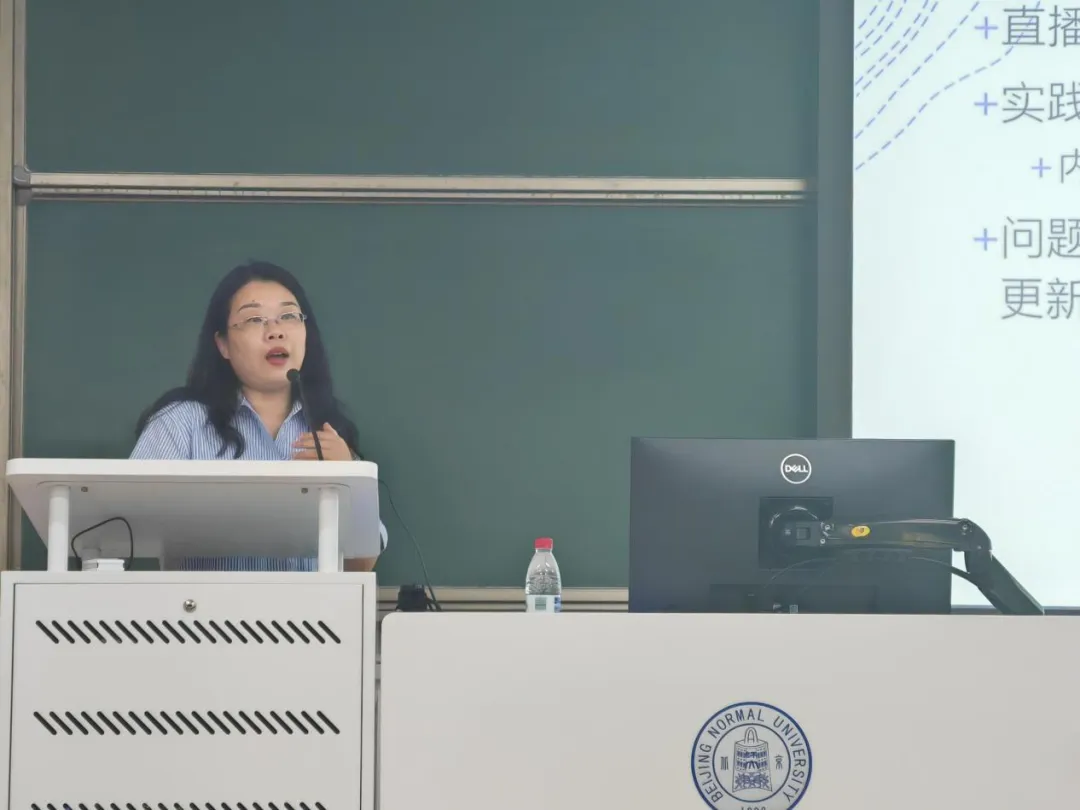
Director Liu Xiaochun delivered her lecture on the theme of "The Regulatory Shift in Platform Governance: A Perspective on the Conflict between Live Streaming Sales and Advertising Law." She began by highlighting the rapid evolution of e-commerce models, particularly the emergence of live streaming sales as a new business format. While acknowledging the economic benefits it brings, she also pointed out the numerous legal controversies it has sparked, especially concerning its classification as advertising. She explained that the unique nature of live streaming sales sets it apart from traditional advertising, posing challenges for the application of the Advertising Law. For instance, if live streaming sales are deemed advertising, they must adhere to pre-approval requirements, which are difficult to meet due to the immediacy of live streaming. Moreover, strict enforcement might inadvertently classify low-risk products, such as beauty devices, as high-risk, thereby stifling innovation. It became evident that the control-oriented regulatory model embodied by the Advertising Law faces applicability dilemmas, necessitating updates in corresponding concepts and tools. Based on this analysis, she delved into the necessity and feasibility of transitioning from "control-oriented" to "regulatory" governance in the context of live streaming sales, focusing on the conflicts and shortcomings in the application of the Advertising Law, while also considering structural changes in consumer trust and governance costs. She further elaborated on the evolution of the platform trust mechanism and the redefinition of the government's role in governance.
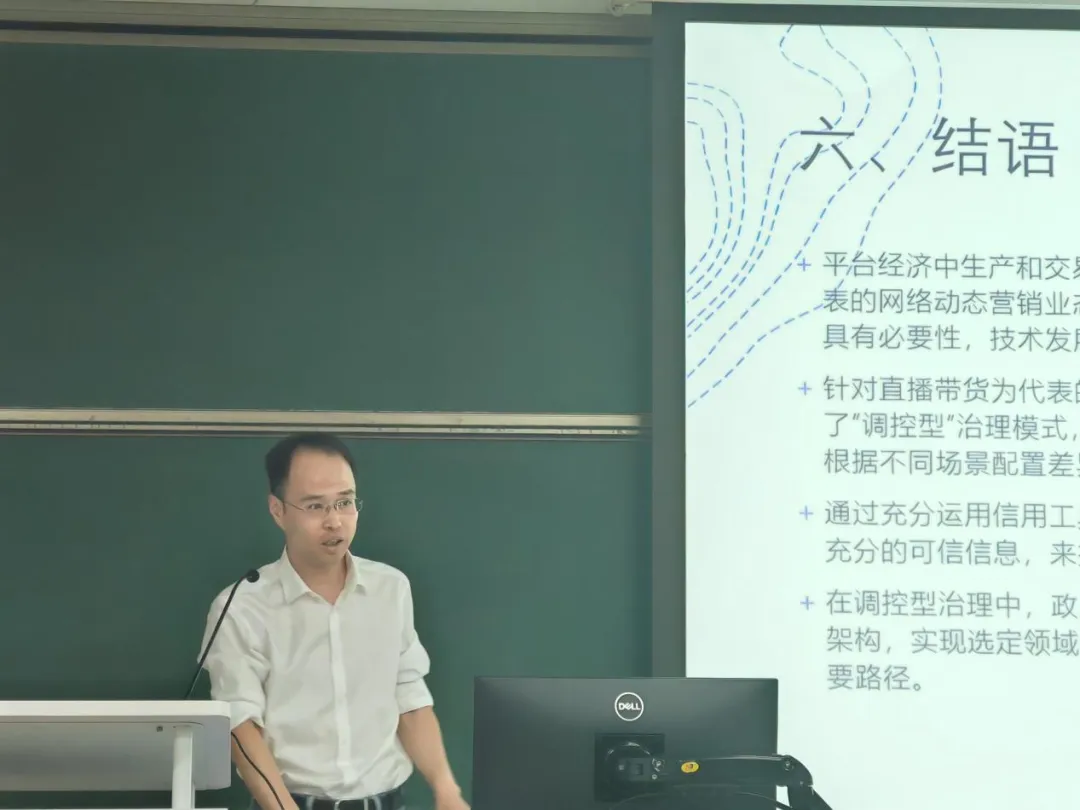
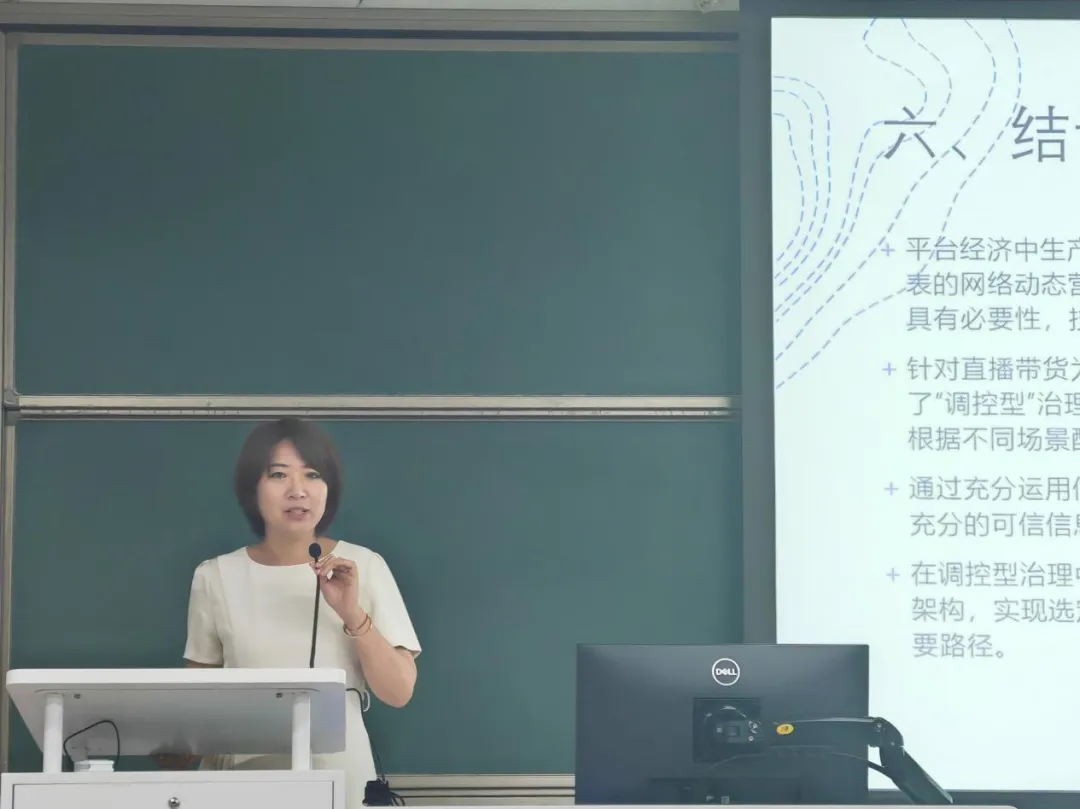
During the discussion segment, researcher Wang Lei and Associate Professor Han Na offered insightful critiques and comments on Director Liu Xiaochun's presentation. They engaged in discussions on topics such as advertising regulations, online commerce supervision, and law enforcement standards, providing unique perspectives on cross-platform collaboration, compliance management, and the establishment of trust mechanisms through multi-party cooperation. 
Towards the end of the lecture, a lively Q&A session ensued, with participants delving into in-depth discussions on topics such as the regulatory shift in platform governance mechanisms. Director Liu Xiaochun expressed her appreciation to the research institute and the associate professors, and provided thorough responses to the questions raised by speakers and participants, further enhancing everyone's understanding of these legal issues.
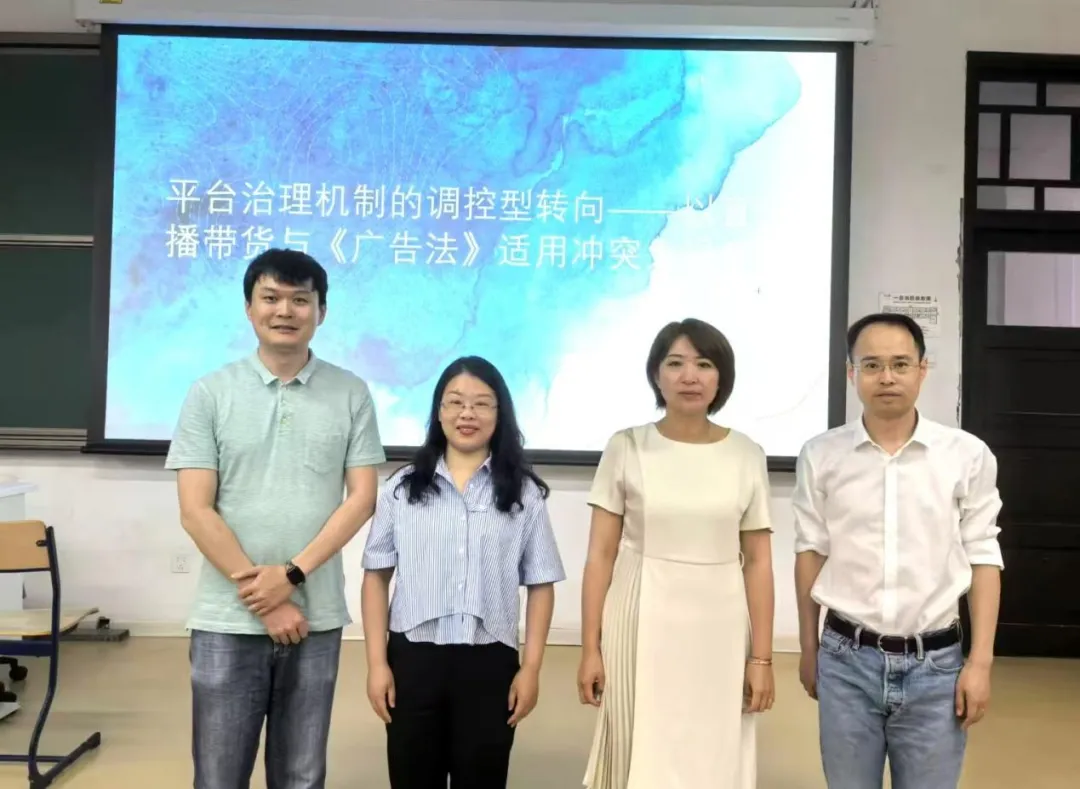
In closing, Associate Professor Li Dejia once again extended his sincere thanks to Director Liu Xiaochun for her presence and to the attending faculty and students for their attentive participation. The lecture concluded successfully amidst warm applause, leaving a lasting impression on all attendees.
Contributed by: Zhou Yanni
Typesetting: Xu Yiyang
Editor: Shi Tianyu