

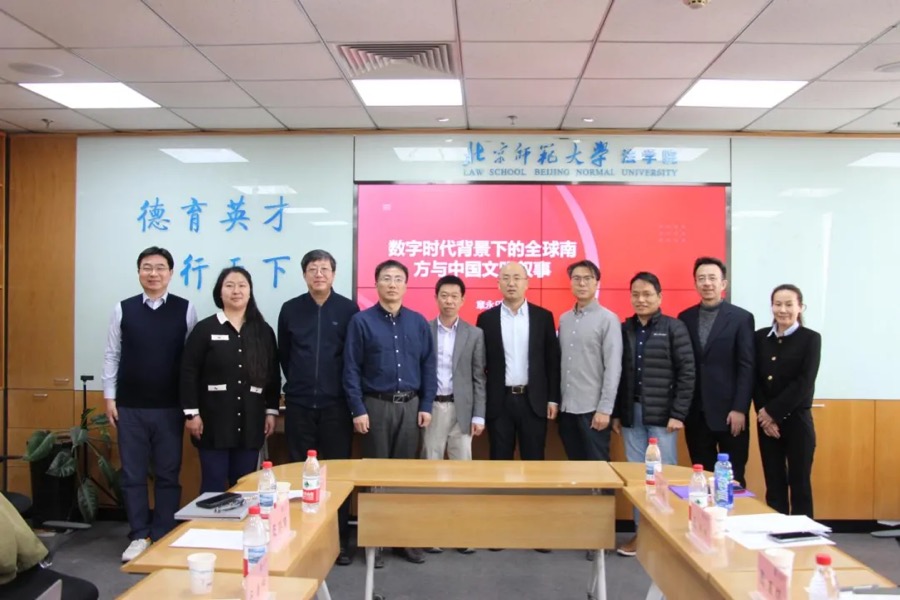
On the morning of March 28, 2025, the academic seminar titled “Global South and Foreign-related Rule of Law in the Digital Age” was successfully held in Room 1922 of the Rear Main Building at Beijing Normal University. Organized by the Digital Law Research Center of the Law School at Beijing Normal University, the event brought together distinguished guests from Peking University, Tsinghua University, Renmin University of China, and Beijing Institute of Technology, alongside more than a dozen students from both on and off campus.
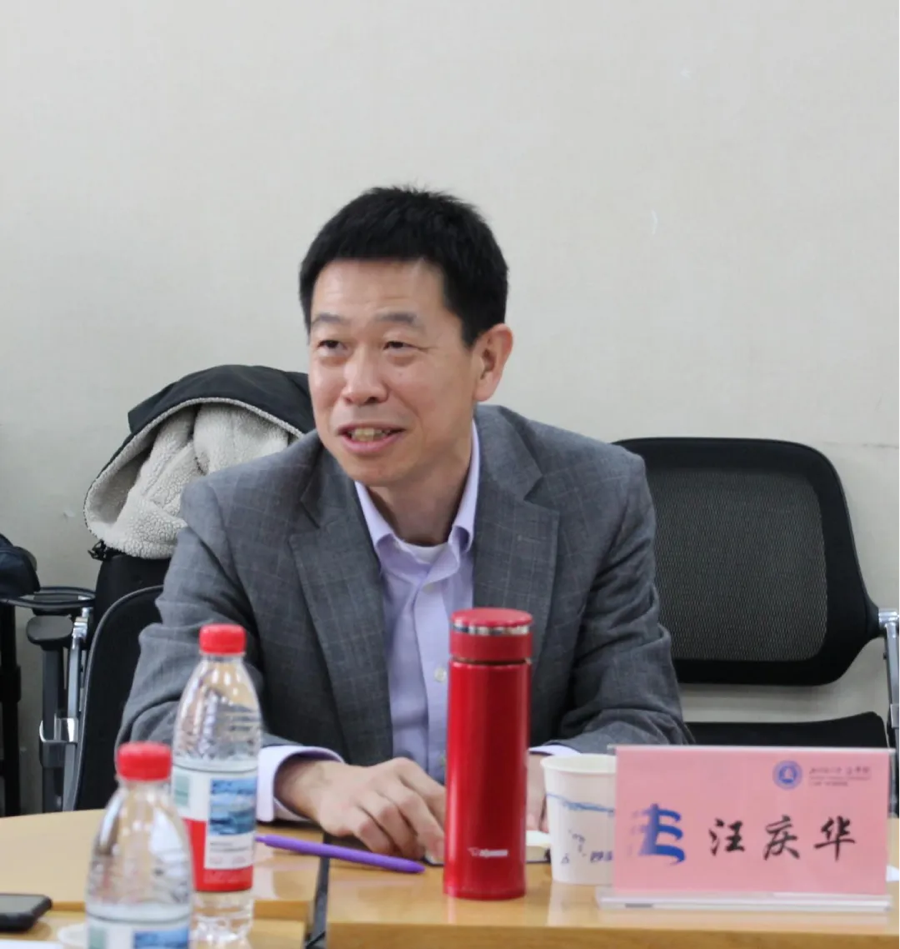
Professor Wang Qinghua from the Law School of Beijing Normal University provided a brief introduction of the conference guests and delivered a keynote address on the origin and contemporary significance of the Global South discourse. He also explored the integration of the global political, economic, and technological order in the digital age, as well as the concept of foreign-related rule of law within the framework of a "global community."
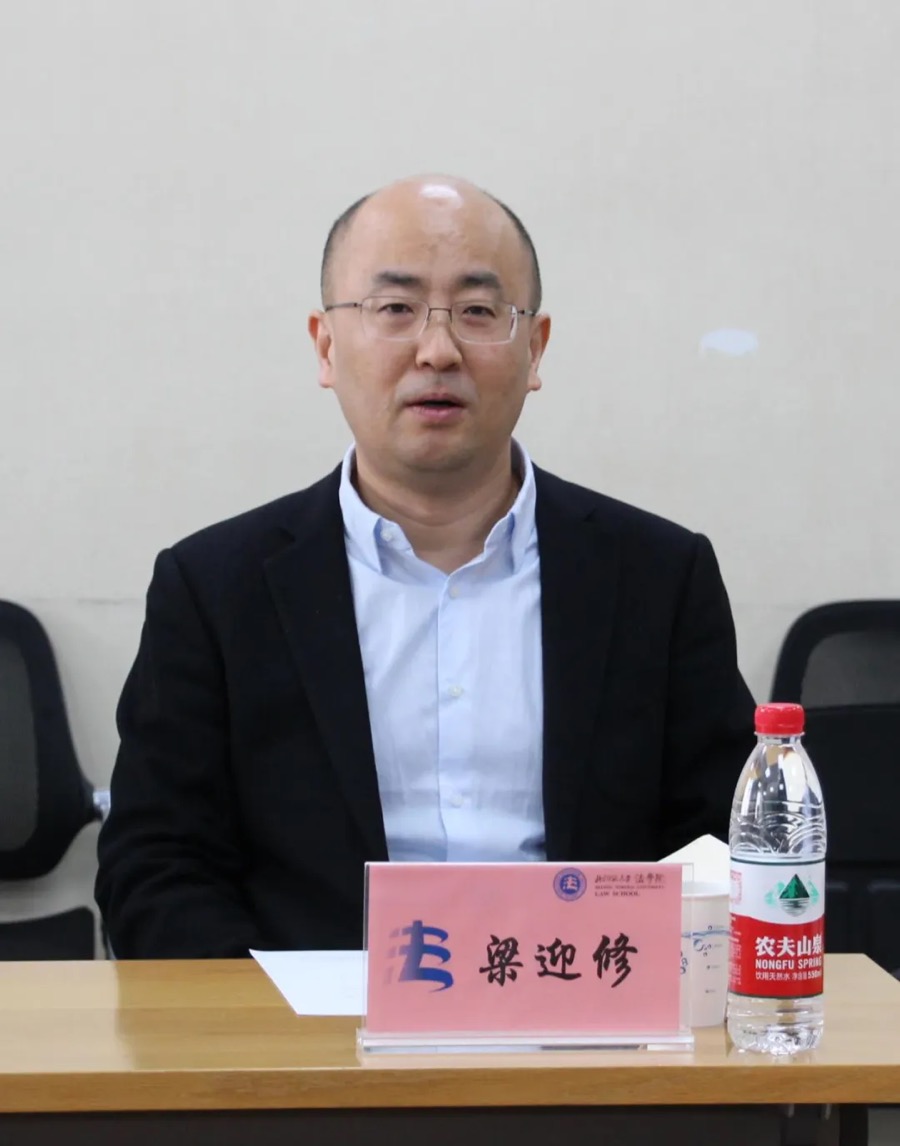
Professor Liang Yingxiu, Dean of the Law School of Beijing Normal University, delivered opening remarks, warmly welcoming all the guests. Dean Liang noted that this academic seminar uniquely combines two critical areas, digital law and foreign-related rule of law, while also addressing the discourse and practices of the Global South. He emphasized that the digital infrastructure, digital human rights protection, and governance challenges faced by Global South countries in the digital age deserve in-depth discussion by the academic community. He concluded by expressing his best wishes for the success of the seminar.
Theme Speech Session
01
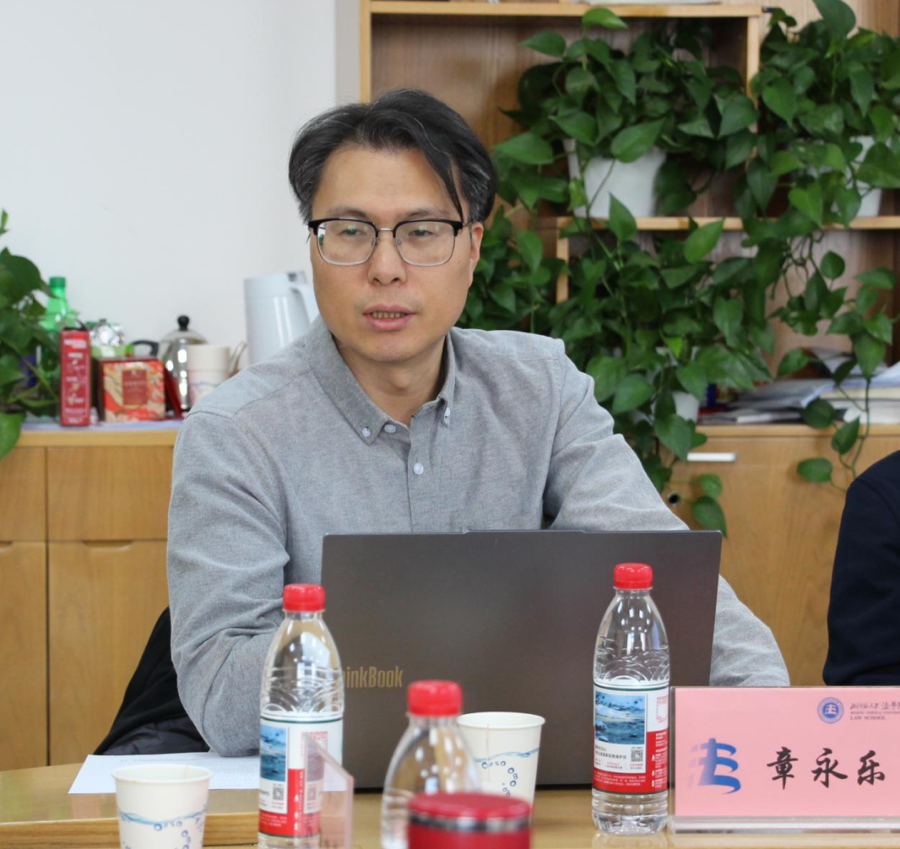
Associate Professor Zhang Yongle, Vice Dean of the Institute of Regional and Country Studies at Peking University, shared his views on China's positioning in the Global South and the unifying advantages of Chinese civilization in the digital age. He believes that although China has formed a "parallel running" pattern with the United States in fields such as artificial intelligence, it still belongs to the Global South. From the perspectives of per capita levels, industrial chain status, and upgrading pressures, China faces similar challenges as other Southern countries, especially in the context where developed countries occupy high-end ecological niches, necessitating cooperation among Southern countries to address unfair competition. He pointed out that the unifying characteristics of Chinese civilization are showing advantages in the digital age. The new type of national system combines an effective market with a proactive government, promoting inclusive construction of digital infrastructure, while the super-large market and data integration capabilities become important driving forces for technological innovation. In contrast, Europe struggles to form a unified market due to political and linguistic divisions. In the context of global competition, Southern countries can promote South-South cooperation through interconnected digital infrastructure. However, digital technology also brings social challenges such as labor protection and family coordination, which need to be addressed through legal innovation and international mutual learning.
02
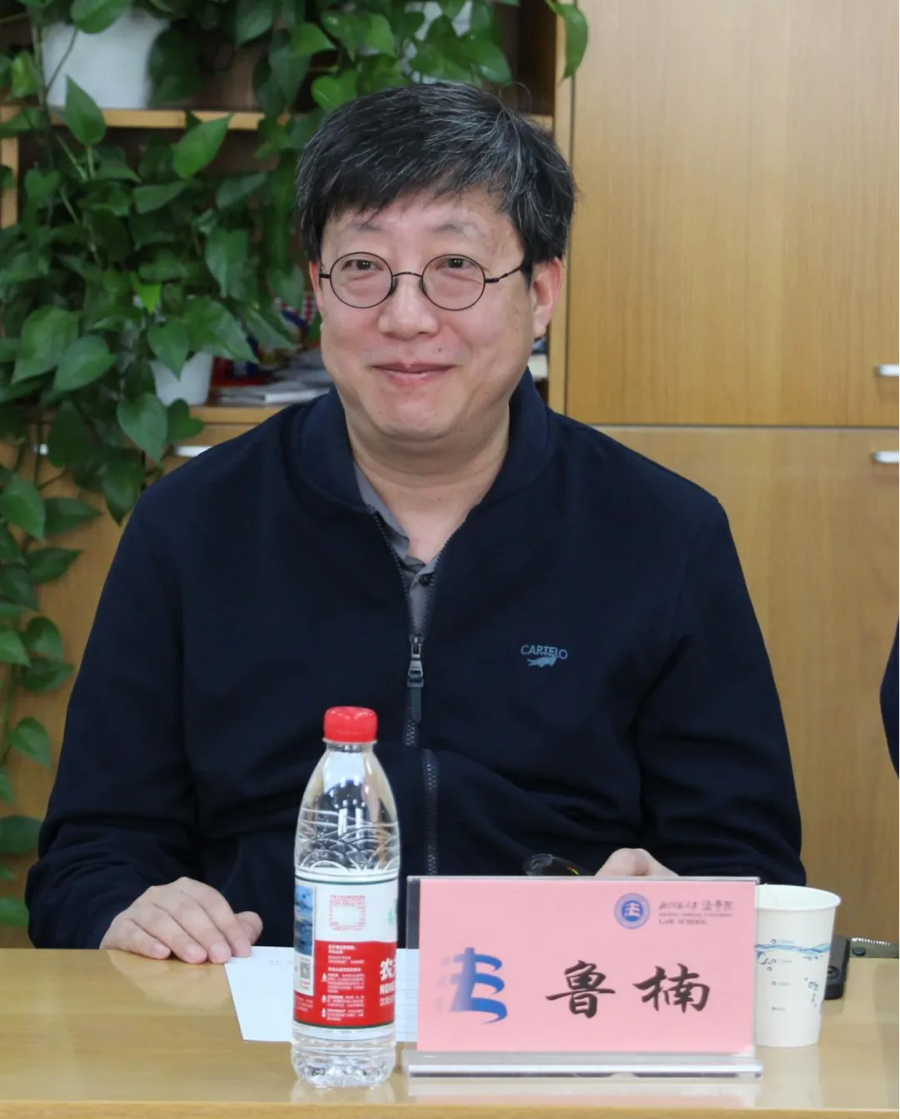
Lu Nan, an associate professor at Tsinghua University's Law School, pointed out that the concept of "Global South" is gradually replacing traditional discourses such as "Third World" and "developing countries". The Southern countries are not an organic whole, but are filled with competition and differentiation. He emphasized that China and India are engaged in a fierce competition over the discourse power of the 'Global South.' In recent years, India has actively articulated the narrative of the “Global South,” attempting to seize leadership among southern countries. The differences in development paths between the two countries are evident: China relies on the advantages of a unified market and digital infrastructure to form emerging digital centers like Hangzhou. India, on the other hand, faces infrastructure bottlenecks with its outsourcing model represented by Bangalore. This competition between the “Southeast” and “Southwest” highlights the complexity within the Global South. Regarding the digital divide, there are significant disparities between northern and southern countries, as well as among southern countries. Taking India as an example, there is a stark contrast in digital infrastructure between its northern and southern states. Legally, India is accelerating legislative reforms for the digital economy; the 2023 “Digital Personal Data Protection Act” emulates the EU's GDPR, and the criminal justice system has also undergone digital upgrades. However, the fragmentation of international law and the challenges of regional integration (such as the dysfunction of the WTO mechanism) remain common challenges for southern countries. Finally, Professor Lu Nan specifically pointed out that traditional religious legal cultures in India's coastal states are being reshaped by the digital economy, a phenomenon that has not yet received sufficient attention from academia.
03
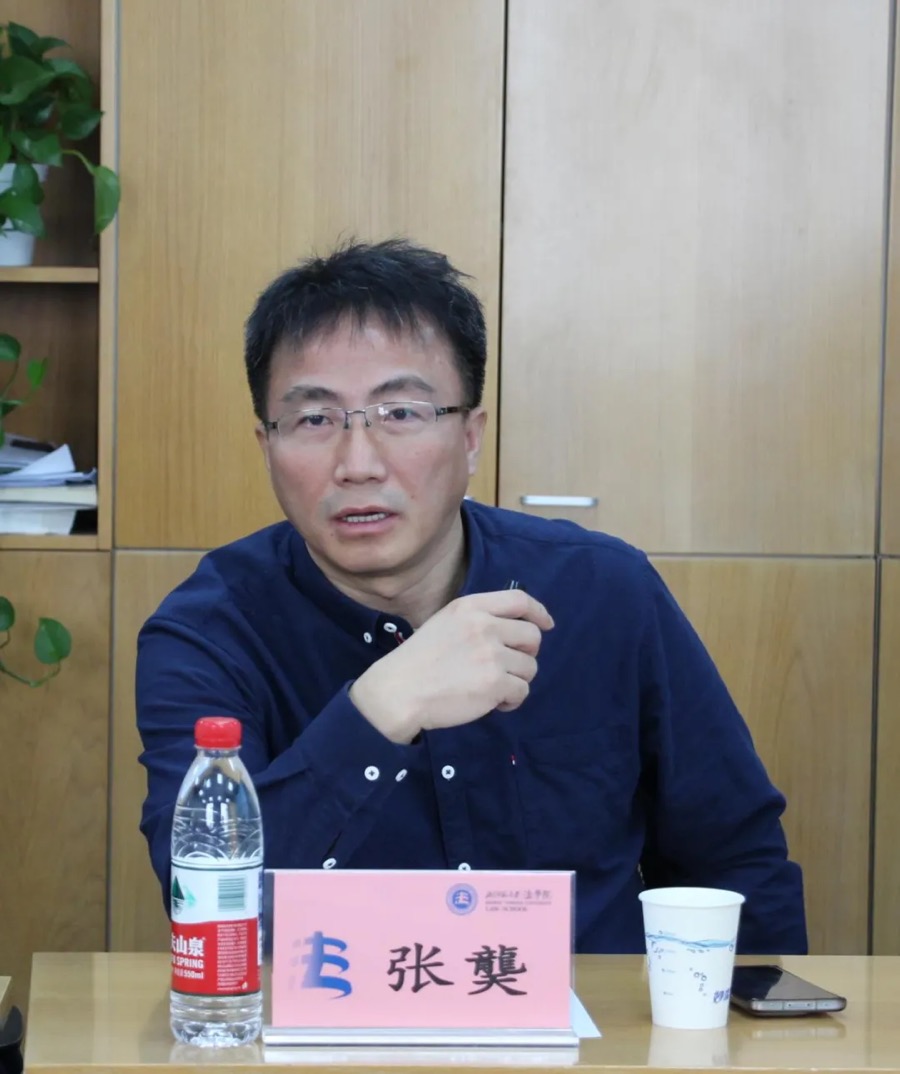
Professor Zhang Yan of the Law School at Renmin University of China focuses on "three basic legal relationships in the global governance of artificial intelligence," analyzing the formation of cybersecurity risks and the path of legal regulation from the perspective of the interaction between the will of sovereign states, internet giants, and the public. He pointed out that network superpowers shape hegemonic order through infrastructure and rule dominance. Sovereign states rely on coercive power to maintain 'network sovereignty,' controlling digital content domestically and competing for rule discourse power through foreign-related legal systems externally. Internet giants hold media social power, reconstructing identity and interest distribution through technical norms and algorithms. The public aggregates opinions through “public square power,” becoming a dynamic force influencing cybersecurity. These three types of entities intertwine to form transnational, trans-spatial, and trans-personal three-dimensional security risks, which need to be coordinated through legal relationships for governance. He emphasized that China's cybersecurity legislation needs to break through the traditional departmental legal framework, coordinating domestic rule of law with foreign-related rule of law, and balancing the triple relationship of “hegemonic threats - social power - individual security” to build a governance system that aligns with the transnational nature of cyberspace, maintaining “data sovereignty” while promoting a new form of global digital civilization.
04
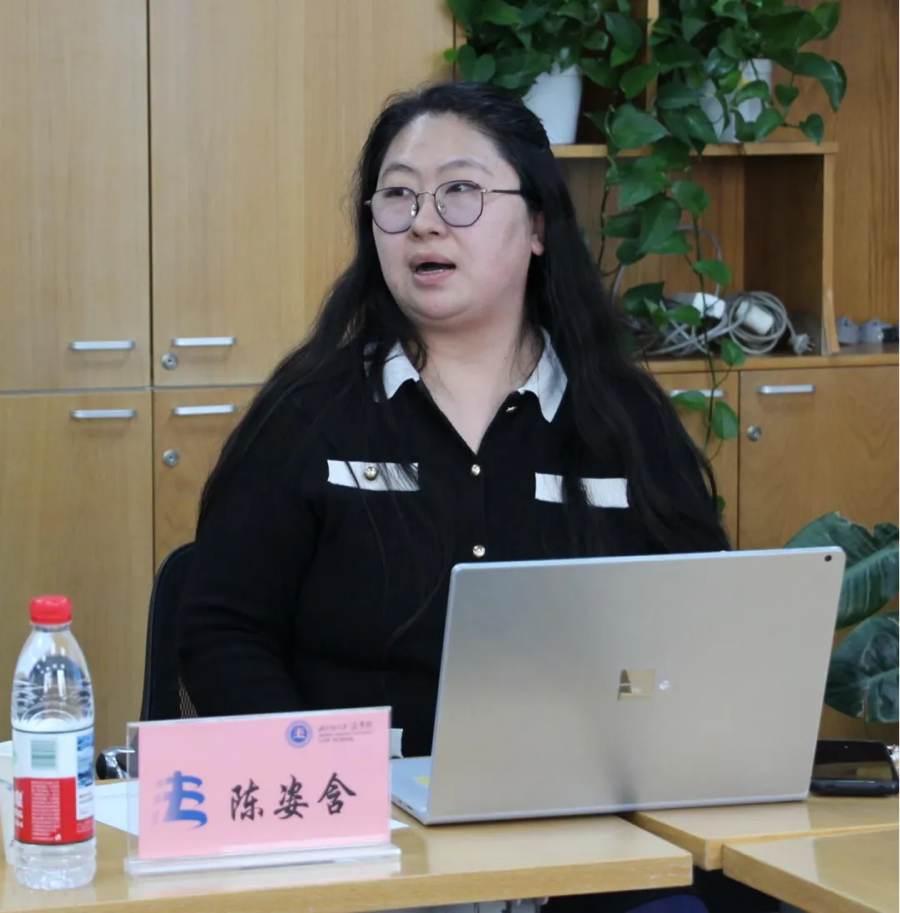
Associate Professor Chen Zihan from the Law School at Beijing Institute of Technology discussed the "Legality Review of Algorithmic Administration," pointing out that algorithmic administration needs to confront three sets of contradictions: the conflict between efficiency and procedural justice, the divergence between technological rationality and traditional values, and the tension between global standards and local practices. Based on the analysis of the challenges brought by the inherent influences of the French Revolution legacy, the Enlightenment, and technological governance, Professor Chen explored China's unique concepts in digital governance and its position in the new form of global civilization. He proposed the "unity of heaven and humanity" digital ecological view and the "co-governance of etiquette and law" ethical path, advocating for a breakthrough in binary divisions through "relational data rights" and constructing a local paradigm based on the theory of differentiated order. She emphasized that China needs to promote "institutional sinking" within the constitutional framework, utilizing mechanisms such as algorithm audits, conflict of interest declarations, and dynamic updates of technical standards to ensure the effectiveness of reviews, and relying on the "pilot - evaluation - legislation" path to achieve institutional innovation and constitutional control.
Discussion Session
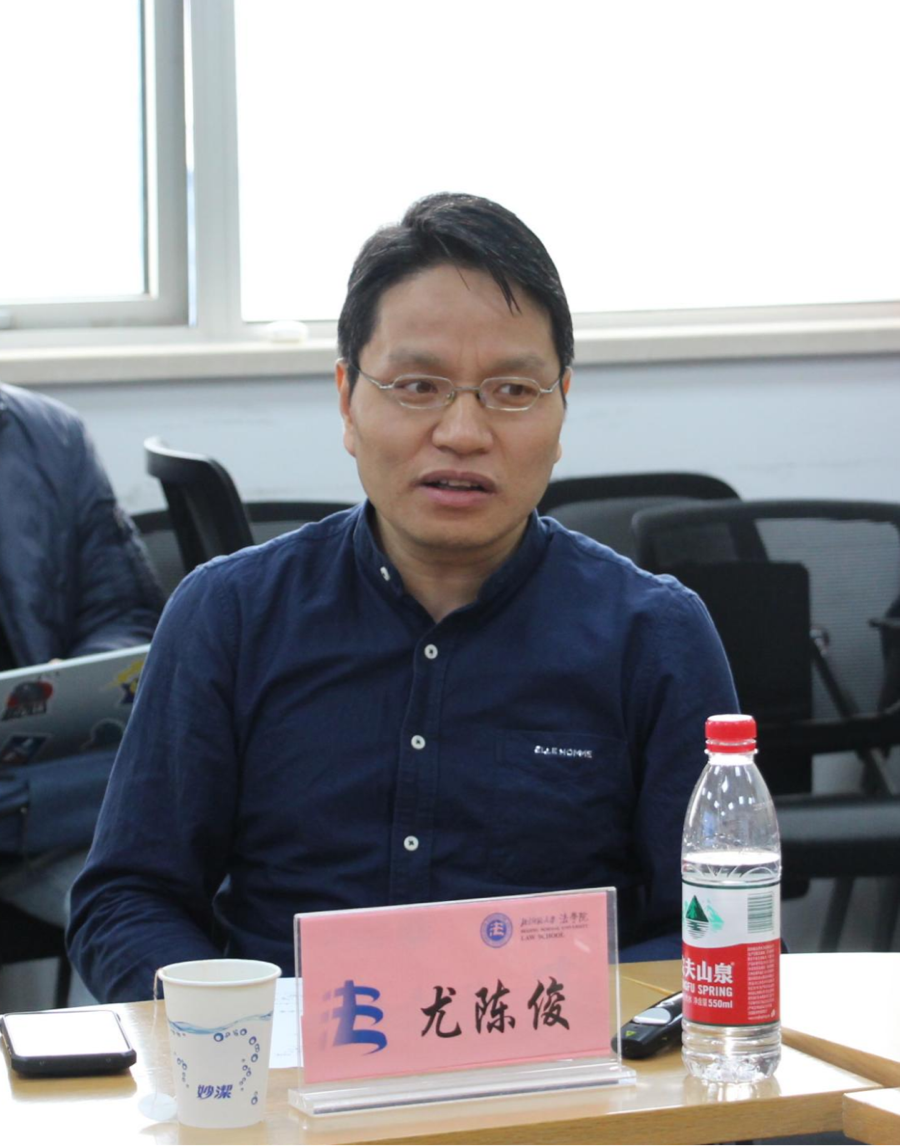
Professor You Chenjun of the Law School at Renmin University of China pointed out that the digital age is reshaping the global landscape: on the one hand, the promotion of technology may lead to "technological feudalism," which marginalizes certain groups and causes inequality. In the future, we can draw wisdom from traditional Chinese resources such as the concept of "great unification" to build an inclusive narrative. On the other hand, the concept of the "Global South" has gradually replaced the past term "Third World" in a certain sense. When using this new popular concept, it is also necessary to be vigilant about the presentation of "center-periphery" hegemony in the digital age. At the same time, he emphasized two major challenges faced in the future: first, the concept of "sovereignty" based on the geographical meaning of "territory" established in traditional jurisprudence needs to be reconstructed to address new governance issues that transcend physical boundaries, such as "cyber sovereignty" and "cross-border jurisdiction". Second, there is a need to innovate the "civilizational narrative" to balance China's "center" and "periphery" positioning in global digital civilization, integrating traditional concepts such as the "view of the world" to promote the transformation of foreign-related legal education and international relations cognition. Finally, he pointed out that the arrival of the digital age has also brought new vitality to traditional disciplines such as foreign legal history and comparative law, and in the future, we should seize opportunities to promote disciplinary innovation.

Professor Xia Yang of the Law School at Beijing Normal University pointed out that the concept of the "Global South" has shifted from a label of "economic weakness" to a symbol of potential opportunities. He recalled that in the past, the "South" was often associated with low value-added processing roles, but now, taking China as an example, companies like Xiaomi have grown into global brands by deeply cultivating the Southern market, proving that their role has shifted from passive recipients to active innovators. The widespread adoption of digital technology has broken geographical limitations, allowing Southern countries to participate in global competition through unique models. For example, the successful development of TikTok and Xiaohongshu globally reflects China's profound understanding of social media. He believes that Southern countries should leverage their cultural advantages to compensate for technological shortcomings. For instance, a deep understanding of “relationship-oriented societies” can become a driving force for business model innovation. He calls for a redefinition of the positioning of the “Global South” by combining digital tools with local wisdom to form a unique competitive advantage for Southern countries.
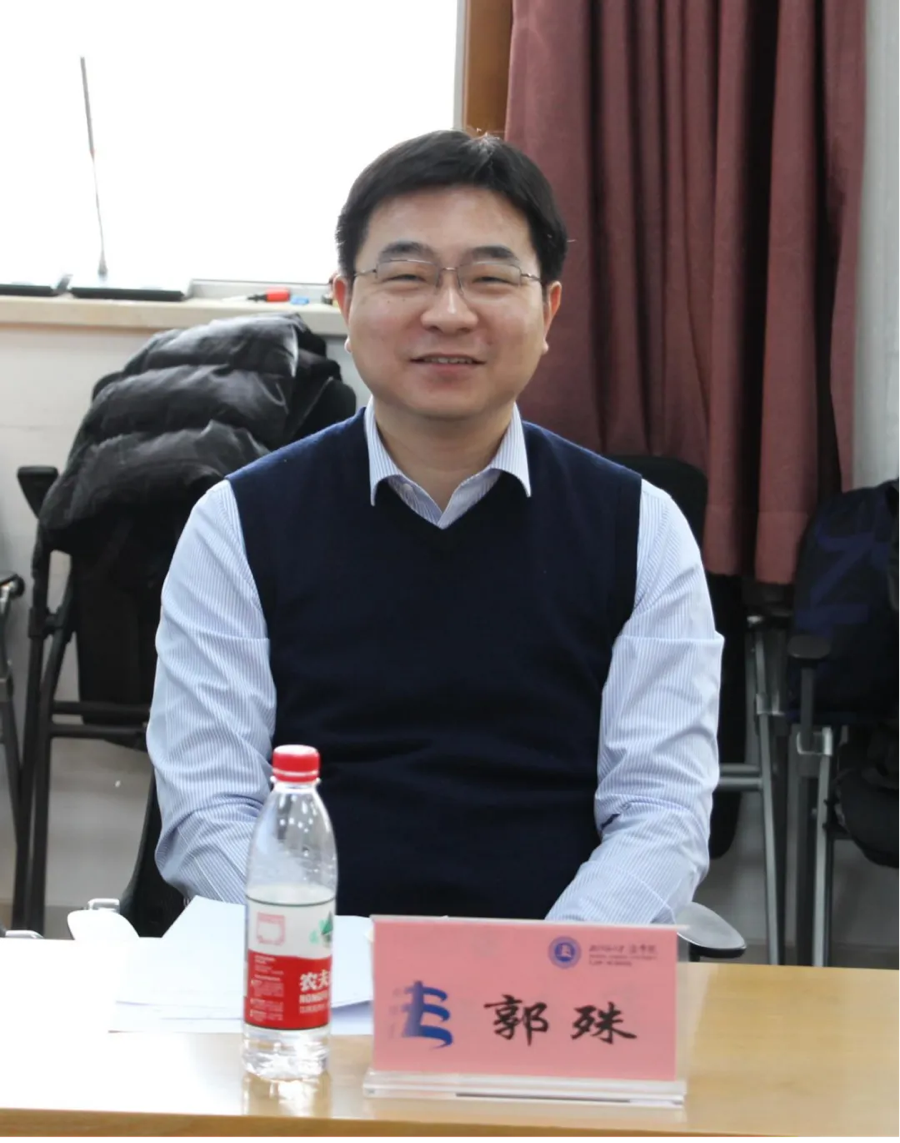
Guo Shu, an associate professor at the Law School of Beijing Normal University, pointed out that the concept of the "Global South" is underpinned by complex historical factors. In the current digital age, technological development has become a key force in reshaping the global landscape, with China's technological breakthroughs challenging the existing digital hegemony. In terms of application, the successful implementation of 5G remote surgery demonstrates the potential of technology to bridge global development gaps. Furthermore, Chinese companies have exhibited a strong sense of social responsibility within the telecommunications sector. Taking the “Thousand Sails Plan”' as an example, telecommunications companies are leveraging profits from urban operations to support rural and mountainous areas in achieving comprehensive signal coverage. The future development of low-orbit communication satellites is expected to further reduce costs and provide broader communication services for developing countries, representing a positive practice of China providing public goods to the world. Regarding foreign-related rule of law, Mr. Guo believes that China is at a critical juncture, transitioning from a traditional nation-state discourse system to a globalized era. He argued that China must adhere to its own development philosophy and pursue "a world of great harmony" so that all countries can share in the dividends of development.

Associate Professor Yang Chao of the Law School at Beijing Normal University observed that China currently occupies a unique position within the international rules framework, functioning as neither a mere active implementer nor a passive recipient. She suggested that researching how to enhance China's international contributions and influence, building upon its existing role, is a topic worthy of in-depth study. Professor Yang further pointed out that disputes over data sovereignty are intensifying, creating an urgent need to establish a mechanism for cross-border data flow and trading. Regarding international developments, she noted that the legislative proposal for an artificial intelligence liability mechanism promoted by the European Union includes eight pillars. These cover key issues such as the attribution of responsibility for AI use and the expansion of consumer protection, offering new perspectives for legal norms in the AI era. In the field of foreign-related rule of law, Professor Yang emphasized its nature as a "relational law" with a global concept. She highlighted the increasing importance of foreign-related rule of law in safeguarding national and public interests and in participating in the formulation of international rules in the digital age.
This academic seminar provided valuable inspiration and stimulated reflection regarding research and practice in the Global South. Amidst the wave of the digital age, China faces both opportunities and challenges in promoting the development of the Global South. How Chinese-style modernization can serve as both a paradigmatic model and a subjective paradigm remains a question worthy of further exploration.