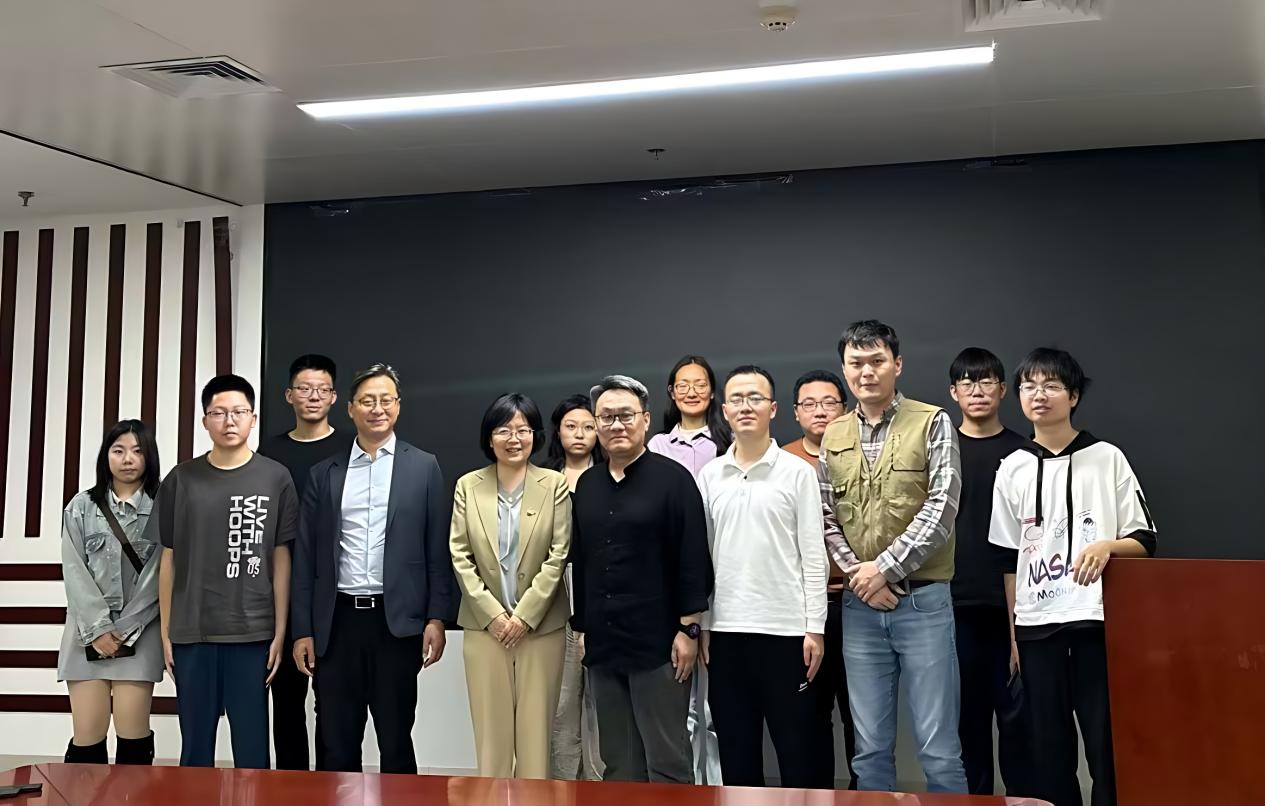
On the evening of May 15, 2025, at 7 PM, the 35th session of the Law Graduate Salon, hosted by the Law School of Beijing Normal University, took place in Room 1822 of the Rear Main Building. Themed "Legal Responses to the Transformation of Labor Forms in the Digital Age," the lecture was delivered by Professor Wang Tianyu, a researcher at the Institute of Law, Chinese Academy of Social Sciences. Professor Li Dejia from the Law School of Beijing Normal University presided over the event. The panelists included Professor Lou Yu, a doctoral supervisor from the School of Civil and Commercial Economic Law at China University of Political Science and Law, Yu Xiaohang from the Institute of Rule of Law Research of the China Law Society, and Professor Chai Rong, who serves as the Party Secretary and a professor at the Law School of Beijing Normal University. The lecture attracted enthusiastic participation from numerous students.
Professor Li Dejia commenced the proceedings by introducing Professor Wang Tianyu, emphasizing his outstanding research accomplishments in the field of labor law. He remarked on the forward-looking nature of the day's lecture topic and extended a warm welcome and heartfelt gratitude to Professor Wang for gracing the university with his presence.
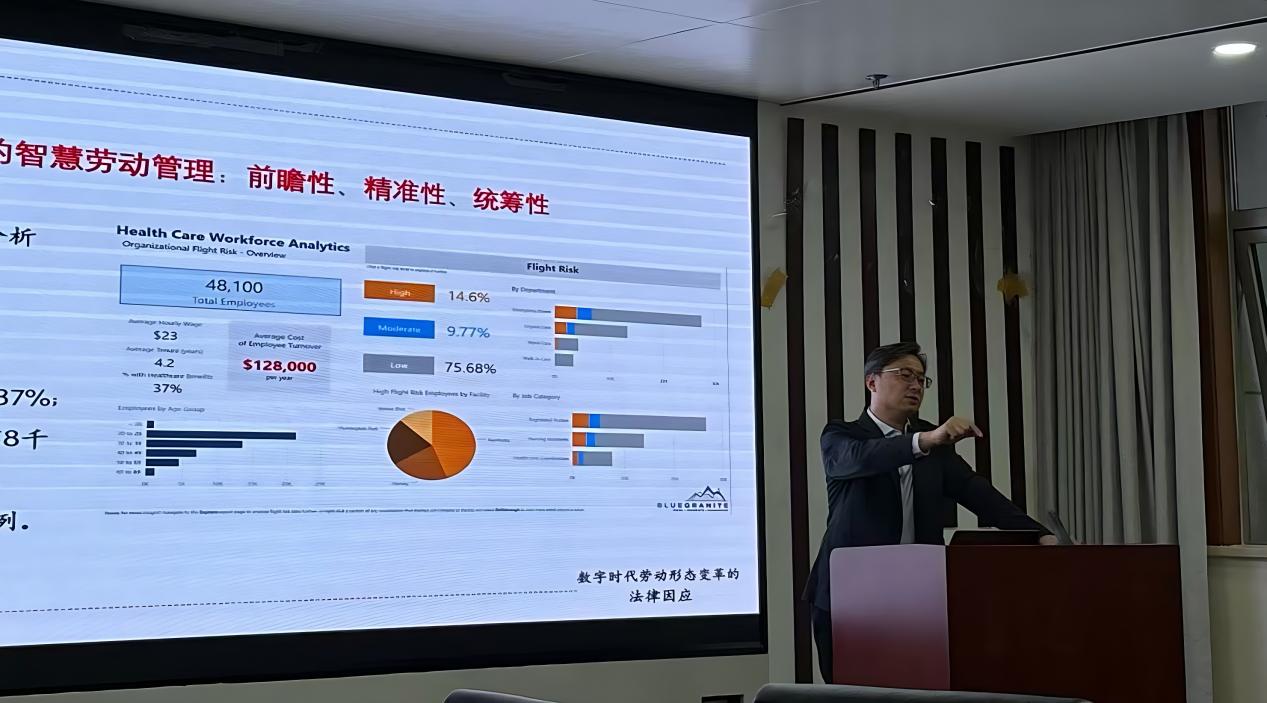
During the thematic lecture, Professor Wang Tianyu commenced by dissecting the transformative impact of digitalization on labor forms. He underscored that the digital revolution in labor transcends mere job market shifts, embodying a broader digital transformation across the nation. The digitalization of pivotal industries is propelling labor organization from a traditional "unit system" towards a "platform-based" model. For instance, nursing institutions leverage data analytics to forecast employee turnover risks, while food delivery platforms employ algorithms to orchestrate rider schedules, both exemplifying data-driven innovations in labor management. Through a comparative analysis of domestic and international cases, Professor Wang highlighted that China has cultivated a highly efficient and cost-effective food delivery ecosystem, underpinned by infrastructure such as electric bikes and battery swapping stations. Conversely, regions like Singapore and Europe lag in efficiency due to inadequate labor density and technological adaptability, underscoring the profound transformation of labor forms catalyzed by the "seamless integration of technological applications and local markets."
In the second segment, Professor Wang Tianyu delved into the pivotal controversies surrounding labor relations in the digital age. Firstly, he addressed the challenge of identifying labor relations. Under the prevailing legal framework, groups such as delivery riders and ride-hailing drivers struggle to be classified within traditional labor relations due to their "freedom to accept orders and loose management," resulting in inadequate protection of rights like work injury compensation and social security coverage. The Supreme Court's 42nd batch of guiding cases introduced the "dominant labor management" criterion, emphasizing the need to differentiate between the platform's direct control over workers and general regulatory constraints. For instance, riders' ability to freely exit the order acceptance scenario lacks the "irreversibility" characteristic of labor relations, rendering the recognition of platform-worker relationships as labor relations contentious. Secondly, divergent governance paths emerged in academic discourse. One faction advocates for a streamlined labor law, offering "basic version" protections through selective application of labor law provisions, while another supports expanding civil law to incorporate industry-specific rules based on service contracts. Professor Wang Tianyu contended that the labor law system, rooted in "collective labor," struggles to accommodate the diversity of flexible employment, necessitating the exploration of a "tripartite division of labor" framework: labor relations, quasi-labor relations, and non-standard labor relations. Specifically, labor relations encompass traditional employment relationships with clear subordination, fully protected by the Labor Law, such as fixed-term labor contracts between enterprises and employees. Quasi-labor relations represent an intermediate form, such as platform workers, ride-hailing drivers, and food delivery riders, who, while not fully meeting traditional labor relationship criteria, still face substantial platform control over their labor processes through algorithmic scheduling and evaluation mechanisms, warranting legal protections like minimum wage and occupational injury insurance. Non-standard labor relations, characterized by greater flexibility and de-organization, such as freelancers and gig workers, lack long-term binding relationships with employers and primarily rely on digital platforms for task matching, necessitating flexible legal protections like "insurance per task." Finally, Professor Wang Tianyu emphasized the need to abandon the traditional "all or nothing" model of labor relationship recognition and establish flexible standards to accommodate the diversification of labor forms in the digital age.
In conclusion, Professor Wang Tianyu summarized that labor relations are confronting unprecedented challenges in the digital age, and legal regulation of labor relations must be grounded in reality. Under the new technological conditions of the digital age, our laws should facilitate a regulated, orderly, and controllable development of the significant trend of labor transformation. This does not entail denying the development of this transformation or allowing it to run amok, but rather enabling it to unfold in a controllable manner with minimal costs, thereby maximizing the overall advancement of society.
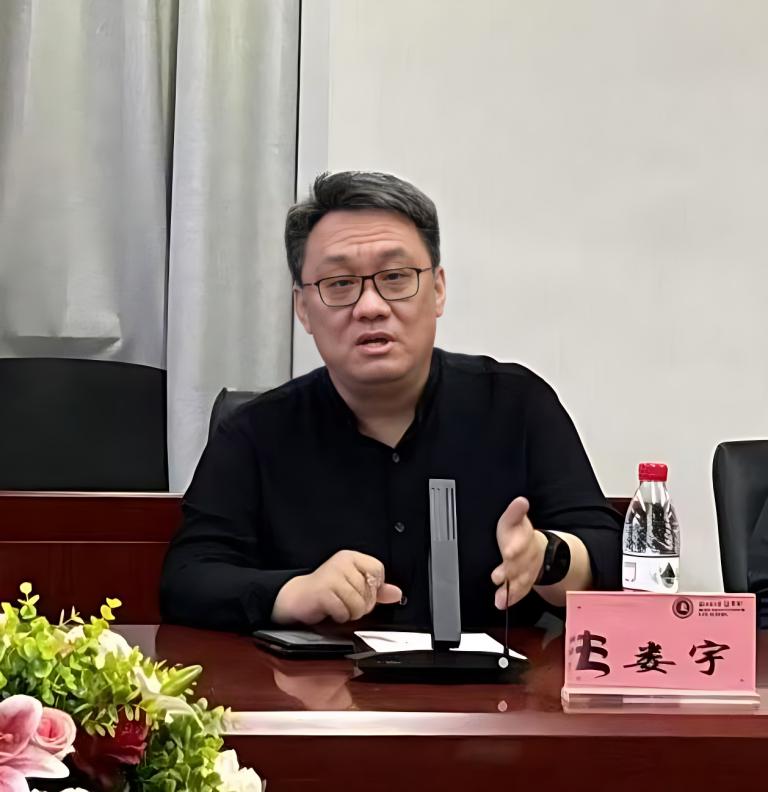
During the lively discussion session, Professor Lou Yu offered insightful perspectives, noting that platform labor represents a "flattened reconstruction" of traditional labor relations through the sophisticated use of algorithms, yet at its core, it remains fundamentally about the integration of labor with the means of production. Despite the transition from a hierarchical command-and-management model to algorithmic scheduling, Professor Lou emphasized that labor law must innovate from within its existing framework, adopting a "deconstruct-reconstruct" approach to develop rights protection mechanisms tailored to the digital age. He underscored the importance of legal research mirroring the diligence of "bees collecting honey," extracting rules and insights from judicial cases to construct an academic system that is both theoretically rigorous and practically relevant. Professor Lou further highlighted the pressing need to distill and summarize the practical experiences of platform labor in China, with the aim of formulating a replicable conceptual framework that can contribute Chinese wisdom and solutions to the global discourse on labor governance.
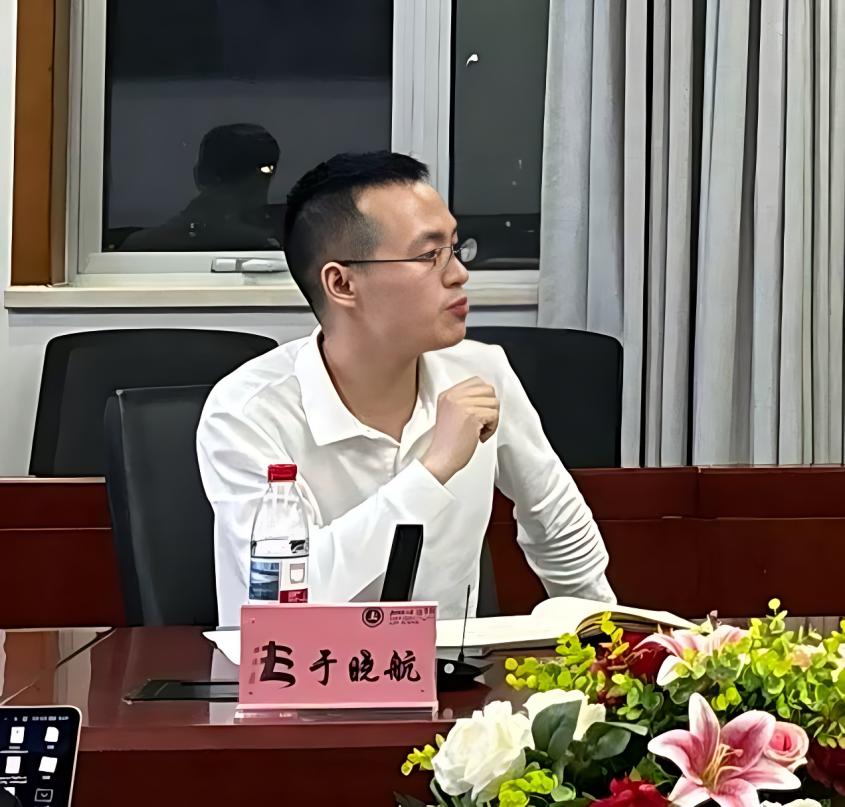
Mr. Yu Xiaohang advocated for a prudent legislative stance, emphasizing that labor relations in the digital age should be effectively regulated through technological empowerment rather than hasty legislation. He cautioned that blind legislative actions might overlook opportunities to repair and enhance the existing legal framework. Mr. Yu underscored the significance of research validation and the seamless integration of law enforcement with judicial processes to prevent theoretical discussions from becoming detached from practical realities, or "empty talk."
Professor Chai Rong offered a concise summary of Professor Wang Tianyu's lecture, highlighting its value for graduate students in conducting impactful research. He encouraged students to concentrate on three key areas: grounding their research in real-world phenomena, leveraging available resources effectively, and solidifying their theoretical foundations. To ground research in reality, students should keenly observe legal phenomena in their surroundings and translate them into meaningful research topics. In terms of resource utilization, students should engage in empirical research by utilizing avenues such as surveys and judicial document databases. To strengthen their theoretical underpinnings, Professor Chai advised students to delve into classic literature to enhance their theoretical acumen and avoid producing research that lacks substance or is "built on sand."
Following the discussion, Professor Li Dejia extended his heartfelt gratitude to Professor Wang Tianyu and all participating experts for their insightful contributions. He noted that Professor Wang's thorough examination of regulatory strategies for labor forms in the digital age was both enlightening and instrumental in deepening our comprehension of labor systems. The case study approach employed by Professor Wang provided fresh perspectives and methodologies for our research endeavors.
In the concluding segment of the lecture, students enthusiastically posed questions to Professor Wang Tianyu regarding the dichotomy and trichotomy of labor relations, to which he responded with detailed and illuminating answers. The lecture drew to a successful close amidst warm applause, leaving students inspired and equipped with valuable insights for their future research.