

On December 25, 2025, an academic seminar for doctoral students titled "Tradition and Modernity: Legal Practices in China's Social Governance," organized by doctoral students Chen Jie and Cao Xin, was successfully held. The seminar featured Mo Yangshen, a faculty member from the Law School of Beijing Normal University, as the panel judge, and Yang Wende, the legal editor of Gansu Social Sciences, along with Zan Chendong, a doctoral student from the Faculty of Law at the University of Macau and editor of Macau Law Journal, as panelists. Additionally, the event attracted a number of doctoral and master's students from the Law School for learning and exchange.
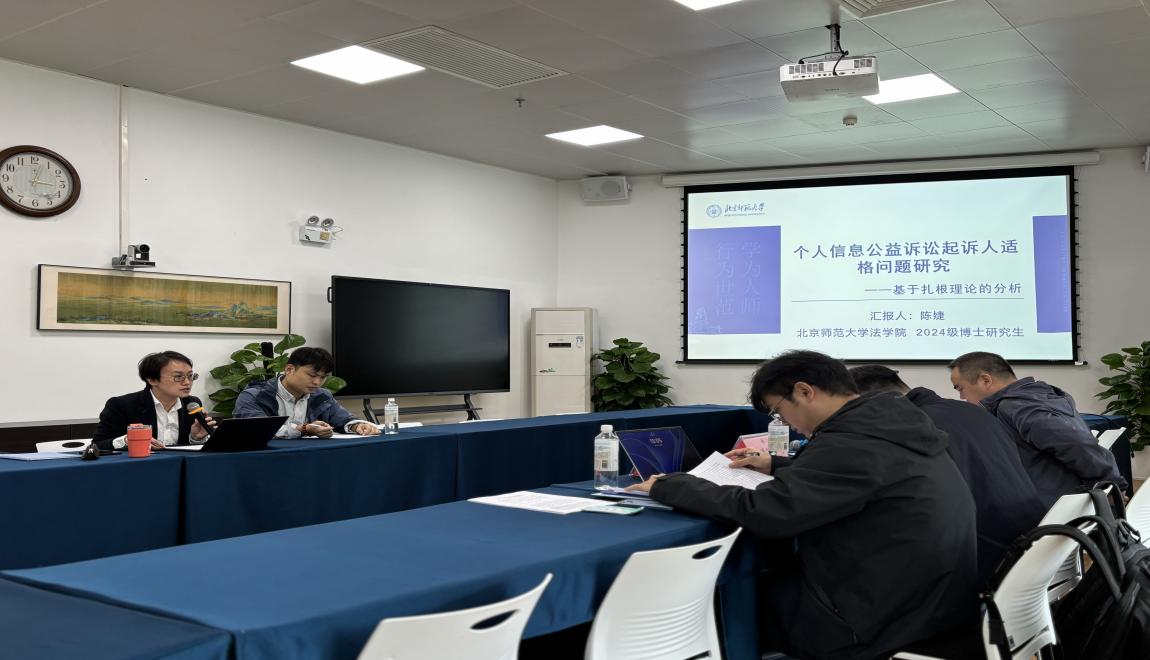
The first presenter was Chen Jie, a doctoral student in administrative law at the BNU School of Law, whose presentation was titled "Research on the Eligibility Criteria for Plaintiffs in Public Interest Litigation on Personal Information Protection: An Analysis Based on Grounded Theory." She focused on introducing grounded theory, a research method rarely employed in the field of law, and demonstrated how, through coding analysis of judicial documents from existing public interest litigation cases on personal information protection, she abstracted the legal basis and functional value elements essential for determining the eligibility of plaintiffs in such cases, providing detailed explanations and analyses for each dimension.

Following her presentation, Professor Mo offered his comments. He noted that while the use of grounded theory as a research method in legal studies was a novel attempt, it was crucial to clarify why this method was suitable for the paper and why it was indispensable. He also suggested that the structure and content of the paper could be further refined to align with academic norms, which would enhance its appeal to journal editors in future submissions.
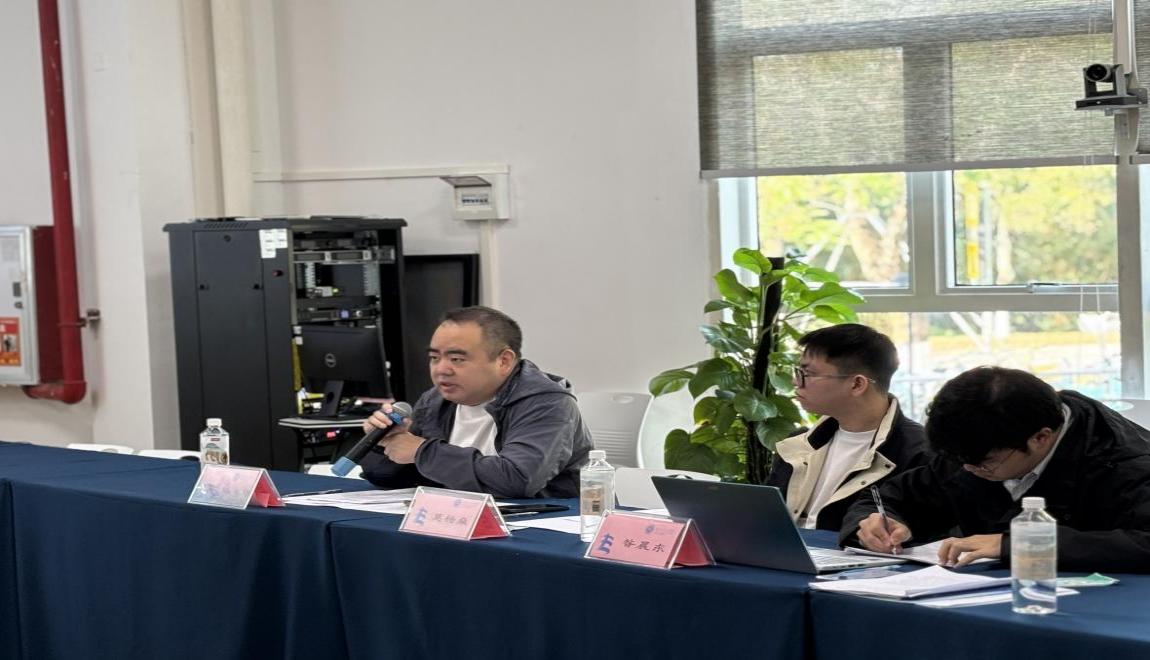
Subsequently, Editor Yang provided a systematic review from the perspective of a professional editor. He emphasized the need to clarify the relationship between the research method and the research topic, explicitly stating why a new method was necessary to address the research question and what contributions it could bring. Additionally, he stressed the importance of establishing a rigorous logical connection between the theoretical model constructed using the new research method and the core sections of the paper.
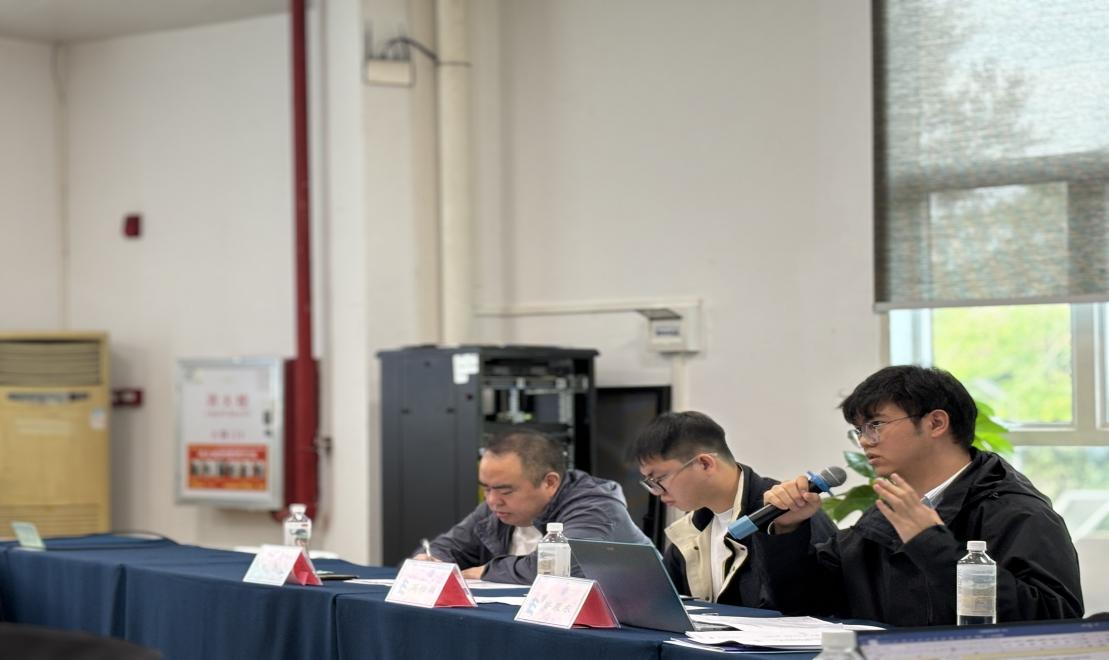
Finally, Dr. Zan shared his insights. He agreed with the previous speakers that employing grounded theory as a new research method was a bold attempt and emphasized the necessity and urgency of justifying the choice of research method. He also highlighted the importance of maintaining awareness of academic communication within the scholarly community in terms of language use and structural organization.。
The second presenter was Cao Xin, a doctoral student in civil law at the BNU School of Law, whose presentation was titled "From Etiquette to Law: Judicial Construction of Property Return in Betrothal Gift Disputes." In his presentation, he argued that judicial practice issues such as the nature of betrothal gifts, the scope, and proportion of property return remain controversial. Existing research primarily focuses on the "economic" aspect of betrothal gifts rather than their "social" dimension. Therefore, he proposed that it was essential to first understand betrothal gifts from the perspective of "etiquette," grasp their essence, and the underlying logic of disputes, before naturally transitioning to the "legal" perspective to provide possible judicial constructions for specific judicial practice rulings.
After his presentation, Professor Mo offered his comments. He acknowledged the academic value of analyzing the concept of "etiquette" in betrothal gifts from a sociological perspective but pointed out that the paper's discussion of this concept was not sufficiently clear, leading to some ambiguity in certain sections. He also suggested that the paper's theme and content could be more tightly structured, particularly noting the need to strengthen the analysis of judicial practice.
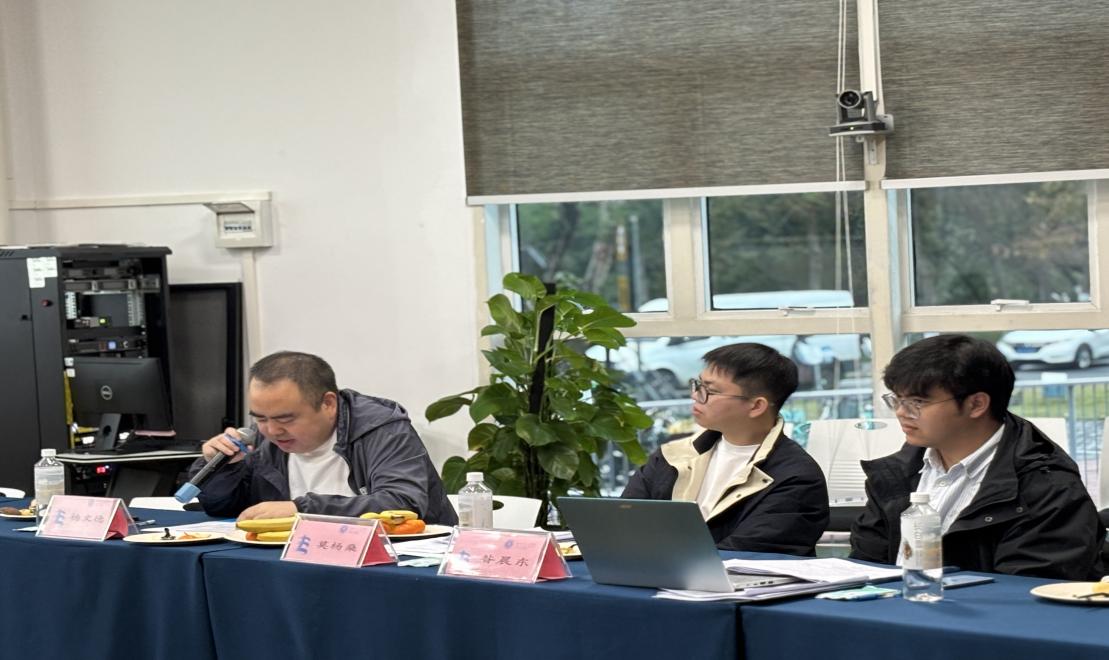
Editor Yang then provided his feedback from a professional editing standpoint. He praised the research intention of Cao's paper but noted that the existing article failed to integrate different research paths, resulting in some unclear viewpoints and arguments. He suggested selecting either legal ethics or legal dogmatics as a research path to address the issue of insufficient focus in the paper.
Finally, Dr. Zan shared his thoughts. He considered Cao's approach of exploring betrothal gift disputes from the essence of betrothal gifts as a novel research perspective. However, he emphasized the need for consistency in research methods and paths. Instead of mixing two research methods, he suggested considering splitting the paper into two separate pieces to effectively resolve the issue of ambiguous arguments in certain sections.
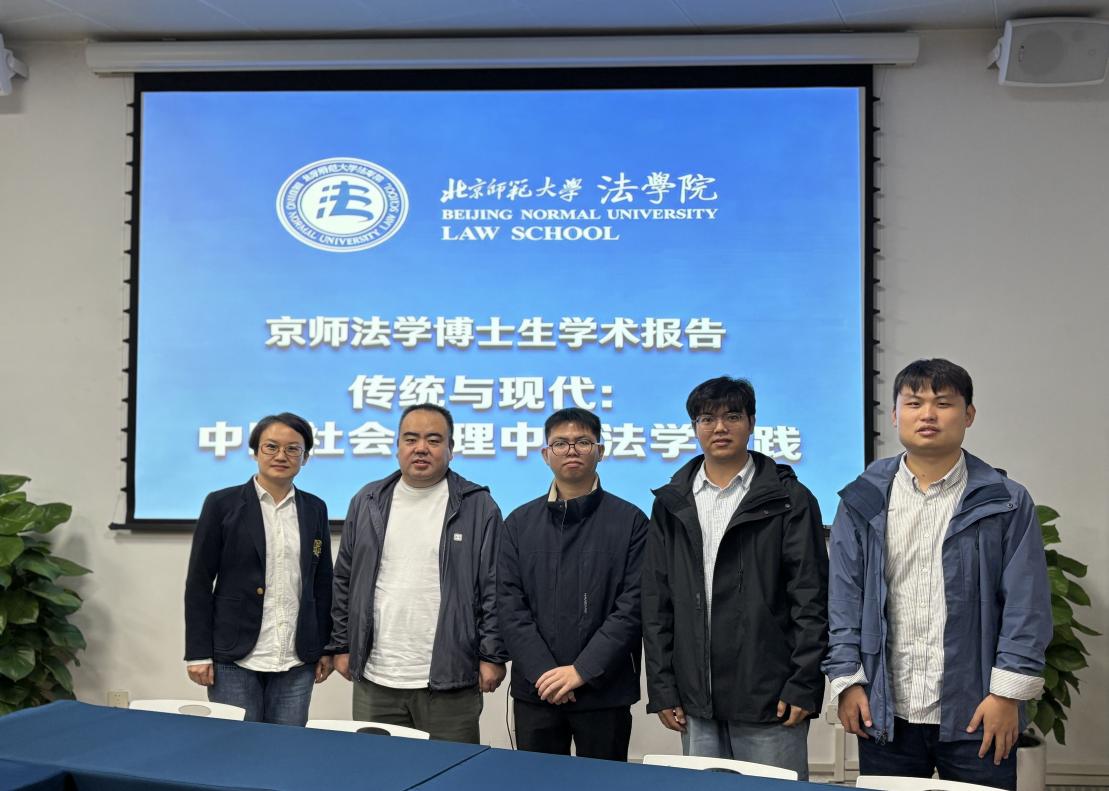
The event featured lively discussions, sparked by the insightful presentations of the two doctoral students and the detailed comments of the three experts. Both the presenters and the attending students gained valuable insights. Chen Jie and Cao Xin expressed their sincere gratitude to the three commentators. For the two doctoral students, this was their first opportunity to engage in one-on-one, face-to-face academic exchanges with professional editors, yielding significant takeaways in both academic research and scholarly norms.