

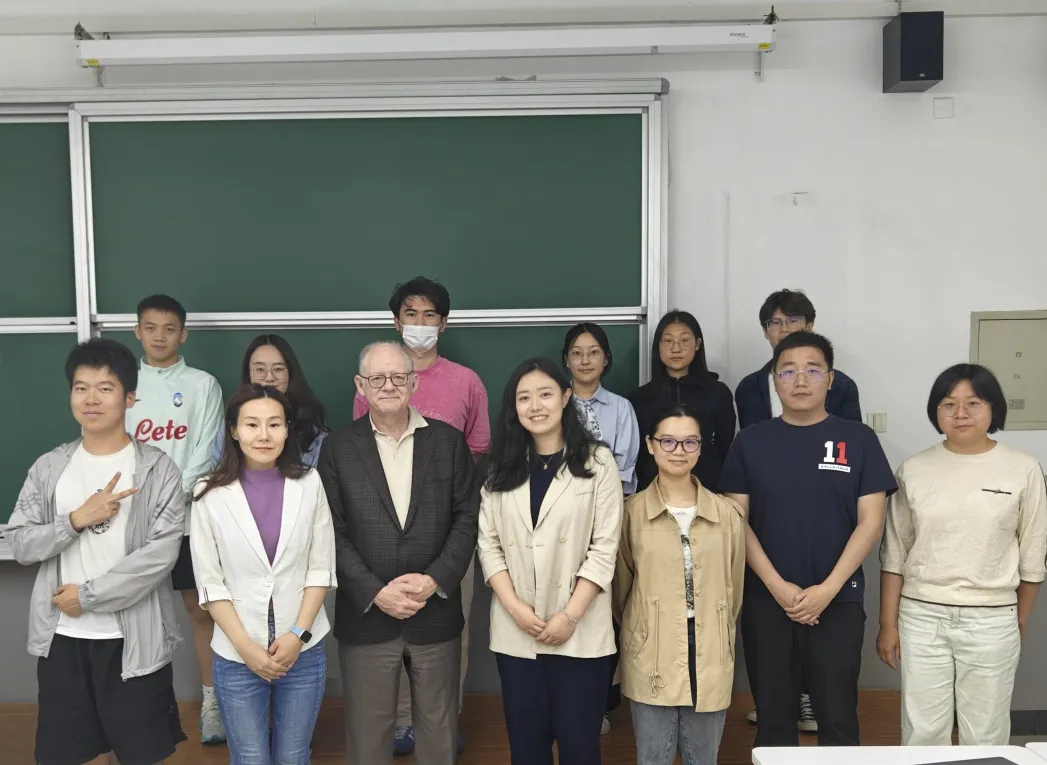
On May 22, the 9th Session of the BNU Procedural Law Scholar Lecture Series was convened in Room 101 of Teaching Building 9 at Beijing Normal University. This session was led by Professor Hamish Stewart from the Faculty of Law at the University of Toronto, focusing on the theme "Civil Forfeiture: A Canadian Perspective." The lecture was hosted by Associate Professor Yang Chao from the Law School of Beijing Normal University, and Lecturer Yan Zemin from the Criminal Justice College of China University of Political Science and Law served as panelist.
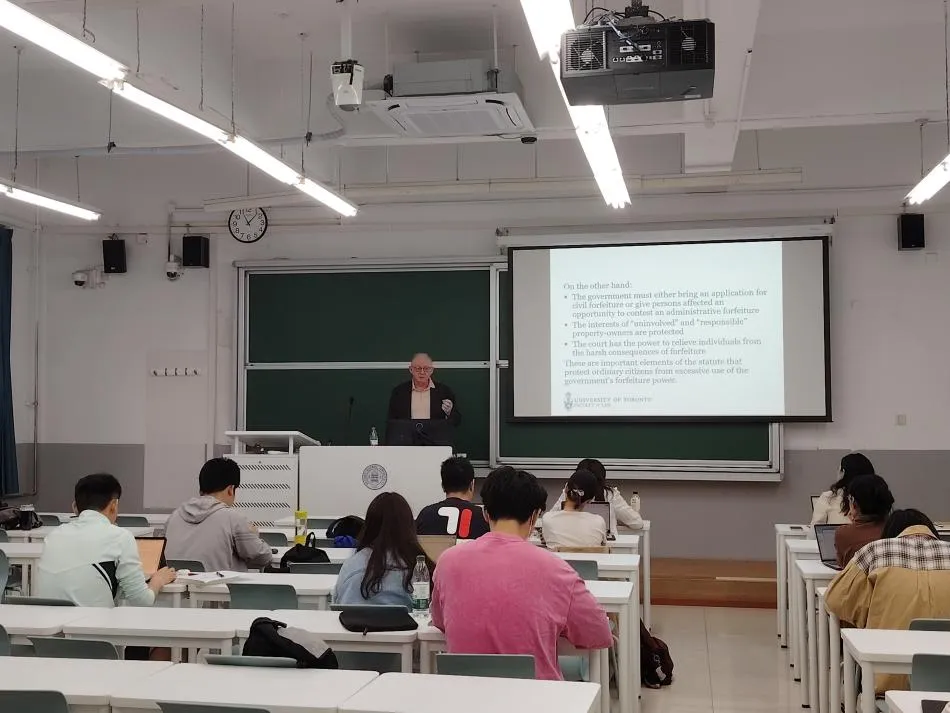
At the outset of the forum, Associate Professor Yang Chao introduced Professor Hamish Stewart's extensive research accomplishments and his profound connection with China, extending a warm welcome to his presence. Subsequently, Professor Hamish Stewart delivered a captivating presentation on Canada's civil forfeiture legal framework.
During the lecture, Professor Hamish Stewart offered a comprehensive explanation of the disparities between federal and provincial forfeiture legislation and delved into their operational models and impacts within judicial practice. He commenced by introducing the subjects of civil forfeiture in Canada, followed by a detailed exposition of the constitutional foundations underlying federal and provincial forfeiture legislation, as well as the dual-track judicial practice model established through case law, with a particular emphasis on the provincial preventive property forfeiture rights determined by recent case law. Building upon this foundation, Professor Hamish Stewart further explored the framework and distinctive features of federal forfeiture legislation and conducted an in-depth analysis of the exception clauses within the provincial forfeiture legislative framework, utilizing illustrative cases from Ontario. Finally, Professor Hamish Stewart highlighted that Canada's civil forfeiture system relies on a broad definition of "illegal activities," which exhibits robust crime-fighting efficacy, while the exemptions for unrelated parties and responsible owners, along with the court's discretion in forfeiture, serve to safeguard rights. However, grounded in the concept of human rights protection, there remains a pressing need for optimization in law enforcement transparency, judicial discretion standards, and fund allocation in the future, to strike a balance between combating crime and protecting private rights.
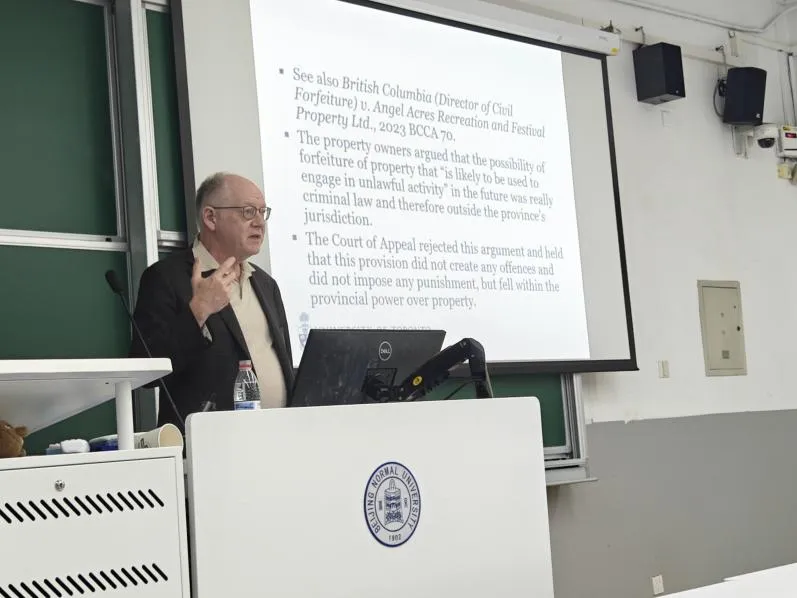
During the discussion segment, Lecturer Yan Zemin observed that as our country places increasing emphasis on citizens' property rights, the disposition of seized property has also garnered attention in both theoretical and practical realms. The evolution of Canada's criminal justice system gradually achieves a balanced approach to crime fighting and property protection. Professor Hamish Stewart's elucidation provides us with a comparative legal perspective for examining foreign cases, aiding us in contemplating this issue in a more diverse manner.
Finally, Associate Professor Yang Chao provided a concise summary of the lecture. She pointed out that the numerous exceptions within Canada's forfeiture system fully illustrate the characteristics of the Anglo-American legal system. She expressed her hope that students would seize this lecture as an opportunity to engage in the study and research of related issues with an open and rigorous mindset.
Typesetting: Xu Yiyang
Editor: Shi Tianyu