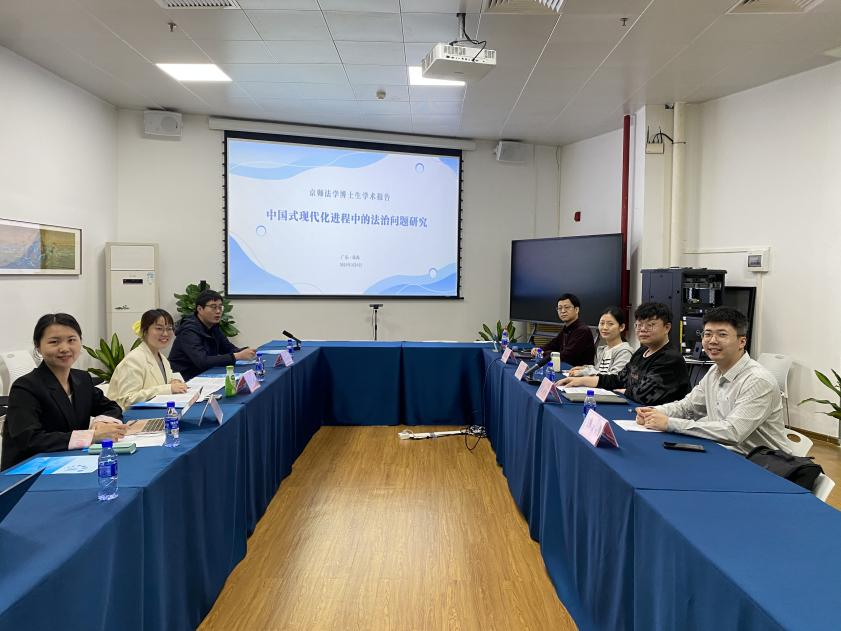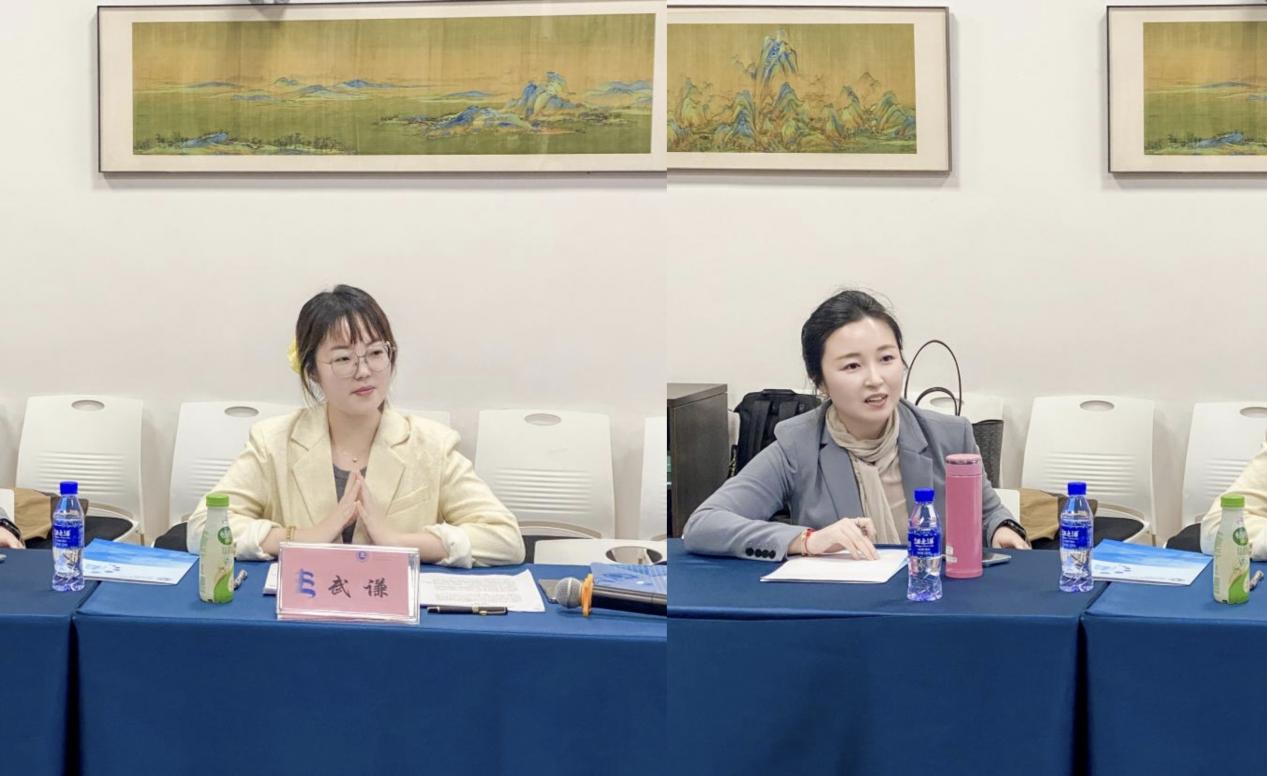
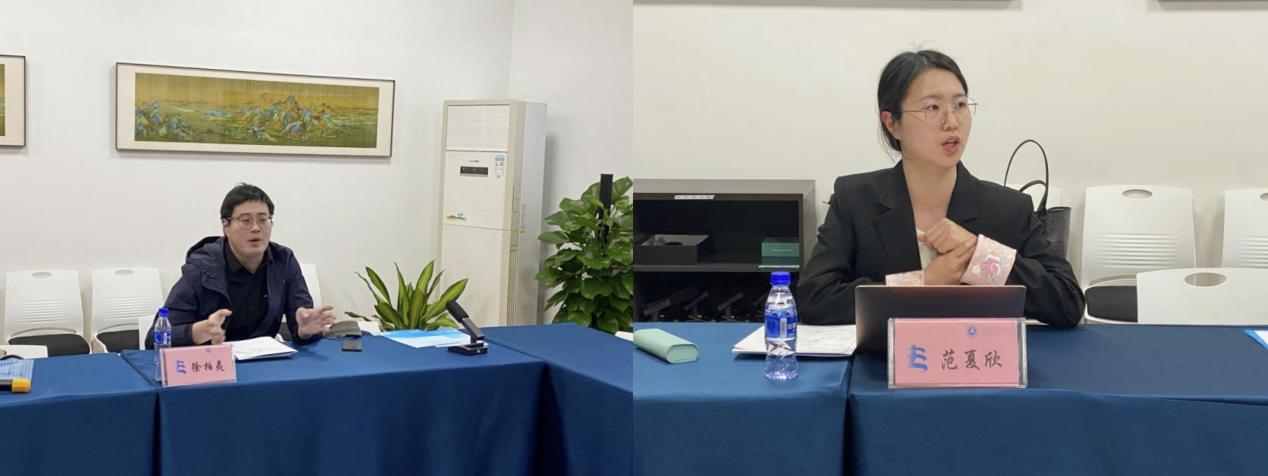
Discussant Wu Qian noted that while the article possesses a relatively clear logical structure and strong legal practicality, the theoretical support for public power intervention needs to be strengthened, with particular attention paid to preventing excessive intervention. In addition, Wu emphasized that since companies bear not only economic functions but also social responsibilities, the role of independent directors in fulfilling these social responsibilities should be highlighted. Panelist Xu Baiyi remarked that the content of the article is quite rich but suggested that it should also appropriately draw on the experiences of foreign independent director systems.
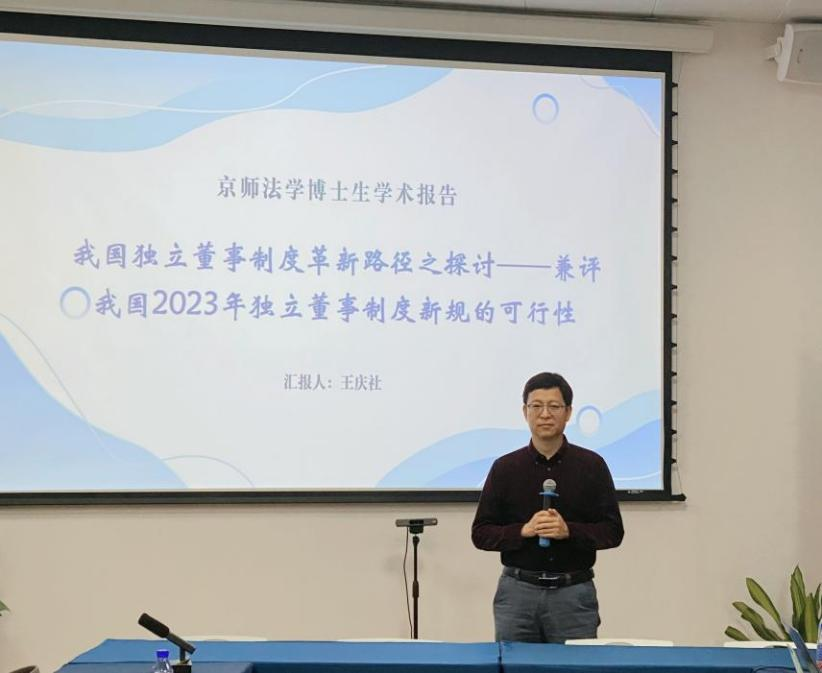
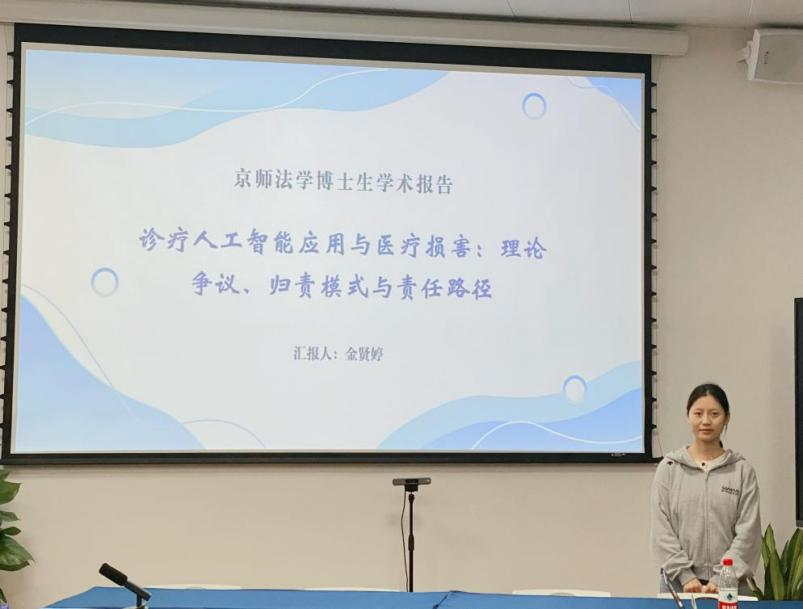
Jin Xianting's academic report was titled "The Application of Diagnostic and Therapeutic Artificial Intelligence and Medical Malpractice: Theoretical Controversies, Attribution Models, and Responsibility Paths." She argued that since its application, diagnostic and therapeutic artificial intelligence has played an increasingly important role in the modern medical system, especially in promoting the popularization of medical services and improving medical efficiency. However, given that China has not yet fully established a legal framework and institutional norms for the application of artificial intelligence, the use of diagnostic and therapeutic AI still faces certain legal challenges. Diagnostic and therapeutic AI, while bringing convenience, also has its inherent flaws. Moreover, due to the irreplaceability of medical personnel, it is difficult to determine the right or wrong of the damages caused from a single dimension. Therefore, medical damages based on diagnostic and therapeutic AI should be assessed from the perspective of the Medical Damage Liability System in the Civil Code and the characteristics of AI itself, dynamically determining the boundaries of responsibility between medical institutions and producers according to current legal provisions.
Discussant Professor Wu Qian believed that the topic of the article closely aligns with current academic research trends and has certain research value. He suggested highlighting the challenges brought by AI in conjunction with its characteristics and categorizing the scenarios of liability, reflecting the practical value of the article through specific cases. Teacher Niu Zihan added that further in-depth research is recommended on the definition of the concept of “diagnostic and therapeutic AI”. Panelist Xu Baiyi believed that the article is closely related to practice and has both theoretical and practical significance. He also emphasized that the key issue lies in the legal status of artificial intelligence, which should be explored in greater depth.
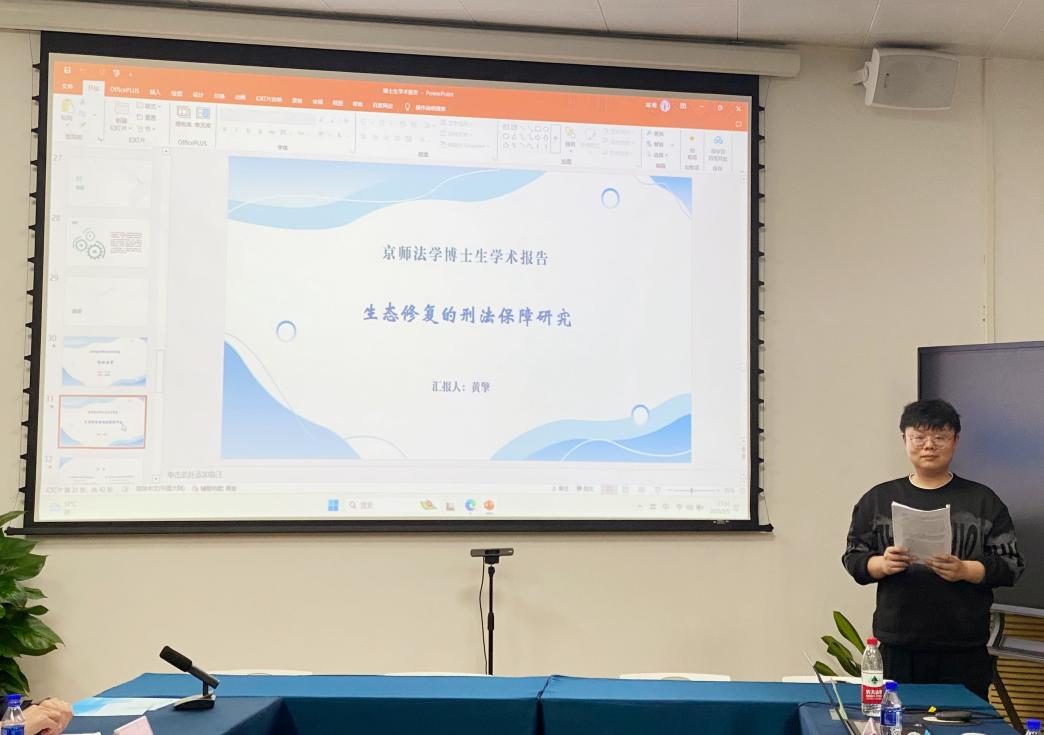
Huang Qing's academic report was titled “Research on the Criminal Law Protection of Ecological Restoration”. He believed that ecological and environmental protection issues have received increasing social attention in recent years, with a continuous rise in environmental crime cases. However, the protection concept of ecological legal interests has not been integrated into the judicial adjudication process of many criminal cases. Influenced by anthropocentrism, the current configuration of the environmental crime punishment system is not urgently aligned with the protection of ecological legal interests. Criminal sanctions primarily based on imprisonment and fines, while they can play a positive role in deterring and combating crime to some extent, are essentially reactive measures that have minimal effect on an already damaged ecological environment. China's Criminal Law does not explicitly stipulate the responsibilities for ecological restoration, and the assumption of ecological restoration responsibilities in criminal justice urgently requires clear legislative guidance. He suggested positioning ecological restoration within the criminal law as a non-punitive measure, using Articles 36 and 37 of the Criminal Law as its normative basis, and providing personal suggestions for specific development from the typology of ecological legal interests and the application of criminal offenses related to ecological restoration.
Discussant Wu Qian believed that the article's topic closely aligns with cutting-edge trends and contains significant theoretical value, but it is somewhat weak in explaining the connotation of ecological restoration in criminal law and analyzing its unique significance. In addition, the analysis of issues is not deep enough, and he suggested supplementing necessary judicial cases and data to provide stronger support for the article's viewpoints. Panelist Fan Xiaxin believed that the article's doctrinal section is well-organized and detailed, making it worthy of reference and study, but the theoretical analysis of ecological restoration lacks depth, and he recommended further clarifying relevant core concepts to solidify the foundation for subsequent arguments.
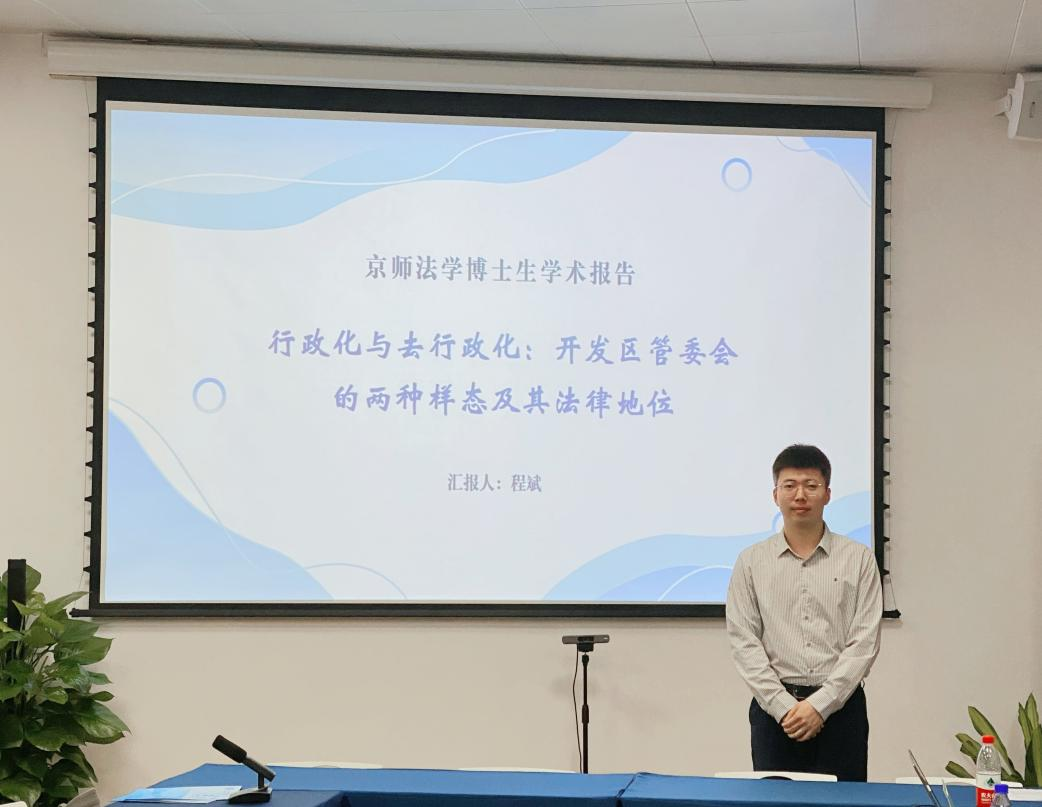
Cheng Bin's academic report was titled "Administrative and De-administrative: Two Forms of Development Zone Management Committees and Their Legal Status." He believed that in the process of continuously improving the management system of development zones in China, management committees have emerged in two forms: administrative and de-administrative, which have significant differences and should be recognized separately in terms of legal status. Administrative management committees meet the basic characteristics of dispatched agencies, but it is not advisable to amend the Local Organization Law to classify them as dispatched agencies; achieving "integration of political and administrative divisions" is their ideal solution. De-administrative management committees are statutory bodies and a new type of public legal person. To align with their functional positioning, institutional design needs to avoid issues such as overloading powers, excessive administrative intervention, and regulatory vacuums.
Discussant Wu Qian believed the article is logically clear and well-structured, but it needs to optimize its structure to highlight the problem awareness of the article, and judicial cases can be used to assist in reasoning. Panelist Fan Xiaxin believed that the topic of the article has high value, and the writing is fluent, but some arguments need further strengthening.
In his concluding remarks, Wu Qian commended each presenter for their academic awareness in addressing China's practical legal system and contemporary issues. He encouraged the young scholars to persist in integrating theoretical construction with empirical research, urging them to achieve continuous progress in their academic pursuits. The four presenters expressed their sincere gratitude to the faculty and students for their constructive feedback, stating that they would fully incorporate the insights gained from this dialogue. They pledged to advance their academic exploration with a more open research attitude, contributing to the construction of the rule of law in China. The academic report concluded successfully in a warm atmosphere of scholarly exchange.