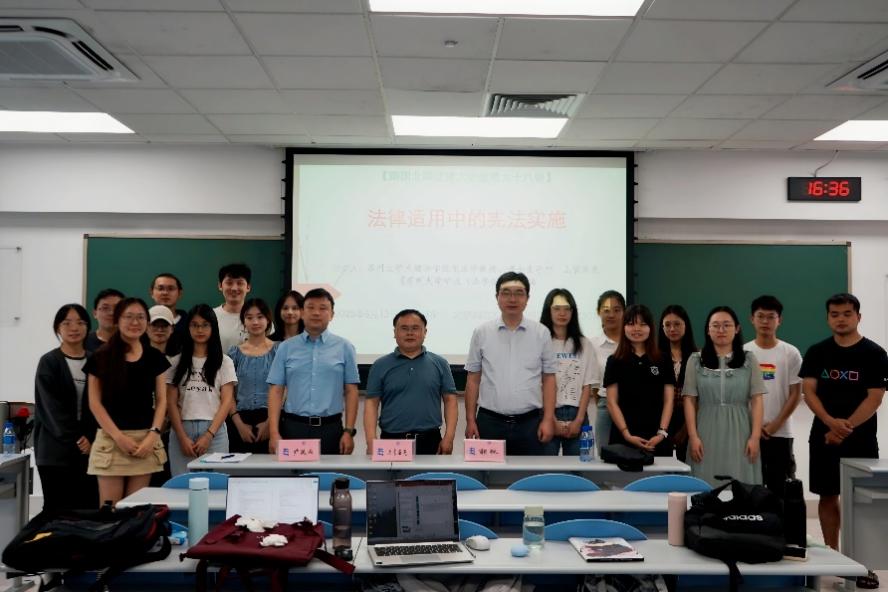
On June 13, the 69th lecture of the BNU Zhuhai Legal Lecture Series, titled "Implementation of the Constitution in Legal Application," was successfully held in Classroom C301 of the Lijiao Building at BNU Zhuhai. This lecture was delivered by Professor Shangguan Pilang, a constitutional law professor and doctoral supervisor at the School of Law, Soochow University, who also serves as the Editor-in-Chief of the "Journal of Soochow University (Law Edition)." The lecture was moderated by Associate Professor Guo Shu from the Law School of Beijing Normal University, while Yin Shuyu, Executive Editor of "Bay Area Communication" at the Center on the Rule of Law and Development at Beijing Normal University, acted as a panelist.
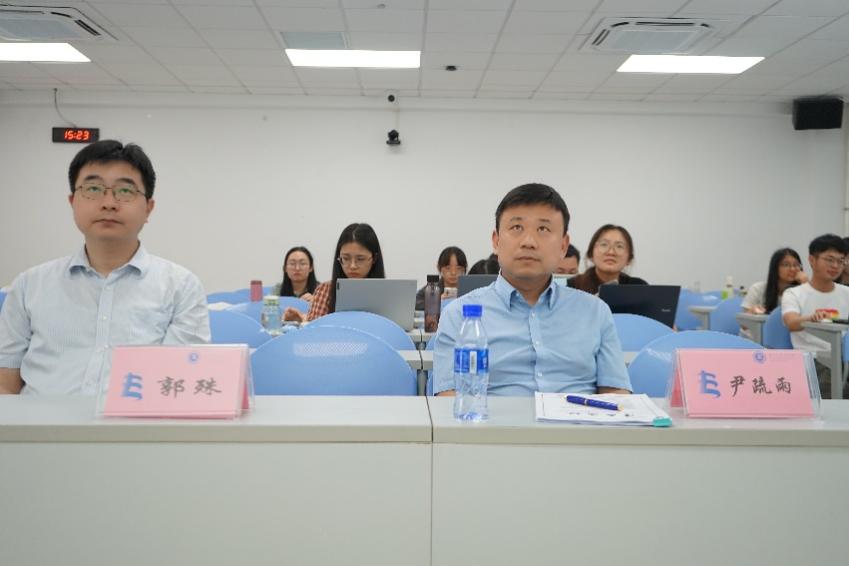
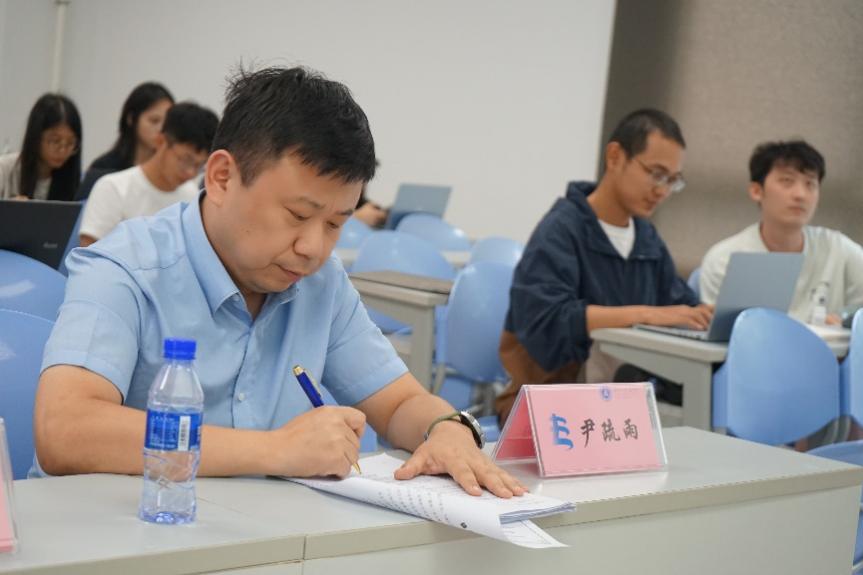
At the outset of the lecture, Professor Guo Shu warmly introduced the speaker, Professor Shangguan Pilang, to the attending faculty and students, extending a heartfelt welcome for his arrival. Professor Shangguan Pilang delivered an insightful and captivating explanation on the theme of "Implementation of the Constitution in Legal Application."
Firstly, Professor Shangguan Pilang commenced with the background of the proposal for the comprehensive implementation of the Constitution. He noted that General Secretary Xi Jinping has underscored the significance of implementing the Constitution on numerous crucial occasions, stating: "Comprehensively implementing the Constitution is the primary task and foundational work in building a socialist rule of law country," "The life of the Constitution lies in its implementation, and its authority also lies in its implementation," and "To improve the institutional system that guarantees the comprehensive implementation of the Constitution, we must fully implement the provisions, principles, and spirit of the Constitution," among others. These important statements have charted the course for the comprehensive implementation of our country's Constitution and provided a robust theoretical foundation for the implementation of the Constitution in legal application.
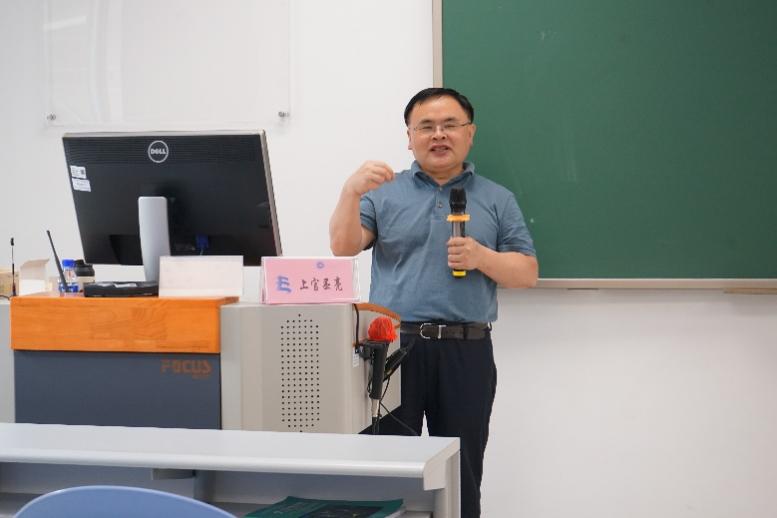
Next, Professor Shangguan delved into an in-depth analysis of the methods, characteristics, and significance of implementing the Constitution in legal application. He expounded on the concept of "constitutional interpretation" and its connotation as a method of implementing the Constitution in legal application, pointing out that constitutional interpretation (constitutional conformity interpretation) is a method of legal interpretation employed in legal application. "Constitutional interpretation" is the specific application of this legal interpretation method in legal application, involving the activity of legal practitioners interpreting the legal provisions to be applied in accordance with the provisions and spirit of the Constitution. This constitutional implementation method not only ensures the constitutionality of legal application but also realizes constitutional values in specific cases.
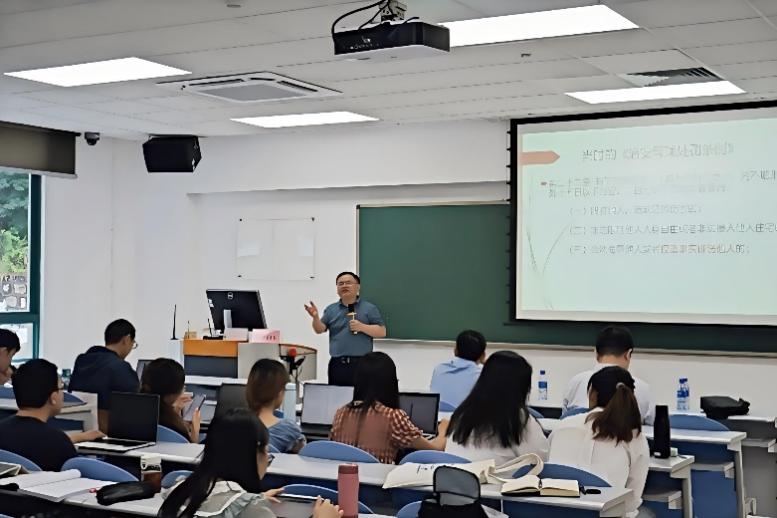
He further elaborated on the three main characteristics of constitutional implementation in the application of law: indirectness, initiative, and broadness. Professor Shangguan pointed out that in ordinary judicial and administrative law enforcement, the constitution is typically not directly used as a basis for judgment but rather plays an indirect role through the interpretation of laws. This indirectness does not imply a diminishment of the constitution's role; rather, it reflects the guiding nature of the constitution as the fundamental law. Simultaneously, the implementation of the constitution is proactive, requiring law enforcers and judges to actively interpret laws in light of the spirit of the constitution. Moreover, the broad applicability of constitutional implementation is evident in its relevance not only to judicial trials but also throughout administrative law enforcement, supervisory activities, and local legislation. On a meaningful level, Professor Shangguan Piliang highlighted that the implementation of the constitution in legal application holds multiple important values. It not only maintains the unity of the legal system but also promotes the construction of constitutional culture, providing a more solid legal basis for case handling while effectively protecting citizens' fundamental rights. He mentioned that in the Hongmao medicinal liquor incident, the failure to fully consider basic rights such as freedom of speech under the constitution led to mistakes in handling the case, underscoring the importance of constitutional implementation in safeguarding citizens' rights.

Subsequently, Professor Shangguan explored the legitimacy and legality of constitutional implementation in legal application. He emphasized that legal interpretation is an inherent aspect of legal application. Due to the abstract nature of legal rules, the uncertainty of concepts, and the lag in legislation, legal interpretation has become an indispensable part of legal application. Constitutional interpretation is the fundamental method of legal interpretation. Through the application of this method, constitutional interpretation, law enforcers and judges can achieve an organic combination of law and the constitution in specific cases. Regarding the legitimacy of constitutional interpretation, Professor Shangguan pointed out that the application of legal interpretation in constitutional interpretation does not conflict with our current legal interpretation system. He elaborated on the division of labor and cooperation among legislative interpretation, administrative interpretation, and judicial interpretation in our legal interpretation system, emphasizing that the application of constitutional interpretation is a beneficial supplement to our constitutional interpretation system, which can make constitutional interpretation more complete and effective.
Finally, Professor Shangguan proposed suggestions for promoting the implementation of the constitution in legal application, namely, to further recognize the importance and responsibilities of constitutional implementation in ordinary legal application, to master specific methods for constitutional implementation in ordinary legal application, to study the constitution thoroughly, to grasp and fully implement the spirit of the constitution, to learn and master legal interpretation, constitutional interpretation, and the basic methods of constitutional interpretation and constitutional application, and to call for our joint efforts to actively step into the door of "constitutional application" for the comprehensive implementation of the constitution, elevating the comprehensive implementation of the constitution to a new level.
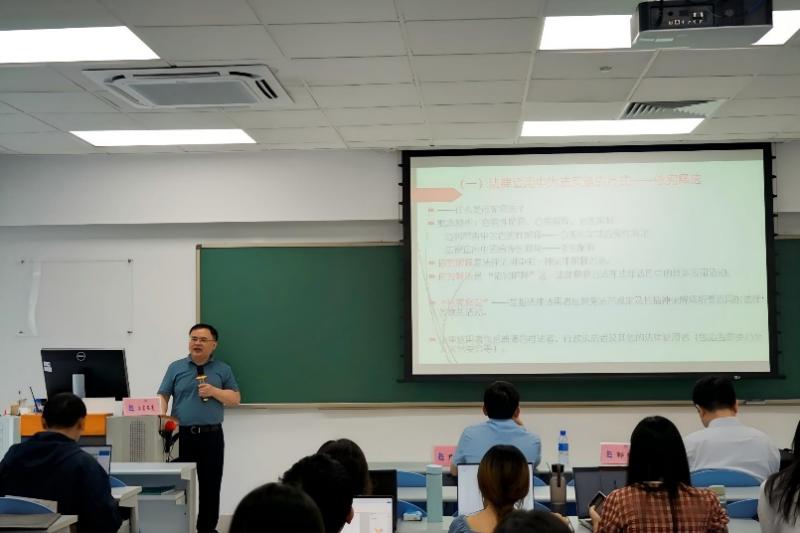
During the discussion session, Mr. Yin Shuyu highly commended this lecture, stating that it explored the importance of the constitution as a way of life, analyzed the key role of the spirit of the constitution in the entire process of legal application and judicial enforcement, revealed the deep issues of comprehensive constitutional implementation in theory and practice, and called on legal professionals to integrate constitutional concepts into their daily words and actions, providing profound inspiration for promoting the social practice of the spirit of the constitution.
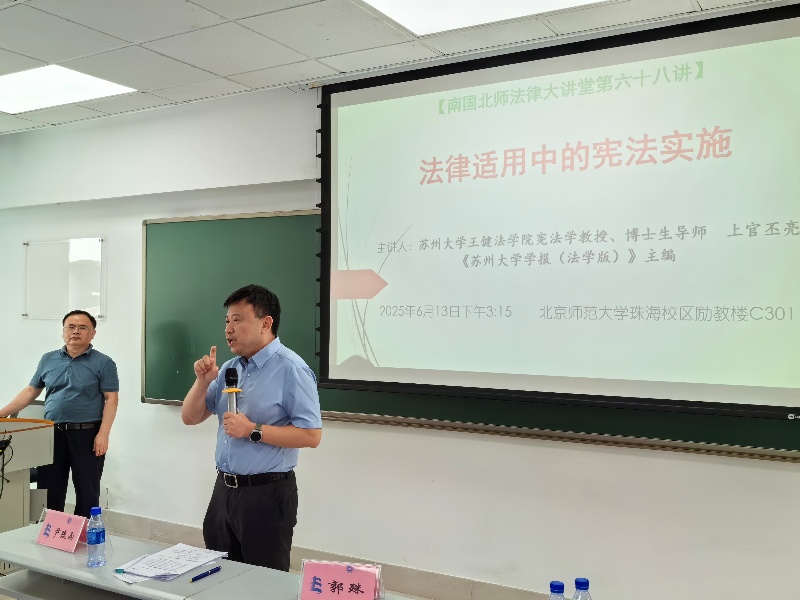
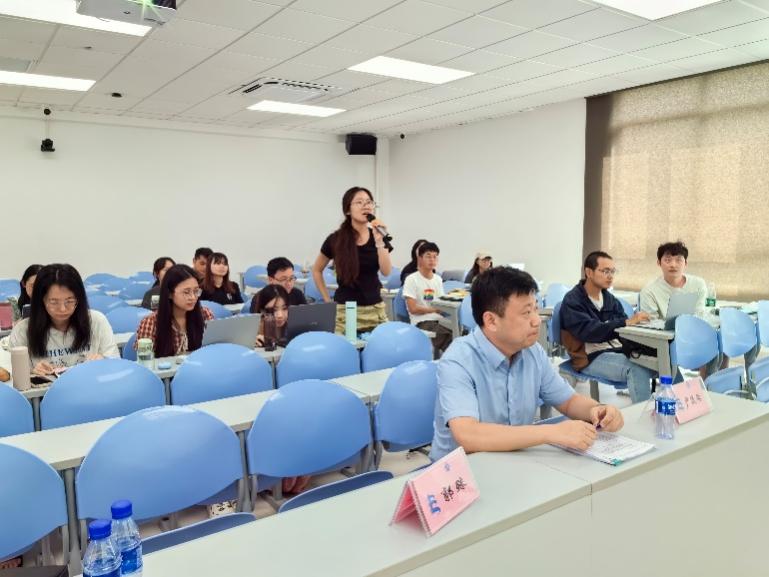
In the interactive session, students actively posed questions. One student asked: "How should we understand that our constitution cannot be directly used as a basis for judicial judgment?" In response, Professor Shangguan Pilang began by discussing the uniqueness of our political system and deeply analyzed factors such as the degree of refinement in legislation. He pointed out that our constitution, as the fundamental law of the state, has a high degree of principle and programmatic nature, and many contents need to be realized through specific laws enacted by the legislative body. Therefore, in judicial practice, judges usually make rulings based on specific legal provisions, while the constitution indirectly plays a role by guiding and constraining the formulation and implementation of laws, especially through the method of "constitutional interpretation." He also emphasized that this does not mean the role of the constitution in judicial trials is weakened, but rather reflects the division of labor and cooperation between the constitution and ordinary laws.
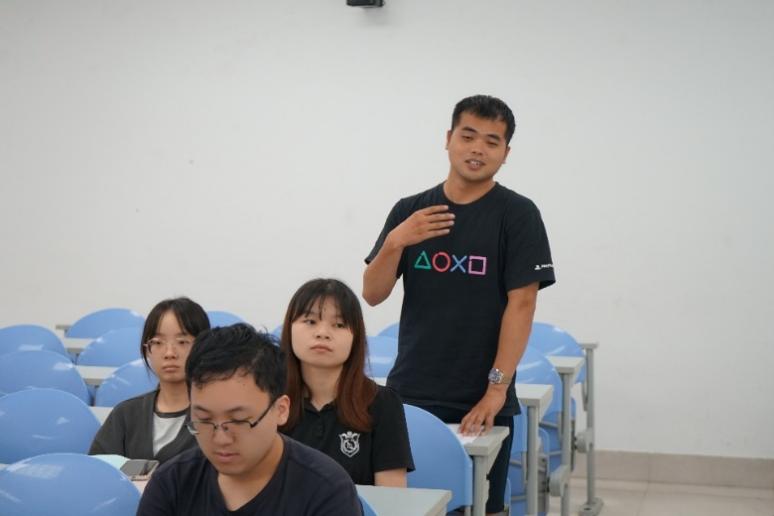
In the summary session, Professor Guo Shu stated that the entire lecture was rich in content and clear in structure, and Professor Shangguan Piliang, with his profound academic accomplishments and unique personal charm, brought an academic feast on the implementation of the constitution to the teachers and students, enhancing everyone's understanding and awareness of the constitution's implementation in legal application. The constitution should become our way of life, and legal professionals need to integrate constitutional concepts into their words and actions, jointly promoting the practice and inheritance of the spirit of the constitution in the new era.
Finally, the lecture concluded successfully amidst warm applause.