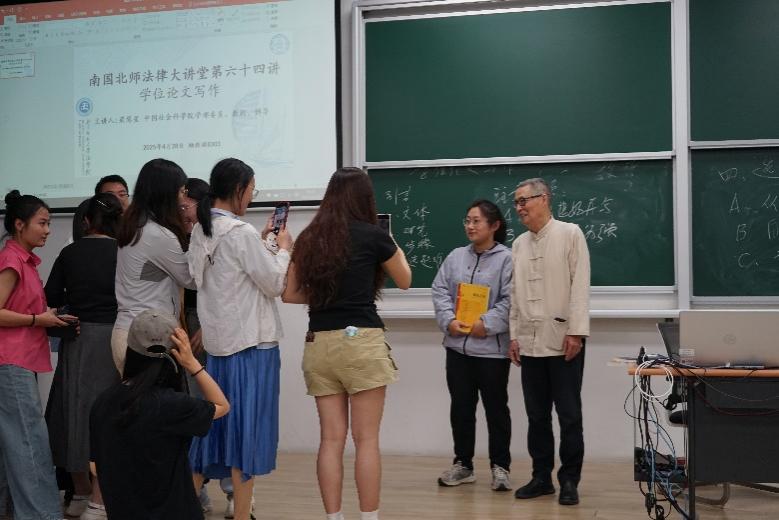
On April 28th, the 64th Lecture of the Lecture of the BNU Zhuhai Legal Lecture Series on "Thesis Writing" was successfully held in Room B303 of the Lijiao Building at BNU Zhuhai. This lecture was delivered by Liang Huixing, a member of the Chinese Academy of Social Sciences, professor, and doctoral supervisor. It was attended by Distinguished Professor Mi Jian from Beijing Normal University, Professor Cui Wenxing from the Law School of Beijing Normal University, Lecturers Wu Qian and Mo Yangshen from the Center on the Rule of Law and Development at the Zhuhai Campus, and numerous students from the Zhuhai Campus.
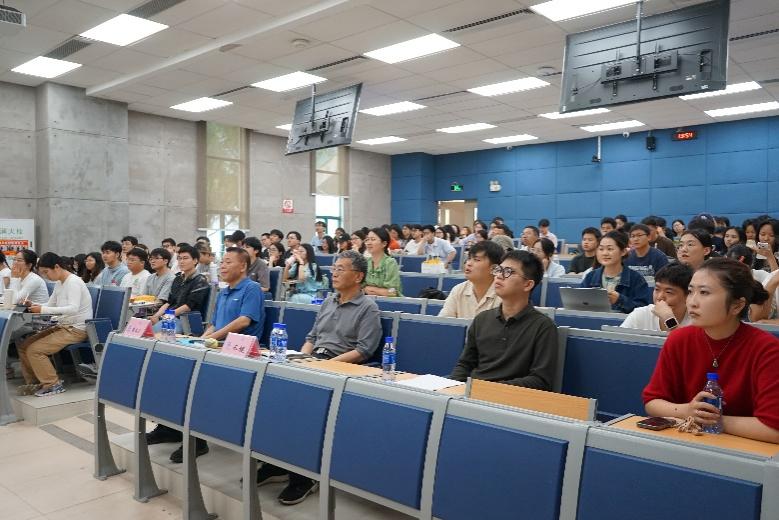
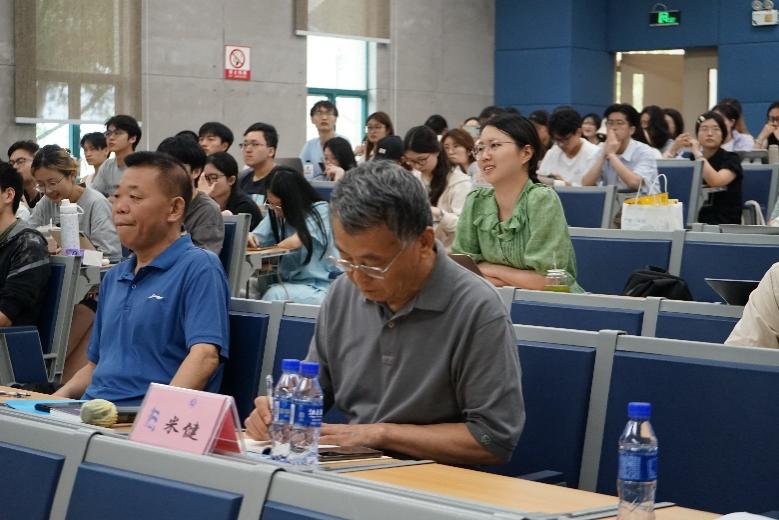
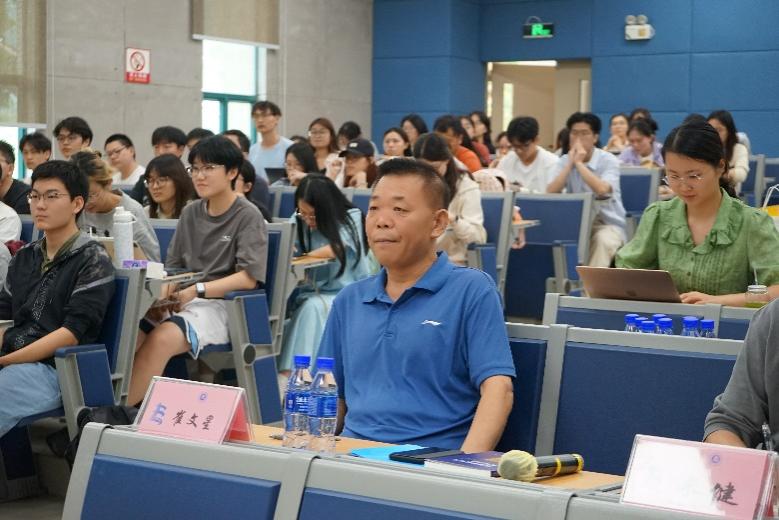
The session commenced with an introduction by Professor Wu Qian, who extended a warm welcome to Professor Liang and highlighted his monumental contributions to the field of law. Professor Liang anchored his lecture on the theme of "Thesis Writing," deconstructing the academic process into four pivotal dimensions: stylistic form, research methodologies, procedural steps, and the intricacies of topic selection.
In the first segment, Professor Liang dissected the stylistic nuances of academic writing. He emphasized the inherently argumentative and demonstrative nature of thesis writing, underscoring the necessity for innovative insights. Transitioning specifically to legal writing, he drew a critical distinction: unlike general thesis writing, which often merely articulates existing problems, research-oriented legal writing is an exploratory practice where the research process and the writing process are inextricably linked. This distinction, he argued, imbues legal papers with profound academic value, transcending the bias that they are solely theoretical to engage with a broader, practical world.
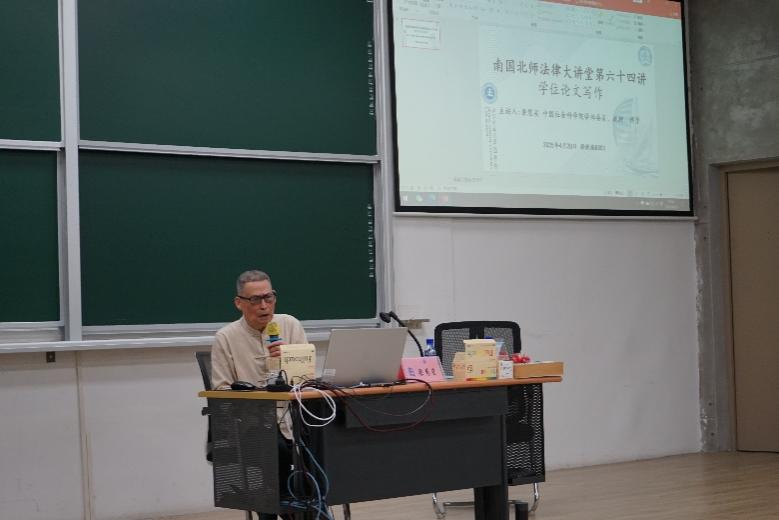
The second part of the lecture focused on research methodologies. Professor Liang provided a comprehensive interpretation of various approaches, utilizing the concept of "assumption of risk" (volenti non fit injuria) as a case study. By comparing the provisions of China’s Civil Code with those of other civil law jurisdictions, he vividly illustrated the application of comparative analysis. Furthermore, he elucidated historical, sociological, and economic analysis methods through the lens of specific legal cases, offering the audience a clear and profound conceptual framework for applying these tools effectively.
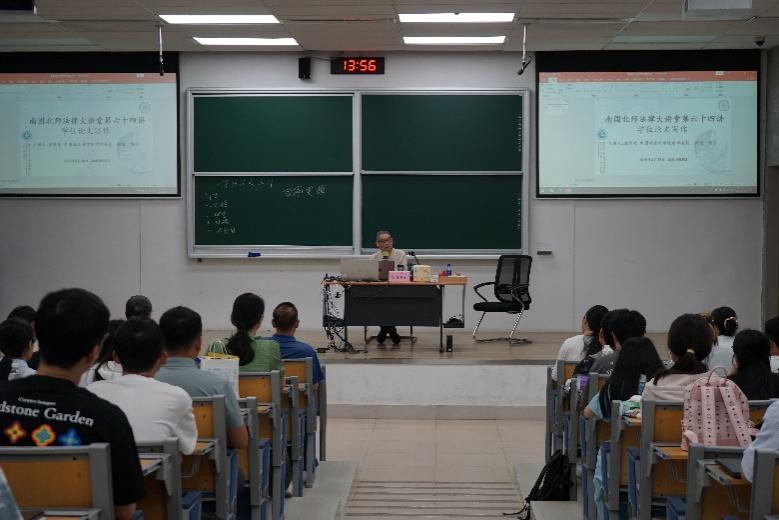
Addressing the practicalities of composition, Professor Liang outlined the sequential steps of thesis writing. He advised that given the magnitude of the task, students should begin with simpler chapters to foster creative momentum and confidence. He also issued a caution regarding critical revisions, urging students to distinguish between substantive contradictions (reversals of black and white) and mere differences of opinion to avoid fundamental academic errors.
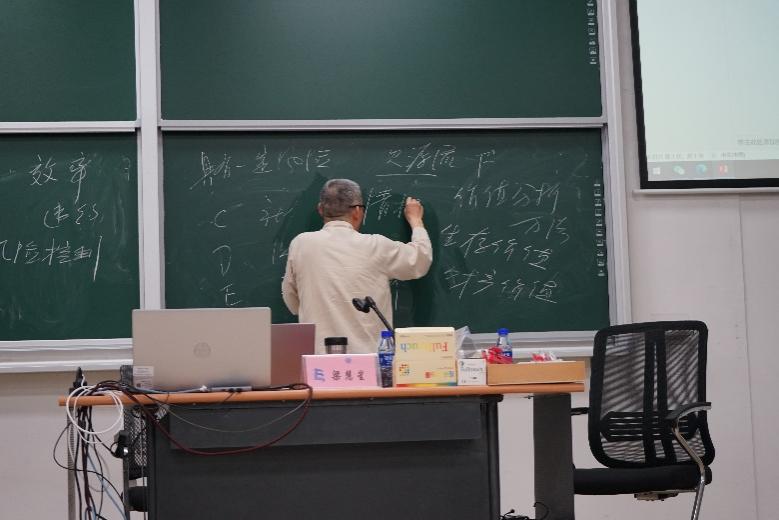
Finally, Professor Liang Huixing highlights the difficulty of selecting a thesis topic. Professor Liang Huixing indicates that the selection of a thesis topic should be guided by existing laws, using the aforementioned comparative analysis method. He cites examples from foreign civil laws in Germany, Japan, and the United States, fully reflecting the advantages of knowledge accumulation and extensive reading. This reminds the audience that writing a thesis not only requires methodological support but also a solid legal foundation.
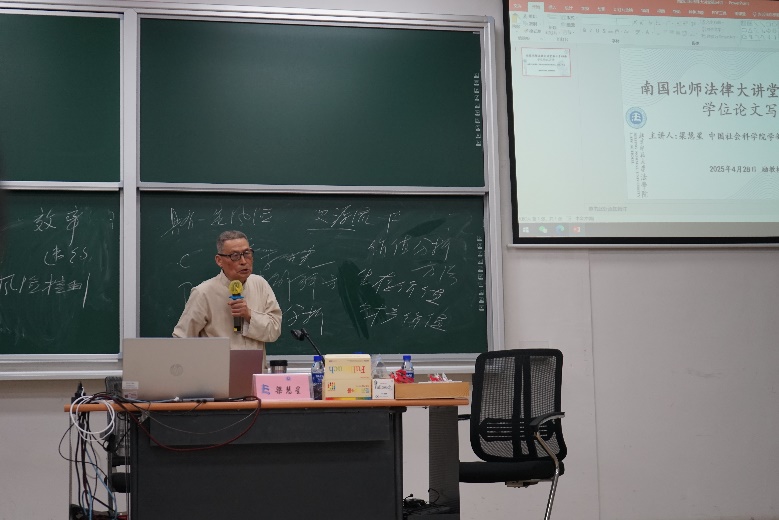
The Q&A session proved to be a dynamic exchange of ideas. Students actively engaged Professor Liang with inquiries regarding the distinctions between master's and doctoral dissertations. Professor Liang patiently elaborated on the specific requirements for research depth and innovation at different academic levels, encouraging the students to cultivate rigorous dialectical thinking and practical research skills.
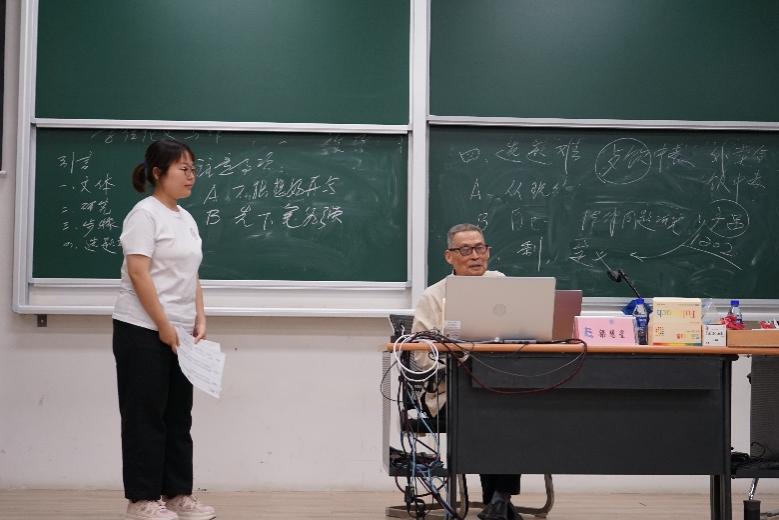
Despite his seniority, Professor Liang displayed remarkable vitality throughout the lecture. His presentation was both profound and accessible, complemented by his powerful handwriting on the blackboard. The event concluded amidst warm applause, with many faculty and students eager to capture the moment with the distinguished scholar, whose unique charisma and intellectual clarity provided an invaluable roadmap for their academic journeys.