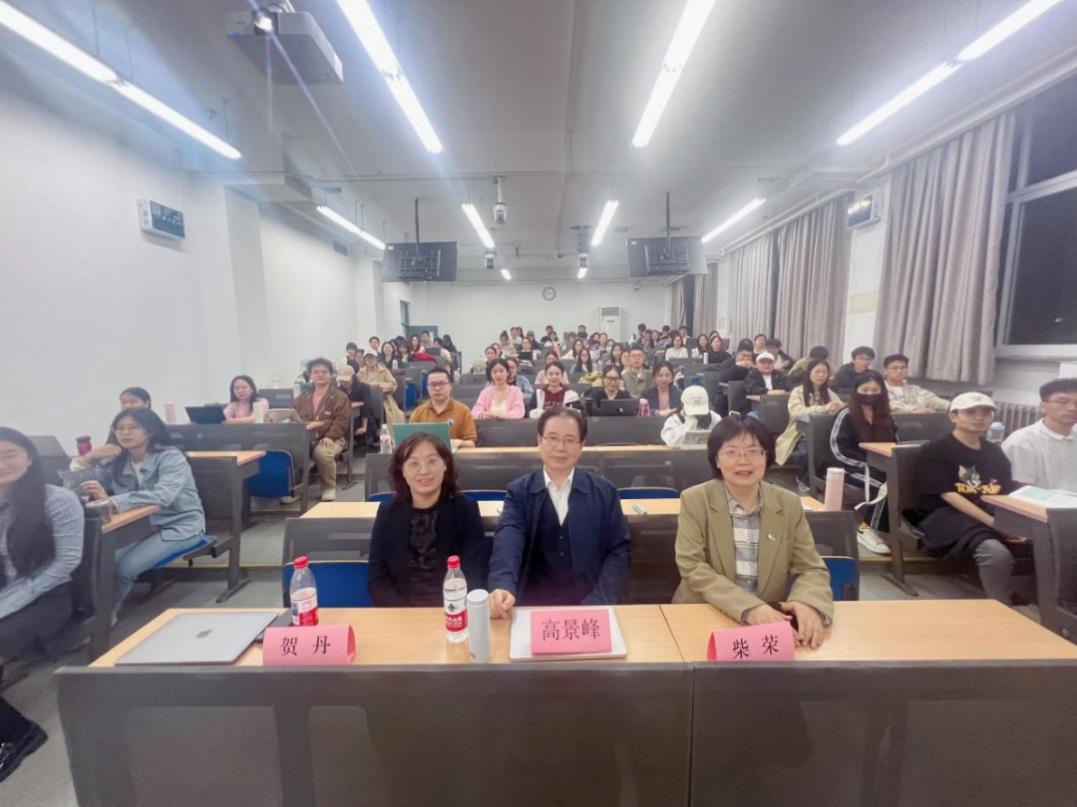
On April 19, 2025, the fourth lecture of the Supreme People's Procuratorate's "Procuratorial Practice Experts Entering Campus" lecture series was successfully hosted in Room 103 of Teaching Building 7 at Beijing Normal University. The lecture was delivered by Gao Jingfeng, a member of the Procuratorial Committee of the Supreme People's Procuratorate and Director of the Legal Policy Research Office, and presided over by Professor Chai Rong, Party Secretary of the Law School at Beijing Normal University. Over 110 faculty members and students from the Law School attended this insightful event.
At the outset, Professor Chai Rong, on behalf of the entire Law School faculty and student body, extended a warm welcome to Director Gao Jingfeng. Secretary Chai emphasized that the collaborative "Procuratorial Practice Experts Entering Campus" lecture series with the Supreme People's Procuratorate not only elevates the quality of talent cultivation at the Law School but also fosters innovation in the training model for legal professionals in the new era. She expressed confidence that the successful execution of this lecture would further strengthen the organic link between legal education and procuratorial practice.
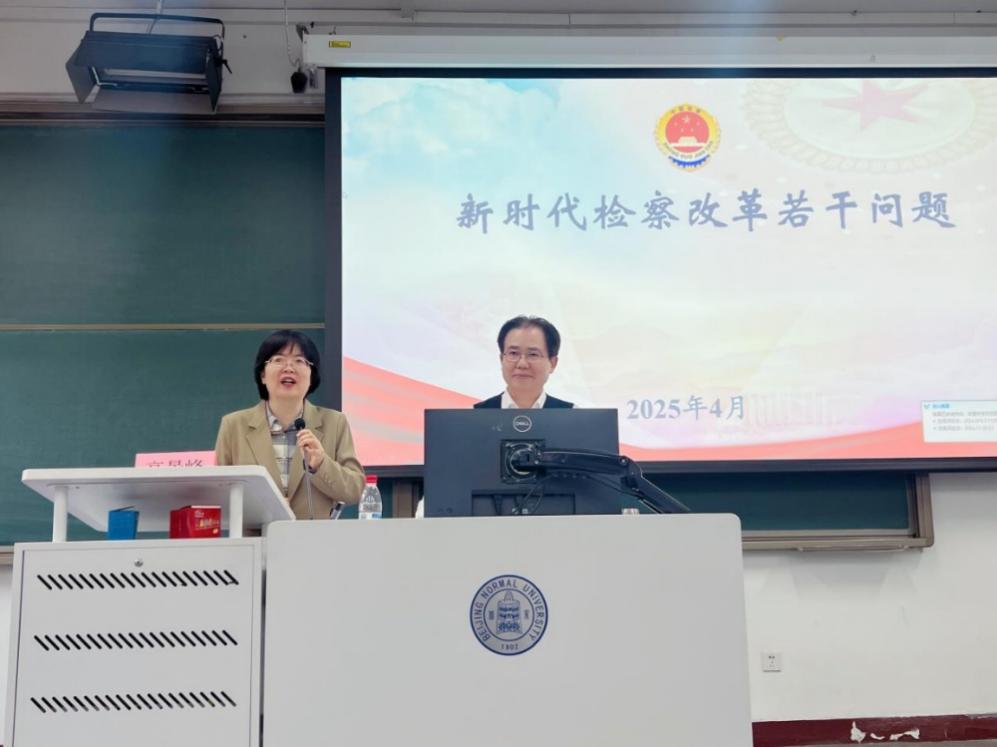
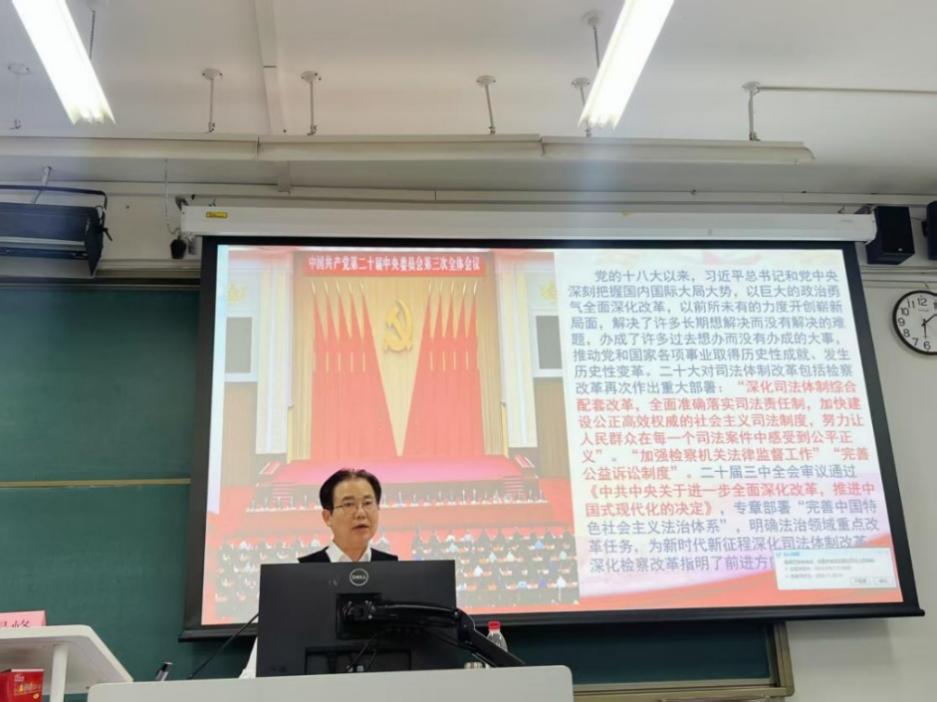
Following the opening remarks, the lecture commenced. Director Gao Jingfeng delivered a specialized presentation titled "Research on Several Issues of Procuratorial Reform in the New Era." He highlighted that the Standing Committee of the 14th National People's Congress has prioritized the amendment of the Criminal Procedure Law as a key legislative endeavor. From the perspective of inspiring students' thesis topics and writings, the lecture would concentrate on procuratorial reform, the fourth amendment to the Criminal Procedure Law, and the contentious issues entwined with them. Director Gao began by guiding the faculty and students through a review of China's judicial reform history, focusing on the segmentation of reform stages, pivotal issues, and significant documents related to the ongoing procuratorial reform. He underscored the importance of considering China's national conditions and rich cultural heritage, as well as the unique developmental trajectory of China's judicial system, when reforming and advancing it. Subsequently, Director Gao provided an in-depth analysis of topics such as case supervision, unresolved criminal cases, the establishment of a system for sealing minor criminal records, and the system of compulsory measures.
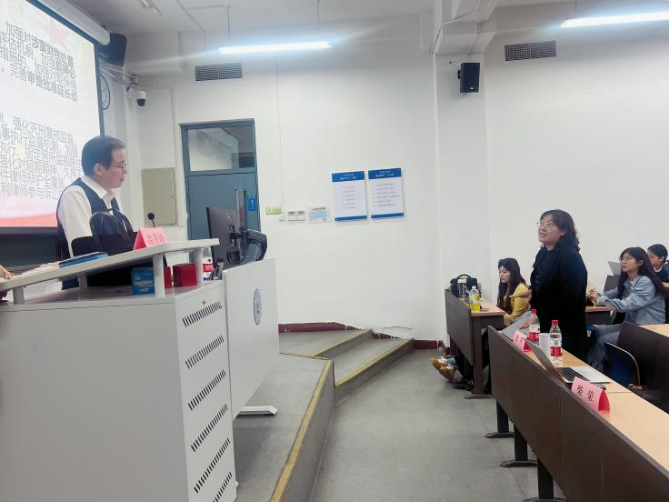
During the interactive session, participating faculty and students engaged in profound discussions with Director Gao Jingfeng on how to effectively leverage foreign experiences to propel the reform of China's prosecution work, and how to harmonize the relationships between case sealing, seizure, freezing, and bankruptcy procedures in cross-disciplinary criminal and civil cases. Director Gao responded to these inquiries with detailed and insightful answers, grounded in legal theory and practical experience, thereby deepening the attending teachers' and students' comprehension of prosecution reform in the new era.
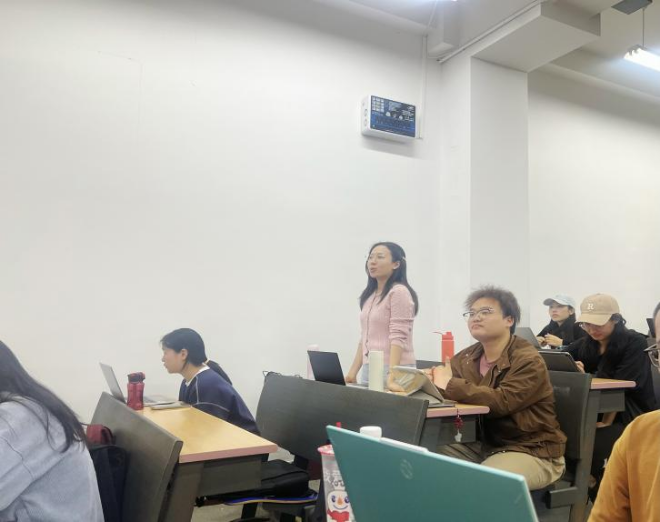
After the Q&A segment, Secretary Chai Rong, on behalf of all faculty and students, once again expressed sincere gratitude to Director Gao Jingfeng for his enlightening lecture. Secretary Chai expressed her belief that, leveraging the insights gained from this lecture, students would be able to delve deeper into issues related to enhancing the socialist rule of law system with Chinese characteristics in their future research and thesis endeavors, achieving even greater accomplishments. She also affirmed that the Law School of Beijing Normal University would continue to strengthen its cooperation with practical departments to enrich students' understanding of judicial practice and refine their practical skills.
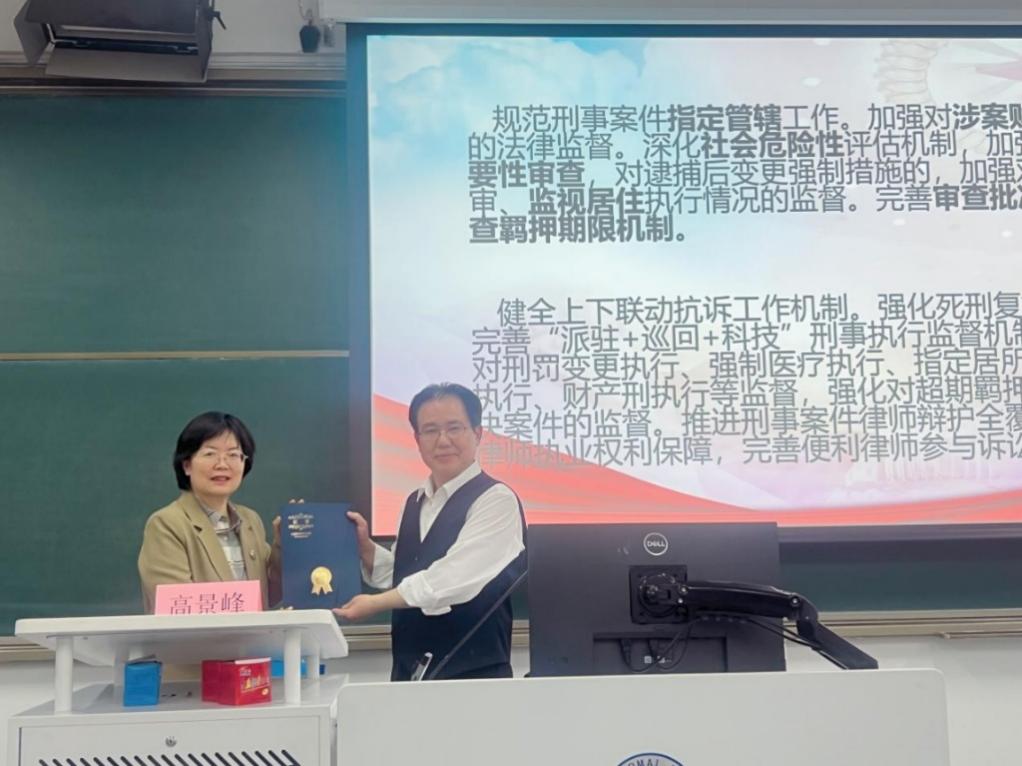
Finally, Secretary Chai Rong presented a commemorative certificate to Director Gao Jingfeng on behalf of the Law School. Director Gao Jingfeng took a group photo with Secretary Chai Rong, Vice Dean He Dan, and all the students, marking the successful conclusion of the fourth lecture in the "Prosecution Practice Experts Entering Campus" series.