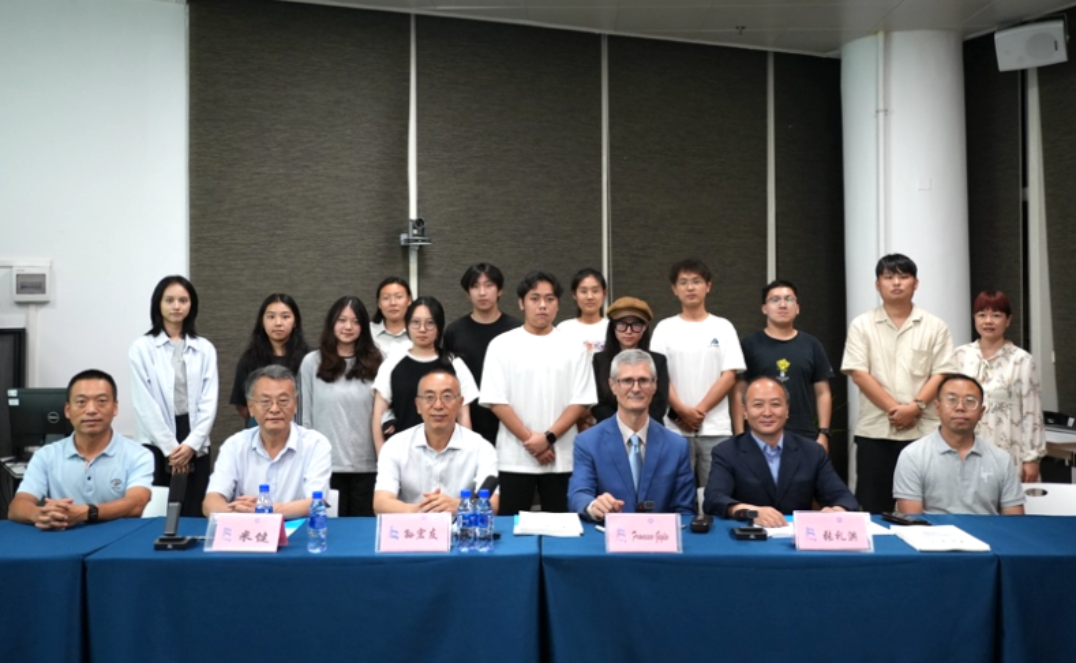
On April 23, the 63rd lecture in the BNU Zhuhai Legal Lecture Series, titled "Comparison of Property Rights in Civil Law and Common Law," was successfully held in Room A103 of the Lijiao Building at BNU Zhuhai. The lecture was delivered by Professor Francesco Giglio from the University of Surrey, with Professor Zhang Lihong, a doctoral supervisor from East China University of Political Science and Law, serving as a panelist. Associate Professor Sun Hongyou from BNU Zhuhai hosted the event. Distinguished Professor Mi Jian from Beijing Normal University, along with several teachers and students from the Zhuhai Campus, also attended the lecture.
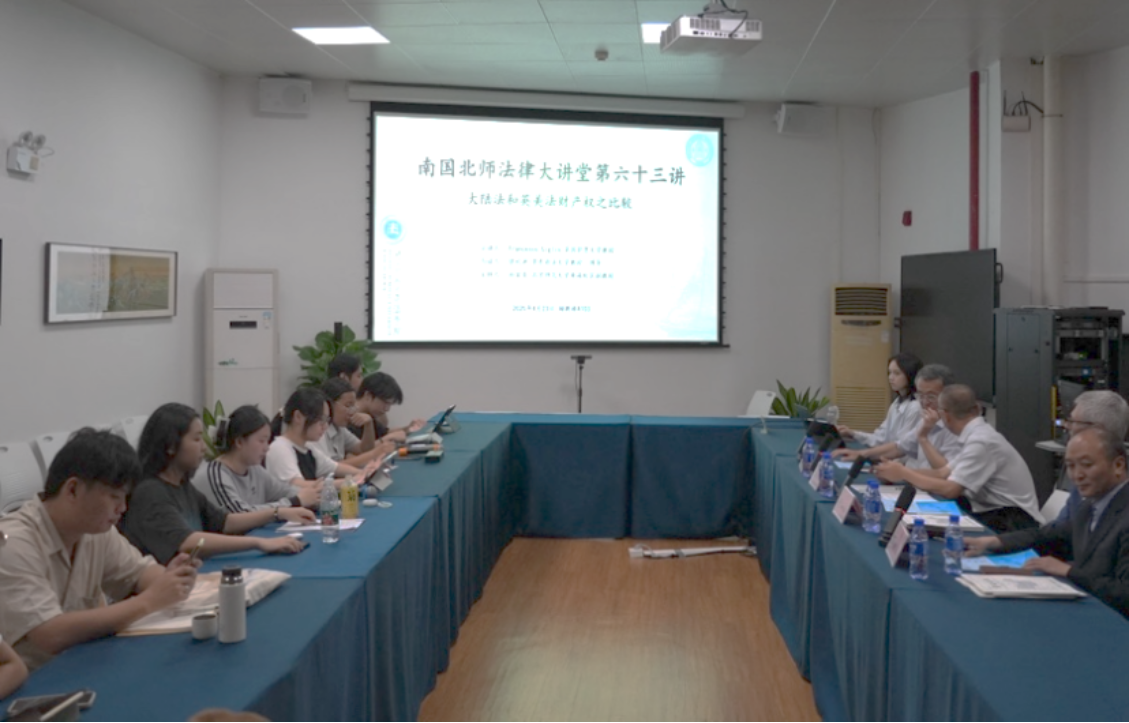
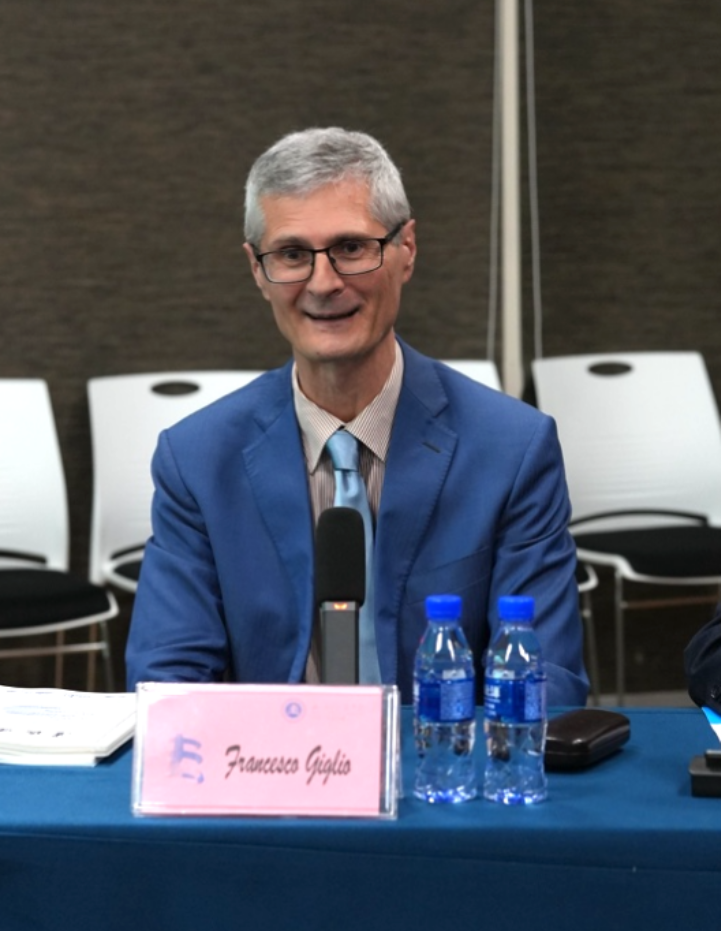
At the outset, Associate Professor Sun Hongyou formally introduced Professor Francesco Giglio's significant contributions in the fields of Roman law and property law and warmly welcomed his presence. Professor Giglio's lecture combined historical depth with a comparative legal perspective, revealing the differences in property rights theory between civil law and common law systems through an analysis of the absolute and relative nature of ownership in Roman law.

Starting with the concept of ownership, Professor Giglio pointed out that Roman law lacks a clear definition of ownership; its connotation must be understood through the litigation process that protects rights. In Roman law proceedings, the plaintiff initiated the lawsuit with the absolute claim of "I own this thing (Meum esse)," but the early litigation structure meant that judges could only determine the "better title to the thing" rather than the "absolute title," resulting in the phenomenon of relative ownership. Even if one party won the case, a third party could still claim ownership based on a stronger title.
Research by German scholar Max Kaser indicates that the relativity of ownership in Roman law originates from the litigation process rather than the essence of rights. Although relative ownership and absolute ownership share the same normative value (both being absolute), the former is procedurally limited by its effectiveness against specific parties. Professor Giglio emphasized that the core of Roman law is relative ownership, where the distinction between 'absolute' and 'relative' is not a differentiation of rights types but rather a dialectical unity of substantive rights (absolute claims) and procedural regulation (relative effectiveness).
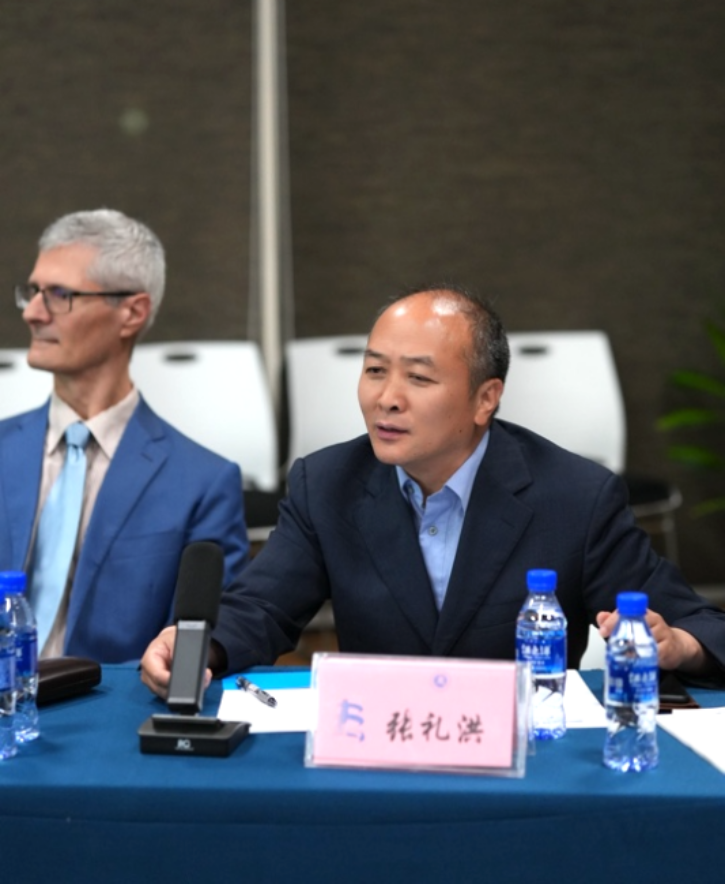
Professor Zhang Lihong stated that ownership in Roman law possesses both absoluteness and relativity, but its relativity does not imply a division of ownership powers, as Roman law only protects the powers of ownership without explicitly defining ownership itself. Additionally, he supplemented the discussion with the characteristics of ancient Roman litigation procedures and the forms of the oath money lawsuit to help the students understand the relativity of ownership better.
Professor Mi Jian and Associate Professor Sun Hongyou raised discussions on relativity, while Professors Giglio and Zhang Lihong explained from the perspective of Roman law trial procedures that during legal adjudication, judges need to choose between parties. Judges do not actually investigate the real owner but may use presumptive methods (generally relying on possession presumption) to determine who has superior and stronger rights credentials. Therefore, only when the judge makes a ruling does the right claimed by the parties become a right against the world, possessing complete absoluteness, but during the litigation process, it is relative.

In comparing with English law, Professor Giglio analyzed three theoretical paths:
The Institutional Path (Sir William Blackstone): Treats ownership as “exclusive absolute dominion,” but influenced by medieval interpretations of Roman law, it fails to clearly distinguish between substantive rights (the right of ownership as a substantive right) and procedural tools (the title to the right as a procedural tool), leading to conceptual ambiguity.
The Analytical Path (John Austin): Attempts to define ownership as “unlimited use and unrestricted disposal rights,” but acknowledges its limitations by other rights, approaching the procedural relativity of Roman law, yet blurring the boundaries between ownership and other property rights due to oversimplification of rights elements (such as emphasizing only use and exclusion).
The Historical Comparative Path (Tony Honoré): Proposes that ownership is “the greatest interest recognized by law,” but the split ownership in English law's “multititular rights of ownership” allows rights to be divided into independent parts (such as possession rights and usufruct rights), fundamentally opposing the complete ownership in Roman law's “unititular right of ownership.”
The typical case "Armory v Delamirie (1722)" confirms the relativity of English law: both parties who are not the true owners can oppose third parties based on possession rights, while the true owner's rights are suspended in litigation, highlighting the core role of “title” as a procedural tool.
Professor Giglio further emphasized that there is an essential difference between relative ownership in Roman law and split ownership in English law: the former has complete rights, with only the scope of effectiveness being relative (for example, the ownership of the judge can oppose third parties other than the true owner). The latter divides ownership into independent rights, resulting in the original rights no longer being complete. The civil law system inherits from Roman law, regulating conflicts of rights through procedural limitations, and consistently rejects "split ownership." In contrast, English law relies on title documents to form a chain of titles, where the ultimate owner exists merely as a "residual rights holder," weakening the attributes of substantive rights.

Professor Giglio ultimately pointed out in his lecture that the essence of ownership in Roman law is substantive absoluteness (a collection of unlimited legal rights), while procedural relativity is merely a tool for regulating conflicts of rights, not a diminishment of the rights themselves. The relationship between the two is like "two sides of a coin"; ownership is the substantive foundation, while title documents are dynamic tools, both of which are indispensable.
During the Q&A session, students actively asked questions, and Professor Giglio patiently answered them, further emphasizing the different starting points and theoretical developments in property rights protection between civil law and Anglo-American law, based on the concepts of ownership and litigation procedures in Roman law and English law.
Professor Giglio called for an understanding of the common law concept of ownership to return to the perspective of substantive rights, avoiding the trap of a singular analysis focused on procedural tools. His research provides a new framework for dialogue on property rights theory across legal systems and offers historical and theoretical support for handling complex rights conflicts in legal practice.

Professor Giglio's brilliant lecture not only provided attendees with a clear context for understanding ownership but also offered valuable insights for the study of property rights and ownership in both civil law and Anglo-American law. The lecture concluded successfully amidst warm applause.