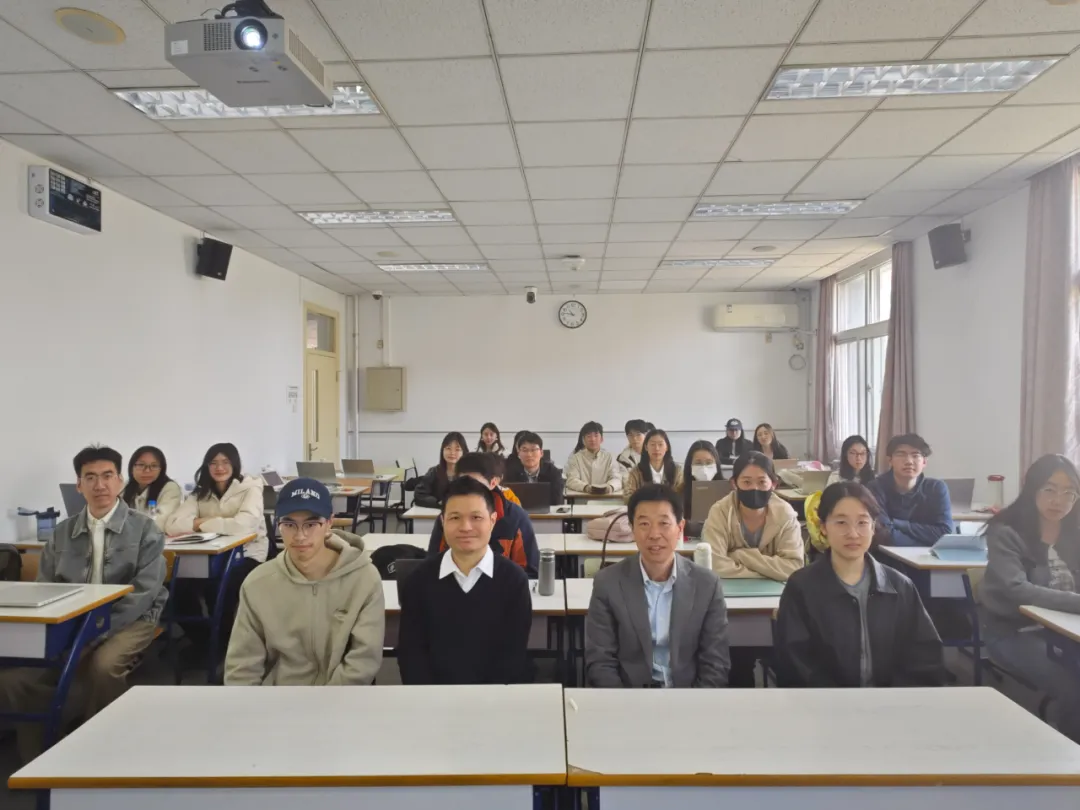
On April 3, 2025, at 8:00 AM, the second lecture in the Big Data and Artificial Intelligence Law course series took place in Classroom 413 of Teaching Building 2 at Beijing Normal University. Professor Su Yu, a doctoral supervisor from the Law School of the People's Public Security University of China, delivered a lecture titled "Key Issues at the Forefront of Artificial Intelligence Legislation." The session was hosted by Professor Wang Qinghua from the Law School of Beijing Normal University.
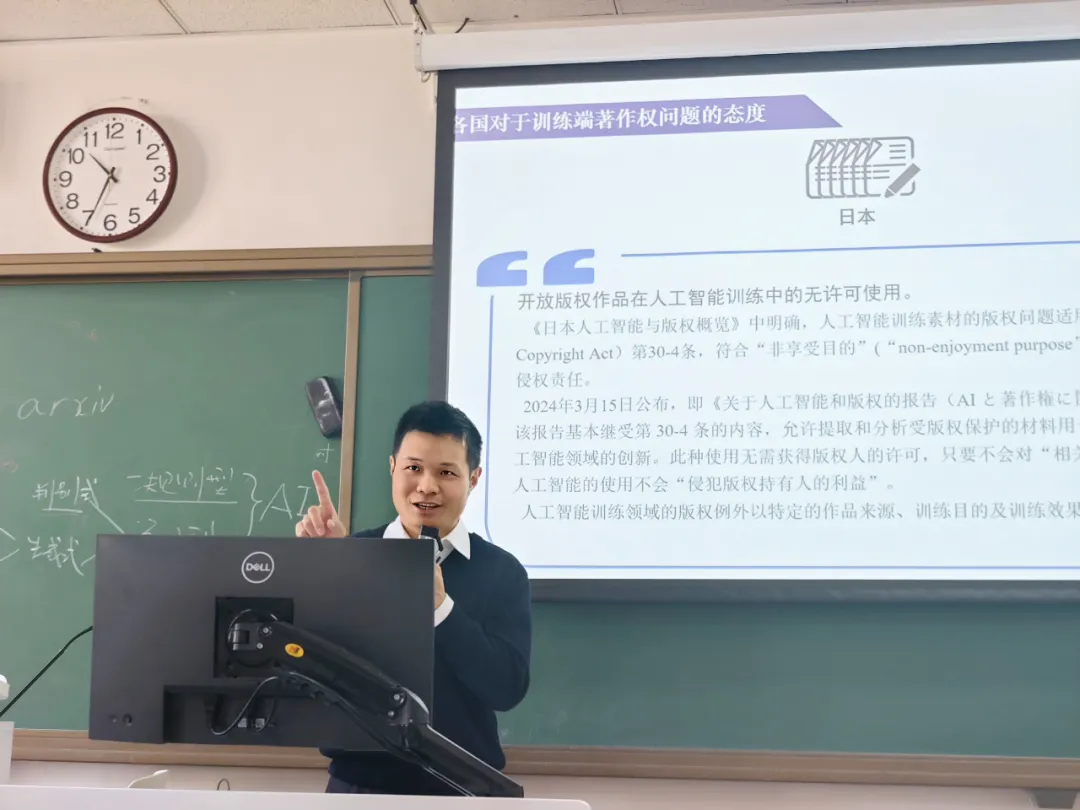
At the outset, Professor Su Yu outlined the critical challenges facing AI legislation, observing that different nations prioritize development and security differently, and that China must seek a balance suited to its specific context. He emphasized that while the open-source ecosystem is vital for AI development, it introduces significant risks, such as facilitating illegal activities and data breaches, which necessitates a careful legislative approach. In terms of risk governance, Professor Su noted that existing solutions like stratification and classification face practical difficulties, making differentiated risk governance a major challenge. Furthermore, he pointed out that the obligations of developers remain ill-defined, and urgent issues, such as copyright protection for AI-generated works, principles of liability for infringement, and the boundaries of industrial policy, require immediate attention.

Professor Su then elaborated on emerging topics regarding the construction of AI legal frameworks. He noted that while model evaluation has become a key governance tool in the era of large models, it faces challenges related to training relevance, scientific benchmarks, and stakeholder interests, calling for robust mechanisms to address them. Moreover, he distinguished between domain models and foundational models, highlighting their unique formation paths and risks, which require specific public law constraints. He also addressed the issue of data pollution, including public data contamination and malicious training data, stressing the need for a comprehensive legal and technical framework for effective governance. Overall, he argued that AI legislation must balance competing values, including development versus safety, freedom versus fairness, and planning versus market forces.

Following the lecture, Professor Wang Qinghua offered comments focusing on content, methodology, and insights. He praised the lecture for its richness and depth, noting that Professor Su's interpretation of AI legislation provided students with a clearer understanding of the field's complexity and importance. Professor Wang concluded by highlighting that the open spirit and diverse perspectives demonstrated by Professor Su provided valuable inspiration for the attendees.